Category: AI

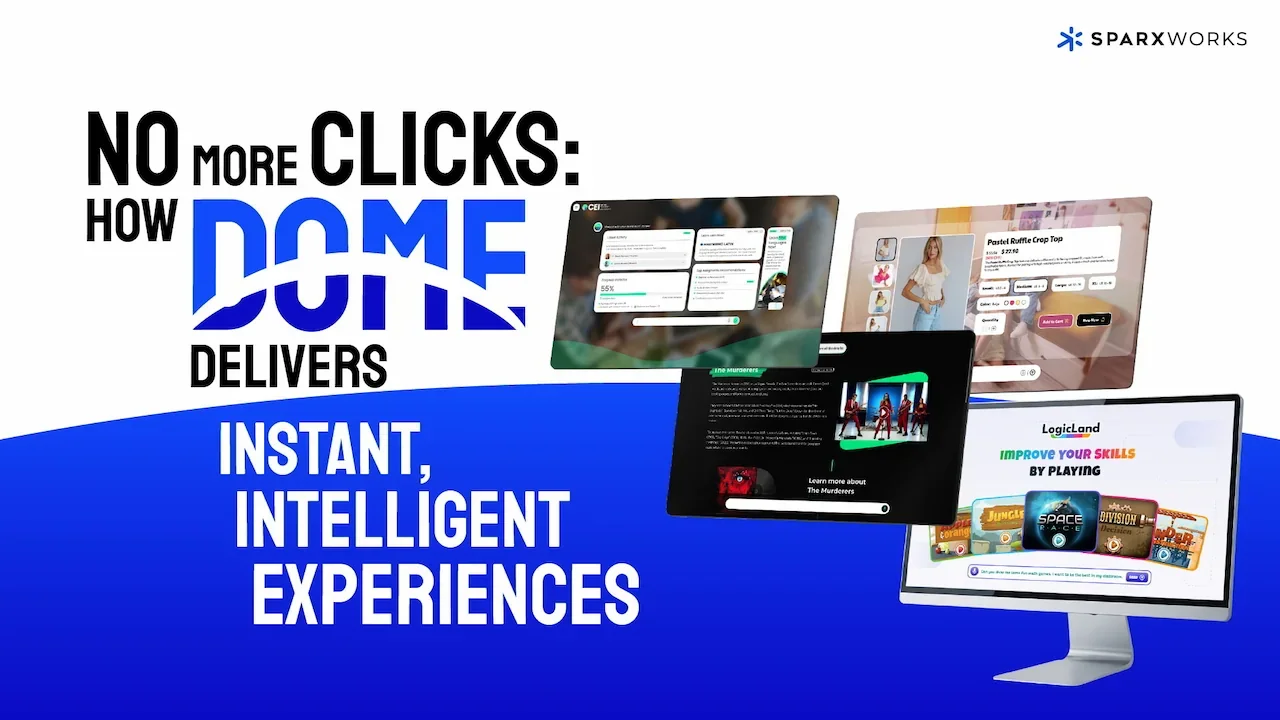
  • No More Clicks: How DOME Delivers Instant, Intelligent Experiences

    No More Clicks: How DOME Delivers Instant, Intelligent Experiences

    The web is 35 years old. And it shows.

    Despite decades of redesigns, the fundamentals haven’t changed: menus, tabs, and the eternal hunt for the right link. The result? Most users bounce in under a minute, frustrated and unfulfilled. IBM estimates this digital confusion costs businesses $62 billion annually.

    But the real problem isn’t the design. It’s the paradigm.

    As noted in “Beyond the Click,” redesigns still ask users to do all the work: click here, scroll there, dig through dropdowns. Today’s users don’t browse, they ask. From Siri to ChatGPT, the bar has shifted. People expect systems to understand intent, respond in seconds, and deliver content dynamically.

    That’s exactly what DOME was built to do.

    Meet DOME, the Dynamic Omni Media Experience. It’s an AI-powered system that ditches static web design in favor of real-time interaction. No menus. No categories. Just results.

    With DOME, users speak or type their needs, and the system instantly assembles a personalized experience. Text, video, 3D content, PDFs, even support forms all modularized, categorized, and delivered in response to a natural-language request.

    And it’s not just for tech giants. DOME was designed specifically to help SMBs compete in a landscape dominated by speed, personalization, and omnichannel access. Whether you’re in education, healthcare, e-commerce, or support services, DOME helps you:

    • Turn static content into intelligent answers
    • Reduce bounce rates and user friction
    • Deliver personalized paths on any device (mobile, desktop, TV, even voice)
    • Plug into your existing CRM, CMS, LMS, or eCommerce stack—no need to rebuild

    Instead of forcing users to learn your site, DOME learns from your users. It continuously improves delivery based on behavior and queries, giving you smarter insights and better outcomes.

    Imagine a customer support page that answers questions like a concierge. Or a course portal that surfaces relevant lessons based on a student’s last interaction. That’s not a redesign—that’s a reinvention.

    We call it orchestration over navigation.

    For SMBs tired of expensive overhauls and underwhelming results, DOME offers a breakthrough: a scalable, defensible platform that amplifies what you already have. And delivers what your users have been waiting for.

    If your users are clicking and bouncing, it’s time for something better. DOME transforms digital frustration into intelligent connection. Let’s build the new standard together.

    Learn more at sparxworks.com

    DM me to explore DOME for your business.

  • Beyond the Click: The Quiet Revolution in Digital Experiences

    Beyond the Click: The Quiet Revolution in Digital Experiences

    In the age of instant gratification, the way we design and interact with websites is reaching a tipping point. With average user engagement lasting under a minute and bounce rates exceeding 70% on many sites, it’s clear that traditional website structures no longer serve modern expectations.

    The current model, based on categories, menus, and static pathways, requires users to work for information. And they’re no longer willing to do that. Whether it’s a student searching for a course, a patient trying to book an appointment, or a shopper comparing products, the expectation is the same: “Give me what I want, right now.”

    The Illusion of Redesign

    Most website overhauls focus on aesthetics or reorganization, but the architecture stays the same. The assumption is that better design equals better performance. But what if the problem isn’t the design but the paradigm itself?

    Redesigning for the same behaviors, clicking, searching, and backtracking, keeps users trapped in outdated patterns. The result? Lost engagement, frustrated customers, and missed opportunities for real-time connection.

    What Users Want (But Aren’t Getting)

    Today’s digital consumers are shaped by intelligent systems. AI-powered tools like Siri, ChatGPT, and personalized shopping experiences have set a new bar. Users now expect systems to understand intent, not just respond to inputs. They want:

    • Relevant answers in 5 seconds or less
    • Media-rich content delivered instantly
    • Personalized paths, not generic funnels
    • Omnichannel access: mobile, desktop, voice, TV

    The Shift from Browsing to Asking

    The next generation of digital platforms won’t be about better clicks—they’ll be about eliminating clicks altogether. Websites and apps will become responsive systems that generate experiences on the fly, based on natural language input. Instead of navigating to a resource, users will summon it.

    Think of it not as navigation, but as orchestration.

    Designing for Zero Friction

    To meet these demands, content must be:

    • Modularized and tagged intelligently
    • Delivered in response to voice or text prompts
    • Compatible across any device or format
    • Connected with existing CRMs, CMSs, and LMSs
    • Updatable in real-time without manual intervention

    This isn’t just a design challenge; it’s an operational transformation. But for those who make the leap, the reward is immense: lower bounce rates, higher engagement, and a digital experience that actually feels intelligent

  • Smarter, Faster, Bolder: 5 Ways AI Can Supercharge Your Career

    Smarter, Faster, Bolder: 5 Ways AI Can Supercharge Your Career

    AI isn’t replacing ambitious professionals; it’s empowering them. And while the tools are powerful, the real value lies in how you use them. Here’s how to strategically make AI your ally in professional growth:

    Choose the Right Tools

    Start by understanding your needs:

    • Need help writing or brainstorming? Explore tools like ChatGPT or Jasper.
    • Want to upskill fast? AI-driven learning platforms like LinkedIn Learning and Coursera offer personalized recommendations.
    • For visuals and presentations, tools like Canva and Tome use AI to help you design like a pro.

    Tip: Choose tools that save time and enhance creativity. If it only automates, it’s not enough.

    What’s Worth Paying For?

    Free tools can get you started, but consider paid options when:

    • You need industry-specific insights or advanced customization.
    • You’re publishing professionally and want polished output.
    • You’re managing sensitive data and need enterprise-grade privacy.

    Subscriptions often include priority access, support, and better-quality outputs—valuable when your brand is on the line.

    What You Can Expect for Free

    Surprisingly, a lot:

    • Draft emails, resumes, and blogs.
    • Summarize meetings or documents.
    • Build daily routines or career roadmaps.

    Even free versions of tools like ChatGPT, Grammarly, and Notion AI are powerful entry points.

    5 Actionable Steps You Can Take Today

    1. Personalize your learning: Ask an AI tool to design a 3-month upskilling roadmap based on your current role and goals.
    2. Create a thought leadership habit: Use AI to co-write weekly LinkedIn posts that reflect your insights.
    3. Simulate career conversations: Practice interviews or presentations with AI chatbots.
    4. Visualize your impact: Generate charts, infographics, or pitch decks that showcase your achievements.
    5. Audit your digital presence: Ask AI to review your LinkedIn profile or resume for clarity and competitiveness

    The future of work isn’t AI vs. humans; it’s AI with humans. The winners will be those who embrace these tools not just to do more, but to do better. Start today, not because you’re falling behind, but because you’re ready to get ahead.

  • The Quiet Career Crisis: Retooling for AI

    The Quiet Career Crisis: Retooling for AI

    It’s easy to feel powerless when entire industries restructure seemingly overnight. In the past year, economic instability and automation have led to thousands of layoffs across sectors—from education and government to media and retail. And as AI takes center stage, many worry about being left behind.

    Especially for professionals in their 40s, 50s, and 60s, the fear isn’t just about losing income; it’s about becoming invisible in a system that increasingly favors digital fluency and tech agility.

    But here’s a different perspective: doing nothing in this moment is the biggest risk. Generative AI isn’t a threat—it’s a toolkit. And like all tools, its value depends on how you use it.

    From coaching others using AI-assisted insights, to launching micro-businesses, to simply landing a better job, this moment is ripe with possibility.

    Here’s how you can get started today:

    1. Use AI to Redesign Your Resume. Tools like ChatGPT or GrammarlyGO can help reframe your experience to match today’s hiring language. Ask it: “Rewrite my resume to highlight AI-readiness for marketing roles.”
    2. Generate Industry-Specific Cover Letters in Minutes. No more one-size-fits-all. Prompt AI to draft a tailored letter based on the job description.
    3. Upskill with AI-Assisted Learning. AI can tutor you. Literally. Use it to break down Python, prompt engineering, data storytelling, or product management into manageable lessons.
    4. Simulate Interview Practice. Prompt tools can emulate interviewers, offering role-specific questions and critique to build confidence.
    5. Create a Portfolio or Business Idea in Days. Use AI tools to draft your website copy, create brand assets, and even generate startup ideas.
    6. Launch a Side Hustle with AI Support. From writing newsletters to developing low-code apps, AI can help you ship faster and cheaper.
    7. Follow AI Trends and Curate Your Niche. Tools like Perplexity.ai or Feedly can keep you ahead. AI-curated content helps you build authority and relevance in a new space.
    8. Network Intelligently. Use LinkedIn’s AI tools to write thoughtful responses, summaries, and even introductions that open doors.
    9. Teach What You Learn. You don’t need to be an expert—just a few steps ahead. Sharing your learning publicly helps you attract opportunities.
    10. Mentor or Consult. There’s growing demand for people who understand both business and AI. Your existing domain knowledge paired with AI literacy is powerful.

    “AI can generate jobs and income. Don’t be afraid to change. Embrace it. Own it. There will be better times soon.”

    This isn’t just encouragement, it’s a call to action. Career reinvention isn’t just possible, it’s practical. And you don’t have to do it alone.

    With much love from your friends at SparxWorks. A company that cares about people.

  • The ROI of Asking Better Questions: Prompting as a Business Strategy

    The ROI of Asking Better Questions: Prompting as a Business Strategy

    Prompting is not a party trick. It’s strategic scaffolding.

    A well-crafted prompt can produce exponentially better results from the exact same model. It’s like asking a seasoned consultant the right question vs. rambling in a meeting.

    And here’s the kicker a general-purpose model, when prompted well, can outperform a fine-tuned one. That means fewer costs, faster results, and less reliance on complex MLOps (machine learning operations) infrastructures.

    However, prompting is also where strategy can slip into sloppiness. Without structure, it’s just noise.

    Here are 5 tips for smart, outcome-driven prompting:

    1. Start With the Outcome in Mind

    Don’t ask, “What can this model do?” Ask, “What do I need it to solve?” Reverse-engineer your prompt from the business result you want.

    2. Build Context Like a Briefing Document

    Models respond better when they’re oriented. Include background, constraints, desired tone, and even who the audience is. Think of it as briefing a new hire, not just typing a command.

    3.  Be Specific—But Not Suffocating

    Precision matters. “Write a summary” gets you average. “Write a 3 bullet summary in the voice of @ReedHastings for a board presentation” gets you standout clarity.

    4. Iterate Like a Prototype, Not a Final Draft

    Test your prompts like you would wireframes. Prompting isn’t one-and-done; it’s design. Refine, compare, adjust. The best results often come from version 3 or 4.

    5. Systematize the Good Ones

    If a prompt works, document it. Treat effective prompts as reusable assets. Better yet, modularize them for different inputs, like templates for creative problem-solving

    Prompting gives you leverage without the latency of training. It’s fast. It’s flexible. And it’s absolutely foundational to any AI-first strategy.

    What’s your team doing to prompt with purpose?

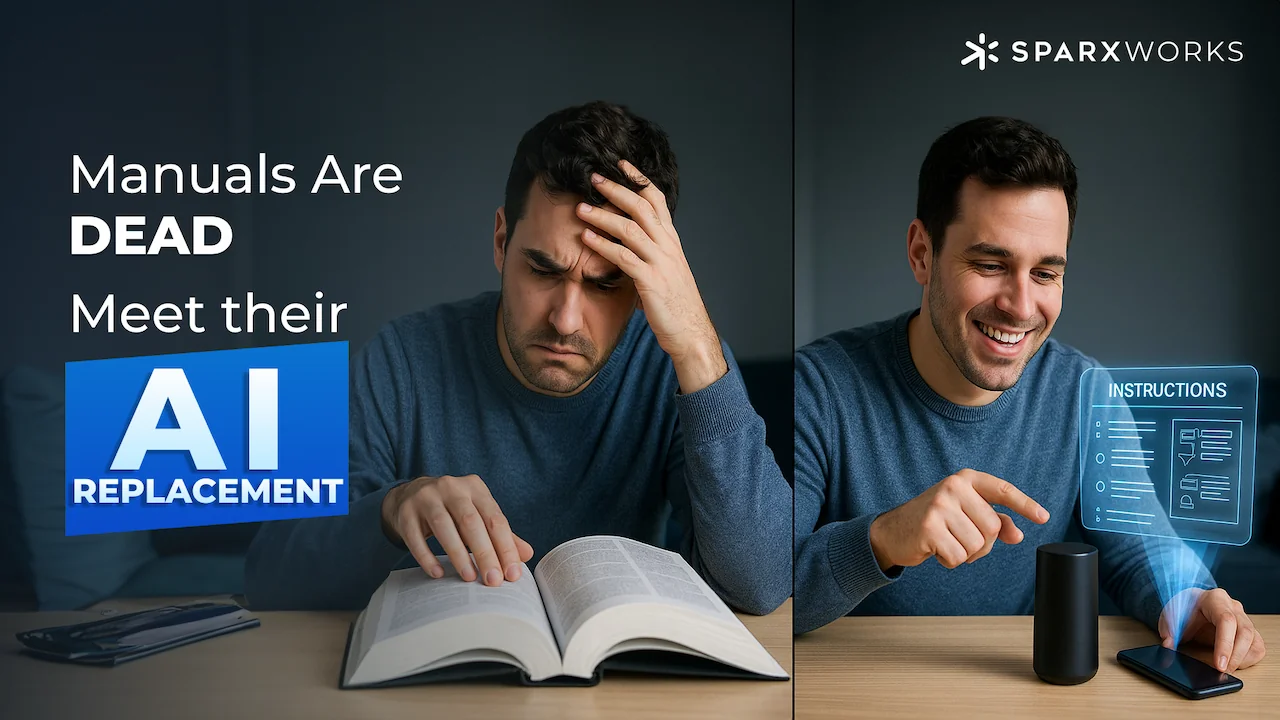
  • Manuals Are Dead. Meet Their AI Replacement.

    Manuals Are Dead. Meet Their AI Replacement.

    Ever been told to “see page 34” while trying to fix something urgent? Traditional manuals, no matter how well-written, often feel like a relic of another era. That’s about to change—radically.

    AI-powered instruction systems are ushering in a new era where real-time, voice- or text-driven assistance replaces static PDFs and cryptic diagrams. Instead of navigating 100+ pages, users can simply ask a question and get a direct, personalized response complete with visual walkthroughs, interactive elements, and video support.

    Imagine a customer asking, “How do I replace the battery?” and instantly receiving a context-aware, step-by-step guide, not a reference to a manual, but an experience tailored to their device, their version, and their use case.

    Why This Matters

    Dynamic Content Based on Intent: AI systems interpret user behavior and assemble the right content—text, video, audio, 3D diagrams from modular components you already own. This removes guesswork and improves comprehension.

    Rich Media = Better Retention: From AR-enhanced steps to SCORM-compliant video tutorials, instructions become multisensory, intuitive, and actually useful—for onboarding, support, or troubleshooting.

    Zero Overhead Integration: This doesn’t mean rebuilding your site or support stack. AI-enhanced instruction layers can wrap around existing systems like WordPress, Salesforce, and LMSs.

    Built-in Memory and Reusability: Every interaction is saved. Users can revisit, share, or print responses—ideal for industries where compliance and documentation trails matter.

    By transforming passive documents into modular, real-time support experiences, we’re not just making manuals smarter—we’re making users more confident, support more efficient, and products more enjoyable to own.

    Have you started exploring how AI could modernize your documentation and support experience? I’d love to hear what challenges and opportunities you’re seeing. Want to learn more about how AI can change and make your documentation efficient and effective? Give us a call or DM at your convenience.

  • Designing Realities: Where Brands, Behavior, and Immersive Tech Collide

    Designing Realities: Where Brands, Behavior, and Immersive Tech Collide

    I’ll never forget walking through a pop-up concept store for a major brand that had turned its physical space into an AR-enhanced playground. Shoppers weren’t just browsing—they were exploring, engaging, and immersed. What struck me most wasn’t the tech. It was the reaction. People lingered longer. Smiled more. Bought more.

    That’s when it hit me: the customer journey had changed—and it’s not going back.

    In a world where consumers fluidly shift between mobile screens, virtual environments, and real-world moments, the line between digital and physical has blurred. Today, immersive experiences aren’t a novelty—they’re an expectation.

    From personalized 3D environments to augmented in-store interactions, the brands that win are those that design for presence, not just presentation. This shift requires more than new tech. It demands rethinking how we discover, define, design, develop, and deploy experiences that create emotional resonance and measurable impact.

    But how do you do that at scale? What’s the role of AI, storytelling, and system design? And how do you ensure it doesn’t feel gimmicky, but human?

    I’ll be diving deeper into this topic with a group of brilliant thinkers and makers during an upcoming panel. I’m honored to moderate a conversation with:

    Together, we’ll unpack how immersive design is reshaping customer relationships—and what’s next. Let’s expand the way we think about experience.

    Are you ready to meet your customer in their reality?

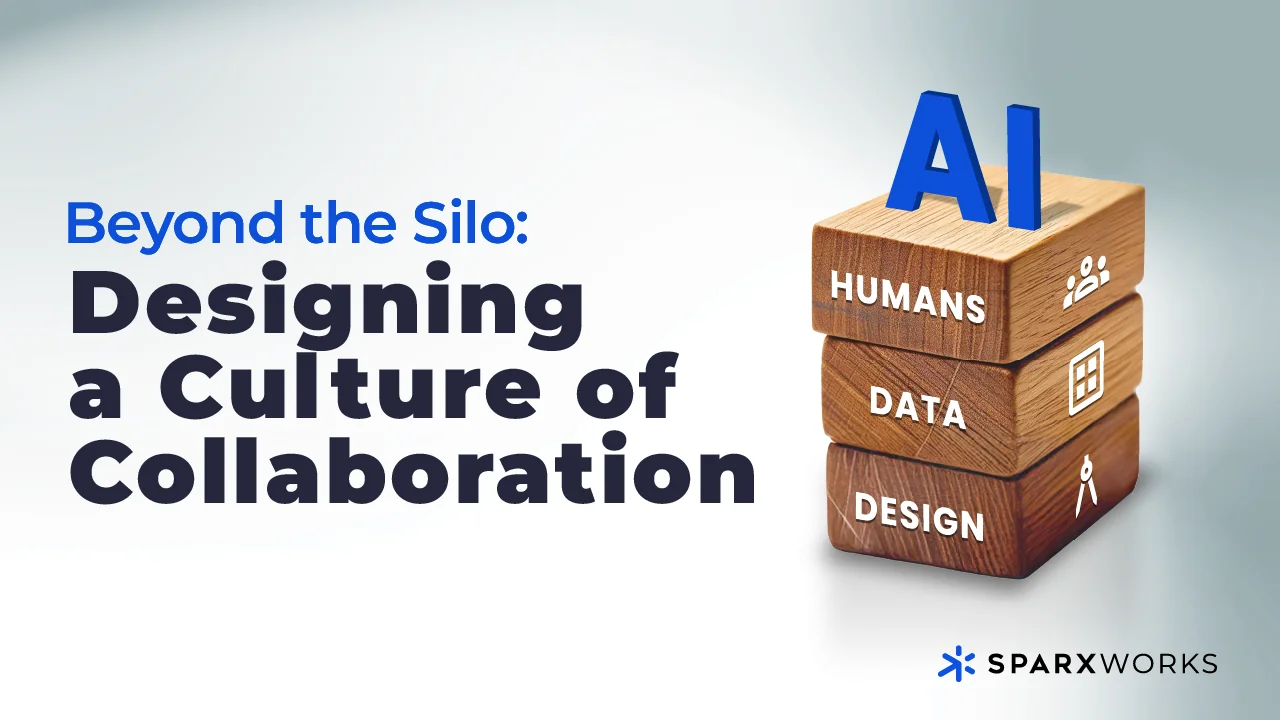
  • Beyond the Silo: Designing a Culture of Collaboration

    Beyond the Silo: Designing a Culture of Collaboration

    Imagine walking into a bustling creative studio where fashion designers, software engineers, marketing strategists, finance wizards, and visionary artists are all huddled around the same table. They’re not just sharing space—they’re sharing ideas, sparking each other’s imaginations, and spinning out concepts that might redefine an industry. This is the power of cross-functional collaboration in driving innovation. It’s not just about having brilliant minds in the room; it’s about breaking down the walls between disciplines and letting creativity run free.

    Building a Culture of Collaboration

    In many organizations, teams operate in silos. The design folks do their magic in one corner, data scientists crunch numbers in another, and finance is typically locked away in spreadsheets. When that happens, companies miss out on those electric “aha” moments that only come from combining diverse perspectives. Designing an app might mean you need the insight of a UX lead, the strategic vision of a brand manager, and the realistic budgeting approach from your finance team. Without them all in sync, your next great idea might stay a half-finished sketch in someone’s notebook.

    Fostering a culture of collaboration means structuring your processes—and physical spaces—to encourage spontaneous meetups and idea-sharing. Set up “creative corners” where marketing can chat up design. Arrange weekly “huddles” between tech and finance. The goal is to make the cross-pollination of ideas the norm, not the exception.

    Embracing the Power of AI and Data

    It’s also important to realize that innovation doesn’t stop at human ingenuity. AI can be a major ally, offering real-time insights into consumer behavior or automating routine tasks so your team can focus on big-picture brainstorming. Just ask Metamorphix, who’s used AI to create fashion concepts that captivate global audiences, or Christian Pierre, whose data-driven approach has powered award-winning campaigns. With the right blend of human creativity and machine intelligence, the possibilities are endless.

    Sustaining Momentum for Continuous Innovation

    Of course, the big question is how to keep this momentum going, especially once the initial excitement settles. That’s where consistent leadership and clear processes come in. Silke Meixner knows all about building structures that encourage innovation across massive organizations. And if you really want to be certain you’re designing something that truly resonates, remember to bring user research to the table—someone like Anna Cavazos will tell you empathy and direct feedback from consumers can make or break that shiny new product.

    Let’s Continue the Conversation!

    If this has your creative gears turning, join me, William Newell, along with METAMORPHIX. Christian Pierre, Anna Cavazos, and Silke Meixner at Digital Hollywood on April 23, 2025—a free event! We’ll unpack how design, tech, finance, and marketing teams can unite to drive the next wave of innovation.

    Come ready to challenge assumptions, share your story, and leave with fresh ideas. Let’s build what’s next—together.

    See you there!

  • AI Is Reshaping Branding—Who’s Really in Control?

    AI Is Reshaping Branding—Who’s Really in Control?

    There was a time when branding meant control—meticulously. crafted campaigns, months in the making, designed to be consumed exactly as intended. But those days are over.

    Today, branding is no longer a monologue. It’s a real-time conversation, shaped as much by consumers as it is by companies.

    Abstract blue graphic with crystal-like spheres highlights GEO technology’s importance for future-proofing websites.
    A half-plush, half-robot AI-powered teddy bear highlights child safety concerns with AI, urging thoughtful development.

    With the explosion of AI as a creative force, branding, fashion, and retail are undergoing a transformation unlike anything we’ve seen before. Every major brand is adapting to the new reality where Consumer Engagement + Immersive Technologies & Products = The Retail Transformation. AI doesn’t just enhance campaigns—it enables brands to evolve dynamically, predicting trends, adjusting messaging in real-time, and redefining customer experiences.

    But as AI rewrites the rules of branding, it raises new questions:

    • When does agility compromise authenticity?
    • Does AI-enhanced branding make brands more human—or less?
    • How do companies balance speed with strategy, so they’re not just reacting, but leading?

    The most successful brands aren’t just keeping up—they’re leveraging AI to personalize, predict, and adapt before consumers even realize what they want. The intersection of AI, branding, and consumer experience is one of the most profound shifts we’re seeing in marketing today. It’s about trust, innovation, and redefining what it means to build a brand in the digital age.

    This is exactly what we’ll be unpacking at Digital Hollywood’s panel, “Digital Design, Branding, Fashion & Retail: The Innovation Experience.” I’ll be moderating a discussion with some incredible experts, including Silke Meixner (ZS Associates), METAMORPHIX . Christian Pierre (GUT), and Anna Cavazos (TheFinds.ai), exploring how AI is shaping the future of branding, storytelling, and customer engagement—from multi-faceted ad campaigns to immersive in-store and online experiences.

    The question isn’t whether AI is changing branding—it’s whether brands can adapt fast enough. But is AI making branding more powerful, or is it stripping away the human touch? Join us for a conversation with leaders who are guiding their companies and clients through these very questions.

  • The Phygital Revolution: How Omnichannel is Reshaping Consumer Engagement

    The Phygital Revolution: How Omnichannel is Reshaping Consumer Engagement

    I still remember walking into a flagship store, scanning a QR code on a product, and instantly seeing a 3D augmented reality (AR) model pop up on my phone. A sales associate equipped with a tablet had access to my online browsing history and made personalized recommendations on the spot. That was the moment I realized—consumer engagement isn’t just about digital or physical touchpoints; it’s about seamlessly blending them into one cohesive experience.

    The Shift to Experiential Commerce

    E-commerce used to be all about convenience—click, buy, ship. But the game has changed. Consumers no longer just want a transaction; they want an experience. This is where experiential commerce comes in, blending digital and physical interactions to create deeper engagement, stronger brand loyalty, and a more immersive shopping journey.

    Consider virtual fitting rooms that let customers try on clothes from their living rooms, interactive product demos where users can see how a gadget works in real-time, or AR-powered “try-before-you-buy” experiences that let you visualize furniture in your home before making a purchase. These tools do more than just drive conversions—they build trust and reduce purchase hesitation by giving consumers hands-on engagement with products, even when shopping online.

    At the same time, in-store shopping is evolving, too. Physical retail spaces are no longer just places to buy products; they’re experience hubs. Brands are creating interactive showrooms, pop-up experiences, and hybrid spaces where customers can scan, customize, and even co-create their purchases in real time. Nike, Sephora, and IKEA are prime examples of brands that have successfully blurred the lines between physical and digital commerce, proving that the future is not just online—it’s phygital.

    “Phygital” is a portmanteau of “physical” and “digital”, describing the merging of the real and virtual worlds to create unique and enhanced experiences.

    Brand Consistency in a Phygital World

    With consumers constantly moving between online and offline channels, maintaining a consistent brand experience is critical. A customer may first encounter your product through a social media ad, research it on your website, check reviews on a third-party platform, visit your store to see it in person, and finally make a purchase through a mobile app. Every touchpoint must tell the same story.

    When brands fail to synchronize these experiences, consumers notice. Imagine seeing one price online but another in-store. Or getting a personalized recommendation via email, only to have a sales associate who knows nothing about your preferences. These disconnects erode trust and create friction.

    Successful brands align messaging, design, and technology across all channels, ensuring that no matter where a customer interacts, the brand feels familiar, responsive, and cohesive. This means:

    • Consistent storytelling—Your brand voice, visuals, and messaging should flow seamlessly across platforms.
    • Unified data strategies—Personalization should be smart, pulling from real-time insights on customer preferences.
    • Technology integration—Omnichannel strategies require systems that talk to each other, from CRM to inventory management to AI-driven personalization.

    The brands winning in this space don’t just sell products—they craft experiences that adapt to where the consumer is in their journey. And in today’s competitive landscape, that can be the difference between being remembered—or being replaced.

    I’ll be diving deeper into these trends at the Digital Hollywood Brand Experience & Design Immersion event on April 22nd & 23rd, alongside industry leaders Silke Meixner, Anna Cavazos, and @Metamorphix. If, like me, you’re fascinated by the future of omnichannel engagement, let’s connect at the event!