Tag: AUGMENTED REALITY

  • Augmented Reality: Don’t Forget Audio!

    Augmented Reality: Don’t Forget Audio!

    When you attend a conference, a launch, or perhaps just a private demonstration of augmented reality (AR), a new mobile app, or the latest game, you are often wowed by the amazing graphics, and how realistically sports, battle scenes, or information is presented. You leave the presentation jazzed, thinking about what you may be able to accomplish with the service or product you just saw. But remember not to overlook the importance of audio. Even the flashiest visuals would not have the same dramatic impact they have on us without quality audio. Whether it is music, effects, dialogue, or a combination of all three, audio is a key ingredient to build emotional responses. Would Star Wars be the same without the masterful scoring provided by John Williams? Of course not. Audio creates mood, anticipation, joy, sadness, etc.

    So for AR, audio is just as important as it has been in the past for movies, theater, and games. To learn more about how audio is being used for augmented reality I spoke with Tom Wesselman Sr. Director of the software group at Plantronics. Plantronics is one the leaders in audio products.  You probably know them from their earbuds or other listening devices. But Tom and Plantronics are engaged in much more than that. Tom shared with me some of the ways Plantronics is looking to innovate in digital media and how they are positioned to be a great partner for AR hardware manufacturers, as well as those of us who are involved in the process of creating AR experiences.

    For example Plantronics is able to collect and analyze data just by listening. Imagine you are in a distance collaboration meeting, like a GoToMeeting, or WebEx session, or a 3D meeting room, or maybe you manage a support center. With Plantronics’ technology you can measure decibel levels in a sound wave, and analyze inflection, tone, and more. Let’s suppose you need to solve a problem with a support situation. With this type of data you could quickly know how communication was handled.  Was the customer upset? Was the support team frustrated? This is important to know since the idea behind a support center is to solve problems. But solving problems can bring a great deal of frustration, so keeping a team fresh, knowing when to give someone a break, is key to optimal performance.

    For AR, audio is not only necessary to bring an experience alive, it is also essential to provide immersion. Imagine if you will that we launch an event at a public park. We are going to set you up with an HMD, and you are going to walk around and see dinosaurs around you. Without hearing the roar of T-Rex, the experience would not be the same. In addition, audio plays an even bigger role. Audio frequencies can be captured by outward facing microphones, analyzed and if needed, canceled by other frequencies so that you don’t hear them. In this example we would probably aim at canceling traffic noise.

    If you want to learn more about this topic, and get a jump into AR and what audio can do for your projects, you can meet Tom in person. Just join us at my panel at Digital Hollywood this coming October 10, at 12 Noon http://www.dhsessions4.com/Tuesday17Fl6.html . Other panelists include Leon Laroue (Epson Moverio), Eric Trabold (Avegant), Michael Leventhal (Holmes Weinberg, PC), Soulaiman Itani (Atheer), and Mike Hildebrandt (DAQRI). Come and learn how your company can be part of this technological revolution and tremendous business opportunity.
  • Augmented Reality: AR Anywhere!

    Augmented Reality: AR Anywhere!

    One of the very first augmented reality (AR) companies I learned about was DAQRI, which is located here in Los Angeles. Years ago I met with them because I wanted to use the ARToolkit, an open source platform they had acquired. I was immediately impressed with their vision for AR and what they had already accomplished with their human body and chemistry applications, which were featured just a few years ago at Apple’s main event. Over the years I have worked with Roy Ashok Chief Product Officer at DAQRI, and more recently, with Mike Hildebrandt, VP of Corporate Development, and Strategic Partnerships at DAQRI. They are both top leaders in the growing AR market place.

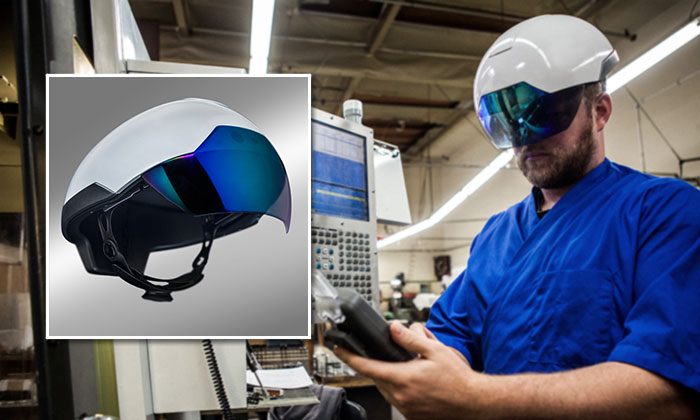
    One of the company’s key products is and has been DAQRI Smart Helmet. Designed to bring digital technology and interaction right into the workplace, it delivers real-time data based on the environment, direct to users, enabling them to visualize and understand the workplace in ways never before imagined.  In short, it makes workers more productive, safer and more proficient.

    Augmented Reality: AR Anywhere!

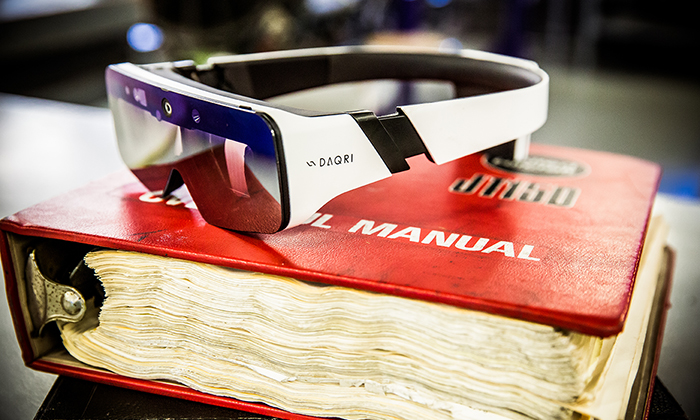
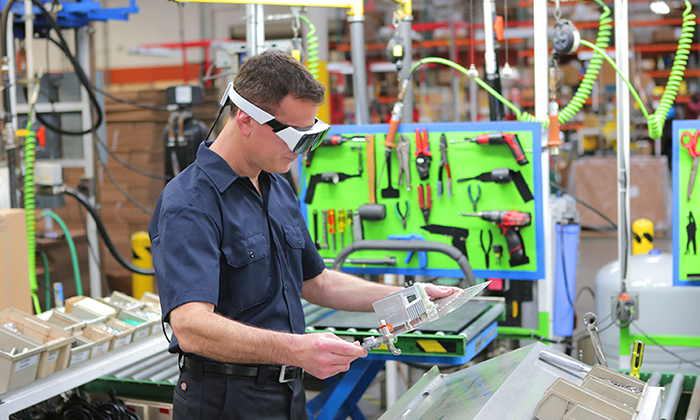
    Today Smart Helmet is just one of DAQRI’s impressive product line up.  They are now launching DAQRI Smart Glasses, which will be on the market this quarter. Smart Glasses are a significantly smaller form factor than Smart Helmet, and should have a big impact on vertical markets like architecture, 3D printing, blueprint models, and more.

    DAQRI Qube, a new development platform that enables robust integration and custom development with the flexibility to leverage existing Integrated Development Environments (IDEs) and applications. The Qube, coupled with DAQRI developer tools, allows for easy prototyping, testing, and measurement by providing more direct access to sensors.

    DAQRI provides DAQRI HUD as a solution for automotive manufacturers looking to incorporate HUDs in their automobiles.

    DAQRI’s advances for AR promise to reshape the way we work, communicate and learn.  You can learn more about DAQRI’s amazing products and AR solutions at their website https://daqri.com/

    If you want to learn more about this topic, you can meet Mike Hildebrandt in person, just join us at my panel at Digital Hollywood this coming October 10, at 12 Noon http://www.dhsessions4.com/Tuesday17Fl6.html . We’ll also be joined there by Leon Laroue (Epson Moverio), Eric Trabold (Avegant), Michael Leventhal (Holmes Weinberg, PC), Soulaiman Itani (Atheer), and Tom Wesselman (Plantronics). Come and learn about how your company can be part of this technological revolution and tremendous business opportunity.
     

  • Augmented Reality: Changing the Way We Work

    Augmented Reality: Changing the Way We Work

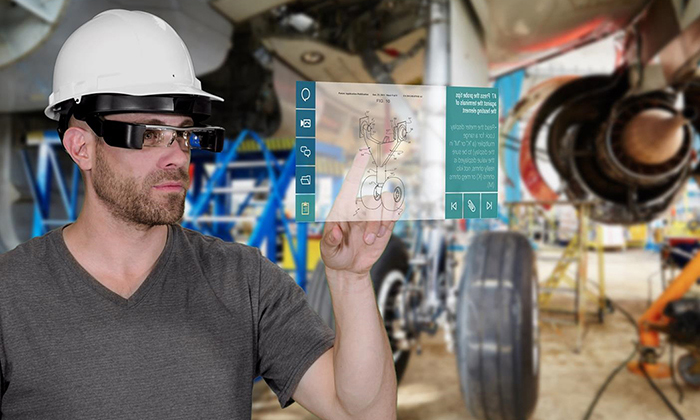
    It’s a fact that augmented reality (AR) is reshaping the way we work. And yes, it is happening right now, and it is going to grow faster than anticipated.  Today, I’d like to introduce you to a company called Atheer. I recently met with their SVP of marketing, Amar Dhaliwal, and he introduced me to the amazing vision Soulaiman Itani, their CEO and founder, has for augmented reality in the workplace, and soon in other areas.

    Atheer’s focus is to connect digital and physical workspaces inside enterprises and as a result transform the productivity, accuracy, quality and safety of their workers. Their technologies provide rich AR applications on smart glasses of “your choice,” meaning it is hardware agnostic, enabling enterprises to use the glasses that best suit them. Their approach starts with something I have been preaching for some time now. In order to innovate, and have augmented reality reach its full potential you have to break with old models and paradigms. You have to forget the mouse, the keyboard, and the concept of sitting and staring at a screen for hours.  With this in mind, Atheer developed multi-modal technology, meaning it supports many forms of interactions including gestures, head motion and voice.

    Think about it this way, if you are going to use AR, one of the very first things you need to consider is how the user is going to interact with the digital and real world. This would strongly influence your hardware and software choices (which are many). The new ways to interact that you need to consider are gesture recognition, voice commands, motion, eye interaction, and touch. All of these are different unique technologies that can work alone, or together. But in order to select the correct ones you need to consider the environment, and how the user will perform his/her work.  With Atheer’s technology, businesses (and more importantly their users) can select the interaction mode(s) that works best for them and switch between them seamlessly.

    Another smart move by Atheer is that they have paid careful consideration to the use of existing operating systems by smart glass manufacturers and enterprises. With their open platform and broad OS approach they are able to support the wide variety of IT eco-systems found in use today.

    Another plus is that Atheer provides flexibility for deployment options with a SaaS model. The technology is available now. If you want to learn more about Atheer visit their website at http://atheerair.com/ and get a glimpse of what’s coming.

    If you want to learn more about this topic, and get a jump into AR you can meet Soulaiman in person, just join us at my panel at Digital Hollywood this coming October 10, at 12 Noon http://www.dhsessions4.com/Tuesday17Fl6.html . We’ll also be joined there by Leon Laroue (Epson Moverio), Eric Trabold (Avegant), Michael Leventhal (Holmes Weinberg, PC), Tom Wesselman


    UI_3rd_Recon

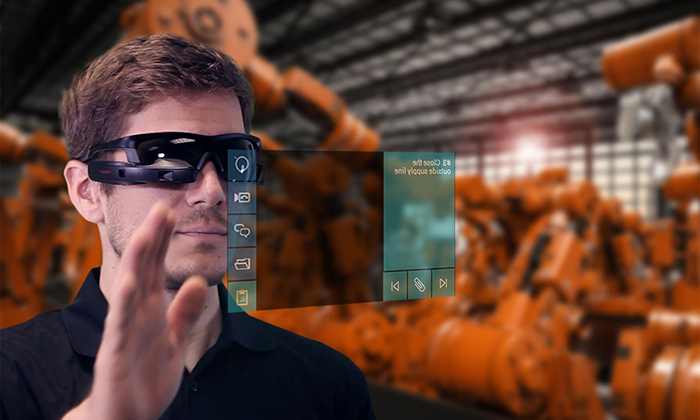
    It’s a fact that augmented reality (AR) is reshaping the way we work. And yes, it is happening right now, and it is going to grow faster than anticipated.  Today, I’d like to introduce you to a company called Atheer. I recently met with their SVP of marketing, Amar Dhaliwal, and he introduced me to the amazing vision Soulaiman Itani, their CEO and founder, has for augmented reality in the workplace, and soon in other areas.

    Atheer’s focus is to connect digital and physical workspaces inside enterprises and as a result transform the productivity, accuracy, quality and safety of their workers. Their technologies provide rich AR applications on smart glasses of “your choice,” meaning it is hardware agnostic, enabling enterprises to use the glasses that best suit them. Their approach starts with something I have been preaching for some time now. In order to innovate, and have augmented reality reach its full potential you have to break with old models and paradigms. You have to forget the mouse, the keyboard, and the concept of sitting and staring at a screen for hours.  With this in mind, Atheer developed multi-modal technology, meaning it supports many forms of interactions including gestures, head motion and voice.

    Think about it this way, if you are going to use AR, one of the very first things you need to consider is how the user is going to interact with the digital and real world. This would strongly influence your hardware and software choices (which are many). The new ways to interact that you need to consider are gesture recognition, voice commands, motion, eye interaction, and touch. All of these are different unique technologies that can work alone, or together. But in order to select the correct ones you need to consider the environment, and how the user will perform his/her work.  With Atheer’s technology, businesses (and more importantly their users) can select the interaction mode(s) that works best for them and switch between them seamlessly.

    Another smart move by Atheer is that they have paid careful consideration to the use of existing operating systems by smart glass manufacturers and enterprises. With their open platform and broad OS approach they are able to support the wide variety of IT eco-systems found in use today.

    Another plus is that Atheer provides flexibility for deployment options with a SaaS model. The technology is available now. If you want to learn more about Atheer visit their website at http://atheerair.com/ and get a glimpse of what’s coming.

    If you want to learn more about this topic, and get a jump into AR you can meet Soulaiman in person, just join us at my panel at Digital Hollywood this coming October 10, at 12 Noon http://www.dhsessions4.com/Tuesday17Fl6.html . We’ll also be joined there by Leon Laroue (Epson Moverio), Eric Trabold (Avegant), Michael Leventhal (Holmes Weinberg, PC), Tom Wesselman (Plantronics), and Mike Hildebrandt (DAQRI). Come and learn about how your company can be part of this technological revolution and tremendous business opportunity.
  • Augmented Reality: Epson Moverio

    Augmented Reality: Epson Moverio

    Having been talking about the future at different panels for the past three years, and researching, and prototyping, I am excited to write about the present in this post.

    I am preparing for a panel I will moderate October 10, at Digital Hollywood at 12 Noon about AR. the next generation applications. I have always had great panelists and this year is no exception. Today I want to focus on Leon Laroue, Product Manager New Ventures, for the Epson Moverio line of smart eyewear products.

    Yes, Epson. You probably know them for great projectors, printers, and other hardware devices. Well they have also entered the AR arena with the Moverio line. I am excited to learn about their technology since Epson definitely knows hardware.

    My conversation with Leon was really interesting.  The first thing I learned is that Moverio AR smart eyewear products are commercially available today. You can pick them up at Amazon, for example. They have three models that include smart glasses for personal and enterprise/multi-user applications, and smart headsets for industrial applications. I also learned that these products support a wide range of commercial standards. You can learn more about this in their specifications page. This one is for the Moverio BT-300 model https://tech.moverio.epson.com/en/bt-300/

    Besides using Android as their development platform (more to come), some of the highlights include:

     A long life battery  (up to  6 hours)

     A light-weight (69g), truly wearable form factor

     Proprietary Si-OLED display technology, providing bright, HD (720p) picture

     Camera and various sensors for enabling AR experiences

     Support for applications that enable FPV for drone piloting

    While the technology is impressive, but perhaps even more exciting, is their ISV program. Epson may have one of the most open ISV programs available in the AR world. This is great news for content developers, publishers, and entrepreneurs looking for opportunities to enter the AR expanding market.

    If you want to learn more about this fantastic technology and meet Leon in person you can join us at my panel at Digital Hollywood this coming October 10, at 12 Noon http://www.dhsessions4.com/Tuesday17Fl6.html , or join the live webcast. We’ll also be joined by Eric Travold (Avegant), Michael Leventhal (Holmes Weinberg PC, Formerly Magic Leap), Soulaiman Itani (Atheer), Tom Wesselman (Plantronics), and Mike Hildebrandt (DAQRI). Come and learn about how your company can be part of this technological revolution and tremendous business opportunity.
  • Augmented Reality: Light Field technology is here!

    Augmented Reality: Light Field technology is here!

    For the past three years I have been researching, prototyping, and developing augmented reality (AR) demos and even some AR products for mobile devices. In parallel I have been fortunate enough to host AR panels for just about the same length of time. This has allowed me to meet with the very top companies in the industry.

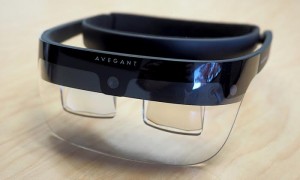
    Interestingly one of the first things I wrote about some time ago was Magic Leap. I loved their light field technology approach. My visit to their offices may have been the final push to make me a complete believer in AR as the next mega milestone in technology. But I am still waiting for Magic leap to enter the AR world publicly. But as often happens in life, while you are waiting for one thing, something else develops. I hosted a panel at GTC this past May thanks to my friend David Weinstein from NVIDIA, and I met a panelist from a company I did not know anything about. This company was Avegant, and the panelist was Eric Trabold, Chief Business Officer.

    I immediately enjoyed meeting Eric, and we went on to have a fantastic session at GTC together with other very talented panelists (they will the subject of other posts J). Soon after the panel I went and visited Avegant in Belmont. CA. My visit was, simply put, fantastic. Eric was kind enough to set up a full demo for me. What came next was really impressive.  I was able to walk through the solar system, where I was struck by the clarity of each detail – I could view individual asteroids passing by Jupiter, see the Mars’ Curiosity Rover, and view the weather patterns on the Earth. I spoke to a photorealistic volumetric 3D hologram where I could easily see features like her eyelashes and freckles, and I was able to hold animals in the palm of my hand!

    Augmented Reality: Light Field technology is here!

    It turns out Avegant has been around for a long time, the Founders started out with display research for the US military, evolving their technology over the course of time into a Consumer Product called The Glyph and now providing their Light Field technology to PC and Mobile OEMs that are going to bring Mixed Reality Headsets with Avegant Technology to the market. Other than Lytro, I think they are the only ones with this technology available today.

    Avegant blends the real world with digital images that you can interact with. I think image wise Avegant is in my top two (I go back and forth from one to two and vice versa). My understanding is that more robust interactivity and other features are in the works.

    If you want to learn more about this fantastic technology, and meet Eric in person, you can join us at my panel at Digital Hollywood this coming October 10, at 12 Noon http://www.dhsessions4.com/Tuesday17Fl6.html  We’ll also be joined by Leon Laroue (Epson Moverio), Michael Leventhal, (Holmes Weinberg PC, Formerly Magic Leap), Soulaiman Itani (Atheer), Tom Wesselman (Plantronics), and Mike Hildebrandt (DAQRI). Come and learn about how your company can be part of this technological revolution and tremendous business opportunity.
     

  • Augmented Reality: Working with Licenses and Securing Rights

    Augmented Reality: Working with Licenses and Securing Rights

    After Apple’s keynote just last week, which was preceded by the launch of Apple’s ARKit, and Google’s ARcore, you can safely assume that the avalanche of AR products and services is on!

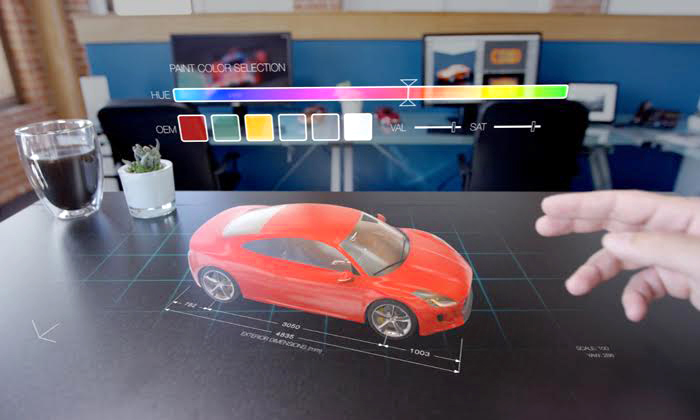
    So, as we march into our first generation AR enterprise and consumer products, we find ourselves in a new frontier. Figuring out how to secure or assign rights, how to ask for or request royalties, and thinking how to protect your likeness, brand, and IP will be more important than ever. And of course, protecting new IP will be of equal importance.

    I wanted to put my arms around these issues, since I create content and also enable others to create content or services. So I reached out to my friend Michael Leventhal. Michael works at Holmes Weinberg, P.C. He has worked with media, and digital properties for a long time. He was also Magic Leap’s legal counsel. I think his combined experience puts him in a unique position to advise companies engaged in content creation and software development.

    Michael started by reminding me that you need to begin by asking yourself why you want to use AR as a starting point. How you negotiate for rights, how you handle a potential revenue share, or an advance on royalties starts there. You have to know why you are doing something to be able to determine who your audience is, the potential size of your market, and the business opportunity.  Once you have determined these factors, you are ready to approach the question of rights and brand protection with enough information to enable a qualified legal advisor to give you good input.  For many of us, knowing how to identify the right legal advisor is tricky.  I asked Michael for his thoughts on this matter and he suggested that in choosing legal help you should:


    Look for someone who is knowledgeable about the kind of project you are making; you probably don’t want someone learning on your dime.

    Broad knowledge of intellectual property.  It’s important for your attorney to understand what is protectable in what you are creating, and to be able to negotiate and document both your assignment of IP rights to third parties, and bringing necessary IP to your project from outside owners.

    Business/corporate knowledge.  Your attorney should be able to understand your corporate structure (or help you create it, if that hasn’t happened yet), and assist you in documenting financing, whether that is from project based or equity investment.  You’ll be bringing on employees and consultants, so, an understanding of the legal issues related to these categories, and the ability to draft and negotiate these agreements is crucial.

    Connections in the AR/MR/VR world.  Attorneys don’t traditionally play the role of matchmaker, but, if you have an attorney who knows the experts in the fields you’re working in, and can connect you with thought leaders, all the better.

    Partnerships, licenses, collaborations, etc.  Often, financing, distribution, and marketing, among other areas, can be critical to the growth and success of your project.  Having an attorney who understands how to structure these kinds of deals can be a powerful asset to your company.


    If you want to learn more about this topic, how to create an AR experience, and meet Michael in person, you can join us at my panel at Digital Hollywood this coming October 10, at 12 Noon http://www.dhsessions4.com/Tuesday17Fl6.html . We’ll also be joined by Leon Laroue (Epson Moverio), Eric Trabold (Avegant), Soulaiman Itani (Atheer), Tom Wesselman (Plantronics), and Mike Hildebrandt (DAQRI). Come and learn about how your company can be part of this technological revolution and tremendous business opportunity.
  • 5 key tips to make sure your augmented reality initiative is a success

    5 key tips to make sure your augmented reality initiative is a success

    Let me start by saying that as a gamer at heart I love VR. However from a creative standpoint, real world application, and overall potential I am convinced that augmented reality (AR) provides a much bigger and interesting opportunity.

    Both AR and VR concepts have been around far longer than most people imagine. VR has been viewed for decades as the future, particularly for games, simulations, and at one point, to drive the creation of virtual worlds. For gaming and simulations VR can deliver a rich experience. But some of the old challenges still remain—limited social interaction, expensive to produce cool applications, risky ROI (the end user installed base is not as big as one would imagine and it is fragmented—accessed by multiple hardware systems).

    AR on the other hand is more social by nature because you don’t leave the real world. You can spend more screen time with it because you are not isolated. And in many cases you can use already existing devices to use the technology (2 billion mobile devices world wide). Don’t get me wrong. There are still many challenges to conquer, but there are also many more potential immediate applications for the technology.

    If you are interested in using AR for your business, products, promotions, etc. AR can definitely be a game changer for you. But there are some practical things you should keep in mind before you decide how to use this new technology.

    1. Like any media it all starts with a solid idea, objective—a clear vision of what you want to call attention to, or the point you want to make. Yes, writing is a big part of it, just like with movies, games, and any story.

    2. Consider that AR and mixed reality (MR) combine the real world with virtual elements. Planning, staging and particular attention to the user experience and user interface are super important. Simple is better.

    3. Think about it in three parts. First, setting. Next, context of the experience you are going to offer. And last, action or interaction you want the user to take during or towards the end of your AR experience.

    4. There are over 300 companies (and growing) dedicated to AR, but they are not all the same. Some companies provide core technologies and are essentially B2B businesses—oriented towards developers or publishers. Other companies specialize in vertical markets using other company’s technologies to deliver AR, and some companies are development teams, very similar to game or mobile applications development studios.

    5. Don’t forget, analytics are essential. The web, and mobile industry have shown the value and power of analytics. Analytics make it possible to improve user experience, fix defects, and add new features based on evidence and real-time feedback.


    There are of course other factors to consider, but you don’t have five hours to read now, right? To learn more about how North South Studios can help you use AR to extend your brand, you can contact me at 310-318-6156. Or join me and other AR experts at my upcoming panel at the Media Summit http://www.digitalhollywood.com/MediaSummit2017.html in New York this coming March 7 at 3.30PM

  • AR: New Frontiers, New Deals

    AR: New Frontiers, New Deals

    In my past few posts I have repeatedly expressed my enthusiasm for AR. There’s no question that as a geek at heart, looking at new technologies, tools, platforms, form factors, UI and other innovations is tremendously exciting. But I am also a businessman and I know that new technologies and new distribution channels also bring new challenges that can’t be ignored. The art of making deals, licensing content, knowing with whom, and how to partner, or set up a joint venture is as essential as knowing the technology options intimately. Just think about the opportunity that IBM left on the table when it let a little company named Microsoft lead the personal computer revolution! Or when Philips chose OS9 for its CD appliance instead of choosing MS DOS. Ancient history, I know, but so telling, and there are plenty more stories like this one in the annals of computing.

    As you know by my prior posts, I am moderating a panel on AR Next Generation Apps from Education to Gaming at Digital Hollywood http://www.dhsessions3.com/Tuesday16Fl5.html this coming October 18th. I wanted this session to be the most informative session of its kind and towards that end I have put together a group of the most talented tech innovators in the industry. And, given the lessons of the past and our shared interest in prospering, I made sure to have a person with great insight into the business aspects of AR as well.

    His name is Michael Leventhal. He is a partner at Holmes Weinberg, PC. and was formerly VP of Legal Affairs for Magic Leap Inc. Michael has been helping creative, technology, and investment teams put together successful partnerships, licensing, and distribution agreements for many years. And he is one of the very few professionals in his field that has significant real experience putting together content, and partnership deals with AR as the key technology.

    Michael will help us address aspects of AR that are related to business—things like how we are going to look at distribution rights and licensing in this new field. Michael is one of those rare birds who, in addition to his business experience, has a lot of experience on the creative side. He has worked with start-ups and large corporations, which gives him a broad perspective that addresses many different constituencies.

    If you are a film or television content creator, distributor, or perhaps involved in the creation of content, or materials for training, or information in other fields, you will want to join us at our session. We’ll address technology, UI, best practices, and of course, deal making.

  • GPU Essential hardware component for AR and VR

    GPU Essential hardware component for AR and VR

    Continuing with my current series of post covering AR and VR I thought it would be a good idea to talk a little bit about hardware. I know is not the sexiest part of the story with AR and VR, but I think it is a key component for those who really want to learn and understand the ins and outs of these two emerging technologies.

    For years we focused on the CPU as a central component for strong performance in a computer, and of course that has not changed. Today the current CPUs available, for example Intel’s i5 and i7, are extremely powerful and can handle the workload in any scenario. This does not mean there is no room for improvement, of course there is, but for now we have most of the power we need.

    The hardware revolution is now more focused on another key component for any computer or mobile device. It is focused on the ability to process graphics. GPUs (Graphic Processing Units) are a key to enabling a rich display of video and images on any device. In your computer you have a video card, in your mobile device you typically have a dedicated co-processor designed to accelerate graphics’ applications, 3D content, etc.

    In this and my past few posts I have been trying to share information regarding key technologies that are behind AR principally, and also VR. One key company behind this new technological revolution is NVIDIA, a pioneer in visual computing with more than 20 years of experience and success. NVIDIA is based in Santa Clara California, and its focus in the creation of GPU’s (Graphic Processing Units). Their technologies are behind advances in AR, VR, and even self driving cars!

    So why are GPU’s so important? Well the simple answer is because AR (and VR for that matter) rely on the ability to process super rich graphics to provide an engaging experience, functions like multi-res shading, 360-degree video, and many others are key ingredients to a rich, immersive user experience, which is essential to AR and VR.

    [blockquote width=’50’]

    What exactly is a GPU? If you look it up online you will get the following definition “graphics processing unit, used primarily for 3-D applications. It is a single-chip processor that creates lighting effects and transforms objects every time a 3D scene is redrawn. These are mathematically-intensive tasks, which otherwise, would put quite a strain on the CPU.”

    [/blockquote]

    NVIDIA’s wide range of products, continuing effort to create drivers, and ongoing investment in research makes them a key contributor to technology in general, and also a key player in the future of AR. Perhaps by now you are wondering why I concentrate so heavily on AR in my posts. I guess I agree with Tim Cook, Apple’s CEO when he said “”There’s virtual reality and there’s augmented reality — both of these are incredibly interesting. But my own view is that augmented reality is the larger of the two, probably by far.”

    David Weinstein, Director of Professional AR and VR at NVIDIA will be with a select group of AR innovators at Digital Hollywood this coming October 18th http://www.dhsessions3.com/Tuesday16Fl5.html. David holds a Computer Science PhD, and is the former COO of Numira. He holds several patents and has a lot of experience with algorithms, image processing and related technologies. David will bring attendees up to date on his view of AR and its possibilities for storytelling, and his thoughts on how this technology may impact the use of video or the creation of content.

    Roy Ashok (DAQRI), Brian Blau (Gartner), Jim Marggraff (Eyefluence), Ronen Horovitz (Eyecue-tech), Michael Leventhal (Former Magic Leap), and I will also participate in the panel. Please do come and learn how your company can be part of this technological revolution and tremendous business opportunity.

  • The Value of Platforms for AR: The DAQRI Solution

    The Value of Platforms for AR: The DAQRI Solution

    If you are looking to incorporate AR into your products and services, there are many things you need to consider in terms of technology. Fortunately, a few companies have focused on making the task as painless as possible.

    DAQRI is one of the leaders in this space and I recently had the privilege of spending some time with their Chief Product Officer, Roy Ashok.  During our conversation I learned about DAQRI’s commitment to creating the strongest set of tools to transform the way we work in many fields.  By focusing on cutting-edge devices and tools, they are enabling developers to create a new wave of next generation applications.

    DAQRI is focused on bringing AR everywhere. Their flagship product is the DAQRI Smart Helmet, which will increase productivity, efficiency and safety for workers. And for those of us in content creation, they will offer a wide range of tools to easily create experiences for the helmet.

    DAQRI also owns and supports ARToolKit, which is an open source, cross platform software development kit (SDK) that allows developers to create AR applications for all major platforms.

    ARToolKit, enables creativity and opportunity. At NorthSouth Studios, we have already been able to create amazing experiences with it.  For example, download our free Snap Tolaca application (available on IOS https://itunes.apple.com/us/app/snap-tolaca/id1081059890?mt=8 and Android https://play.google.com/store/apps/details?id=com.ar.nss.demo&hl=en) and give it a try.  This app allows users to take pictures of themselves with a fictional game character in any real world setting.  It’s fun and it only begins to scratch the surface of what you can do with the ARToolkit!

    Some key pluses about the ARToolKit are:

    • open source
    • multiplatform
    • mobile focused,
    • supports the development of next generation apps for smart glasses
    • fast enough for real time AR applications

    One of the biggest challenges in creating AR applications is the tracking of the users viewpoint.  The ARToolkit uses vision algorithms to solve this problem, enabling easy development of a wide variety of AR applications.

    To learn more about DAQRI, go to their website http://daqri.com/ or better yet, come hear Roy Ashok at Digital Hollywood October 18. http://www.dhsessions3.com/Tuesday16Fl5.html at the panel I am moderating. Roy will be joined by David Weinstein (NVIDIA), Brian Blau (Gartner), Jim Marggraff (Eyefluence), Ronen Horovitz (Eyecue-tech), and Michael Leventhal (Formerly of Magic Leap)—all leaders in the AR field.