Tag: AUGMENTED REALITY

  • Augmented Reality: The Importance of UI /UX Innovation

    Augmented Reality: The Importance of UI /UX Innovation

    I think it’s fair to say that most people in the tech industry agree that AR and VR are the future of computing. Companies around the world are spending vast sums of money and resources exploring the opportunities. Most efforts have centered on hardware like smart glasses, visors, helmets, and other form factors. A great deal of attention has been placed on visual recognition, but a challenge that comes along every time we go through a quantum leap in technology remains—user interface.

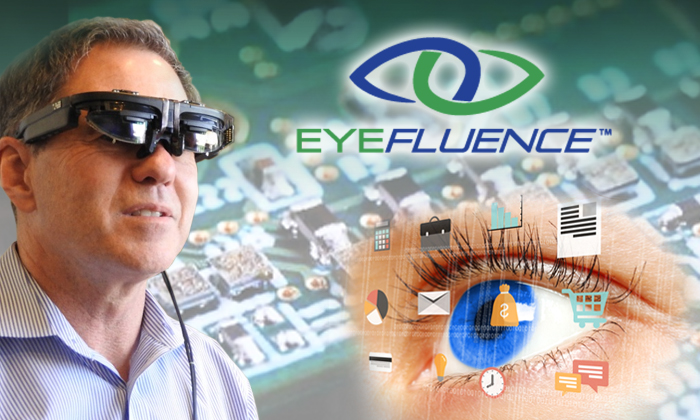
    Without intuitive access, new technologies cannot thrive. That’s why I was so excited when I learned about Eyefluence, a company that has taken on the challenge and come up with intuitive interactions that really work with the new form factors. Eyefluence, lead by CEO Jim Marggraff, one of the brightest minds in technology innovation, focuses on what makes sense. Tapping and swiping, while natural for a hand held device, are not really natural for a HMD or smart glasses, so Eyefluence focuses on your eyes!

    Eyefluence’s vision- driven interface focuses on the eye-brain connection. You use eye movement, to interact and as quick as you can think, you can interact. As they describe it on their website, “eyes can instantaneously transform intent into action.” In just a few minutes a typical user can master the “language” of their eye-interaction technology. Undoubtedly you’ve heard of or seen eye-tracking technologies in the past, but they usually follow the basic principles of standard mouse interaction. With Eyefluence there is no need to look at objects and dwell on them to activate them.

    Intriguing isn’t it? I wish I could fully explain the subtlety of their interface to you in writing but this is one you have to see to truly understand. Luckily, Jim Marggraff will be discussing the technology at my AR session at Digital Hollywood this October 18th http://www.dhsessions3.com/Tuesday16Fl5.html. Please do stop by to learn more about eye-interaction technology. And if you can’t join us, you can learn more about Eyefluence at www.eyefluence.com.

    Roy Ashok (DAQRI), Brian Blau (Gartner), Ronen Horovitz (EyeCue-tech), David Weinstein (NVIDIA), Michael Leventhal (Formerly of Magic Leap) will also be on the panel. Come meet the leaders of the companies that are making AR possible. We’ll all be available to answer your questions. Come and learn how your company can be part of this technological revolution and tremendous business opportunity.
  • Augmented Reality: Next Generation Apps

    Augmented Reality: Next Generation Apps

    I started working on Augmented Reality (AR) and Mixed Reality (MR) almost two years ago. At first I focused on creating demos, proofs of concepts that could serve to spark the imagination. Later I joined Google’s Project Tango initiative and began looking at the possibilities more in depth. I examined HMDs (head-mounted displays) and various technologies, learning about new approaches to UI (user interface) and UX (user experience).

    [blockquote width=’30’]

    AR and MR technologies allow us to superimpose computer-generated images on a person’s view of the real world. The result is a blended view of both the real world and the computer generated images, which can be interactive.

    [/blockquote]

    I was immediately fascinated by the possibilities, imagining a future where computers and mobile devices are replaced by something as simple as smart glasses. I continued learning about the finer aspects of AR and MR: visual recognition, gesture technologies, the use of our own eyes as part of a revolutionary UI, and more.

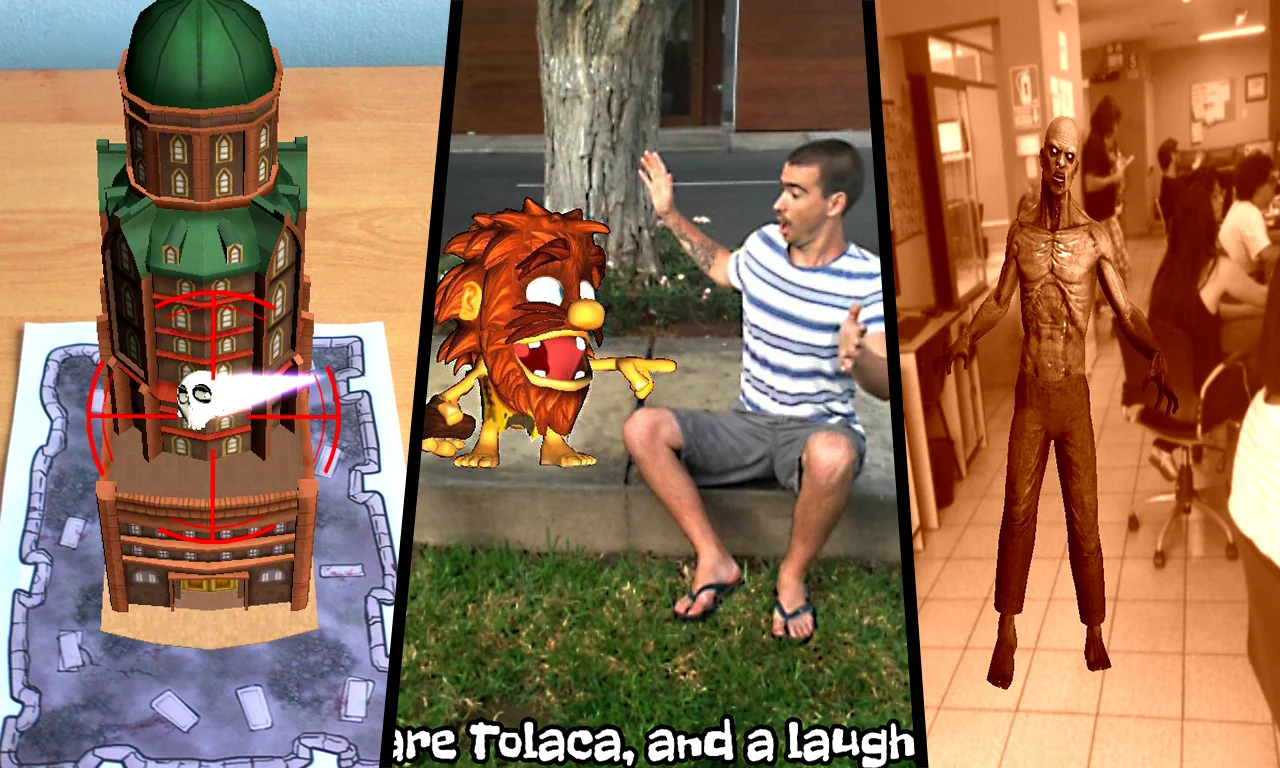
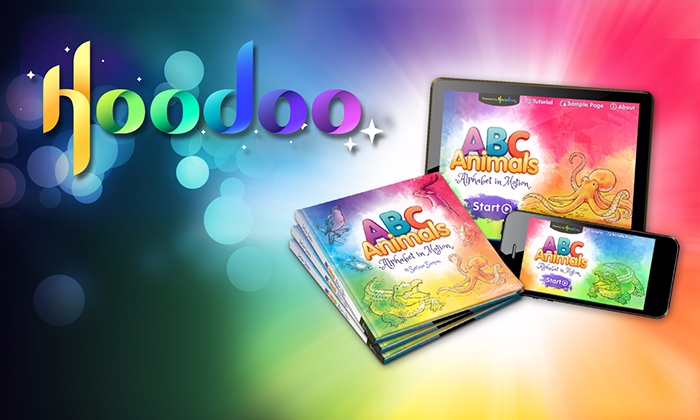
    As a result, NorthSouth Studios launched a division focused on AR and MR and we have grown from creating demos to developing a line of our own products. Our first-generation application, like Pokémon Go, ties in with over a billion mobile devices in the world. It’s called Hoodoo and it allows publishers to share augmented reality experiences with their audiences and customers with minimal cost and effort.

    At its simplest level, publishers provide print media or visual elements for display and Hoodoo makes it come alive. For example, say you have a magazine ad for a new car and some video footage that demonstrates the car’s most exciting features. With the Hoodoo app, users can point their mobile devices over the ad and see and hear the video content. Your ad literally jumps off the page and you and your team do not have to write a single line of code! And that’s just the first tier, basic service we offer. Hoodoo also allows more complex interactions, suitable for games, training and other uses.

    Our second AR/MR offering is a new line of educational products. First in line, and hitting the market in October, is ABC Animals: Alphabet in Motion written by NorthSouth Studios co-founder Sarina Simon (www.sarinasimon.com). The book and app combine the traditional joy of reading a picture book to a child with the entrancing vibrancy of AR.

    And there’s plenty more to come! We’re keeping our eye on the ball and focusing on HMDs and more immersive experiences. Toward that goal I have put together a spectacular Digital Hollywood panel which will take place on October 16th in Los Angeles. If you want to learn about the latest technologies, possibilities and meet the absolute experts in AR and MR come join us: see http://www.dhsessions3.com/Tuesday16Fl5.html. Our expert panel will cover the next generation of apps, from education to entertainment. I will be moderating the panel and afterwards I will be available to give demos and answer questions.

    I’ll be posting more articles covering our panel, panelists and their companies, and of course a great deal of information about AR and MR.

  • Thinking of Doing a Soft Launch for Your Mobile Game or App?

    Thinking of Doing a Soft Launch for Your Mobile Game or App?

    One of the great things about creating products and services is that every day is a learning experience. I love that about my job. I learn from our clients and their initiatives. I learn from my team, the experts and the interns. I have learned to appreciate that everyone has something to offer. I guess it’s part of growing (That’s a lesson that I started learning long before this, but truthfully it took me a while to master it.)

    I recently released a new mobile game. It’s a puzzle game named “Tolaca Rocks.” While this is not the first game I have released (been making games for a couple of decades), this one was special. Perhaps because it was the first direct release from my current company, with a very young team full of hope in Peru, South America.

    The game is not a commercial success, at least not yet, but it has helped us learn a lot about how to compete against larger budgets and companies that seem to have unlimited resources. We learned that the will to succeed, and a team’s dedication to the task, matters a lot. This is not a complete surprise since human capital is the most valuable asset of any company—when a talented group works together to achieve a goal, the goal is more accessible.

    I wanted to share what I learned about how to soft launch a game successfully, particularly when you need to do it with limited resources. Find below five easy steps for a best practice soft launch.

    Step One

    • Leverage friends and family, your immediate community.
    • Use all the free and low cost tools like social media, marketplaces, other free tools.

    Step two

    • Learn from your players.
    • Even a small sampling, let’s say 1,000 players can provide a good sampling of performance and areas to improve.
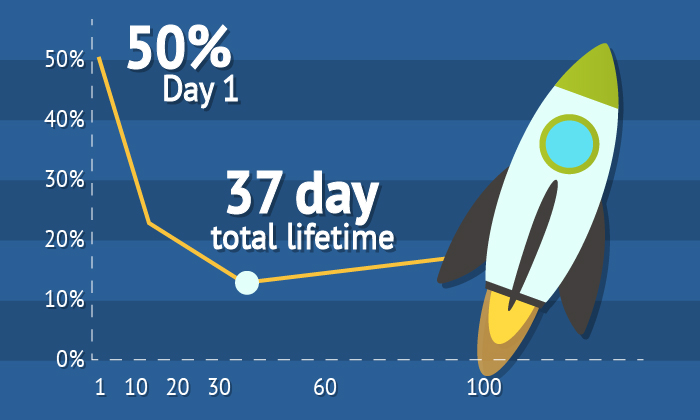
    • Pay attention to metrics, retention; day one, first week, first month are classic examples. Observe your conversion rate. It can help you project what you need to spend, or can help you decide next steps if your marketing budget is limited.
    • Carefully review performance, fun factor, difficulty, user interface, and overall user experience.

    Step Three

    • Survey your players whenever possible
    • Look for markets that have affinity for or need for your type of app or game.
    • If budget is limited, consider cost efficiencies.
    • Make sure that your OS requirements are correct.

    Step Four

    • Set up goals and monitor them.
    • Make adjustments to your game or app and release them as soon as possible. Don’t be concerned about updates. After all, this is a soft launch.

    Step Five

    • Once you have a proven build of your game or app you are ready for a hard launch.
    • Remember what you learned during the soft launch.
    • Be consistent, review analytics, pay attention to user satisfaction.
    • If possible, have an active community manager.


    You can learn more about my game “Tolaca Rocks” at www.tolacarocks.com. It’s free to play, so give it a try. I hope you find this information helpful, I will cover hard launch lessons learned in another post in the not too distant future.

    And speaking of the future, I will be moderating a Video Innovation panel at http://www.digitalhollywood.com  this Spring, My panel is on May 6, but I will be at the conference May 4, and 5. Look me up if you have questions about launching mobile applications or you need a game developer. I will also be demoing our latest samples for augmented reality. You can learn more about me and my company at www.northsouthstudios.com

  • Augmented Reality the New Marketing Frontier

    Augmented Reality the New Marketing Frontier

    In the many years I have worked in the digital arena I have worn several hats. I have overseen technical projects, designed games, acted as a creative director, and handled financial modeling. But no matter what hat I have had to wear, essentially my role has always been to help people and businesses launch and promote products and services.

    One of the most frequent challenges I face is working with people who don’t know how to use media to best tell a story or should I say, sell a story. Writers love words and sometimes they forget the old axiom that a picture is worth a thousand words. This was driven home to me again recently when I found a piece of research:

    James McQuivey of Forrest Research says one minute of video has the value of 1.8 million words, in context that is approximately 3,600 pages”

    Isn’t that the truth! Most of the time, you can use a few well-chosen words combined with the right imagery and convey a strong message in less than two minutes. Apple has shown us that minimalism works, that we need to focus on an intuitive approach to creating user interfaces, and a straight to the point message. Once interest has been established, the user is willing to explore an offering in depth. This confirms what I have long felt—that if you want an effective advertisement campaign with a high conversion rate, focus on video.

    But how do you focus on video if you’re using print ads? To me, this is the beauty and promise of Augmented Reality and this is why I am so excited about its prospects. With AR you can incorporate video into just about any print ad and deliver a full commercial, a call to action, generate a lead, demo a game—all just from a magazine, billboard, or sales sheet. You name it!

    I wish I could tell you that I am a genius, but I am not (although I think I am pretty smart). I just happen to be a great fan of video production, know a thing or two about streaming video, and more importantly have been lucky enough to work with AR in the early stages of its development. AR is currently in full expansion, I think that at the moment, the sky is the limit. There are various platforms to work with, techniques to get started, and plenty of room to innovate.

    If you are interested in developing products with Augmented Reality, or want to know how your print or video content can leverage this innovative technology, please come see me at the Game Developers Conference in San Francisco, I will be taking some meetings on 3/14 and 3/15 and will be available on 3/16, 3/17, and 3/18 at booth number 436 on the exhibits hall, courtesy of Prom Peru. If you want to make an appointment drop me a line at bnewell@northsouthstudios.com Want to visit Peru? Have a business that can use some production help? Come visit me at the booth and ask me how.

  • Augmented Reality is Here

    Augmented Reality is Here

    Many years ago I was blessed with participating in the launch of Philips CD-I. CD-I was the precursor of DVD and many set top boxes. Philips pioneered the use of full screen video playing from a disc. At the time, it was a quantum leap from VHS and Betamax technologies. Little did I know that the platform was the first step in what would become a once unimaginable technology revolution.

    Recently I visited Magic Leap and this time, having worked on launching a platform in the past I quickly recognized that we are on the eve of another exciting revolution. For those of you who are not familiar with Magic Leap, most people would define it by its focus on augmented reality, but after visiting with their team I think they are much more than a technology-driven group. Yes, the area of technology they are working on is augmented reality, but the real focus of the company is on ideas, creativity, and connecting people.

    Magic Leap has the two key ingredients for catapulting a new platform—a clear vision and the team to execute that vision. They are a strong team that has invested heavily in prototyping, paying close attention to the user experience, and the potential user interface. For those of us who are researching and working on how to implement new experiences in virtual reality (via Oculus rift) or in augmented reality, it is clear that UI is going to be very different from the common conventions we employ today in mobile and desktop development. The use of gestures and voice-activated commands are just the beginning of another chapter in the technology revolution. Without a clear understanding of how the UI will enable and be enabled by the technology, a new platform cannot reach its full potential.

    Augmented reality opens us so many possibilities. You can enhance print media, bring a map to life to learn about places around you in a way that no 2D map can equal, explore a landmark in detail, learn music, make your videos come to life by breaking the fourth wall. The potential implications for innovation are multiple, from educational methodologies, to industrial applications, to games, and traveling. And in my view, augmented reality is far more exciting than virtual reality because it incorporates the real world we live in–the actual physical space we occupy, as opposed to a completely unrelated setting. You name it; augmented reality is going to change the way we do many things in our lives.

    Magic Leap is not alone in the AR revolution. There are several technologies that are being created with the goal of enabling augmented reality for consumers. Microsoft and Daqri are two other companies that are investing their resources in doing it right. I will make sure to blog about these other companies and other advances in this field in the weeks ahead.

    I have focused my post today on Magic Leap because I was very impressed with their vision and with the quality of the team they have put together to execute that vision. I expect to hear and see great things from them, and I look forward to the next opportunity to collaborate with them.

    If you like to learn more about Magic Leap please visit their website at http://www.magicleap.com

    If you are interested in developing products with augmented reality, or want to know how your print or video content can take advantage of these innovative technologies please come see me at Digital Hollywood at the Ritz Carlton in Marina del Rey this coming Thursday, October 22 at 11:05 AM where I will be moderating a panel on Video Innovations, or drop me a line, or comment on this post.