Tag: CustomerExperience

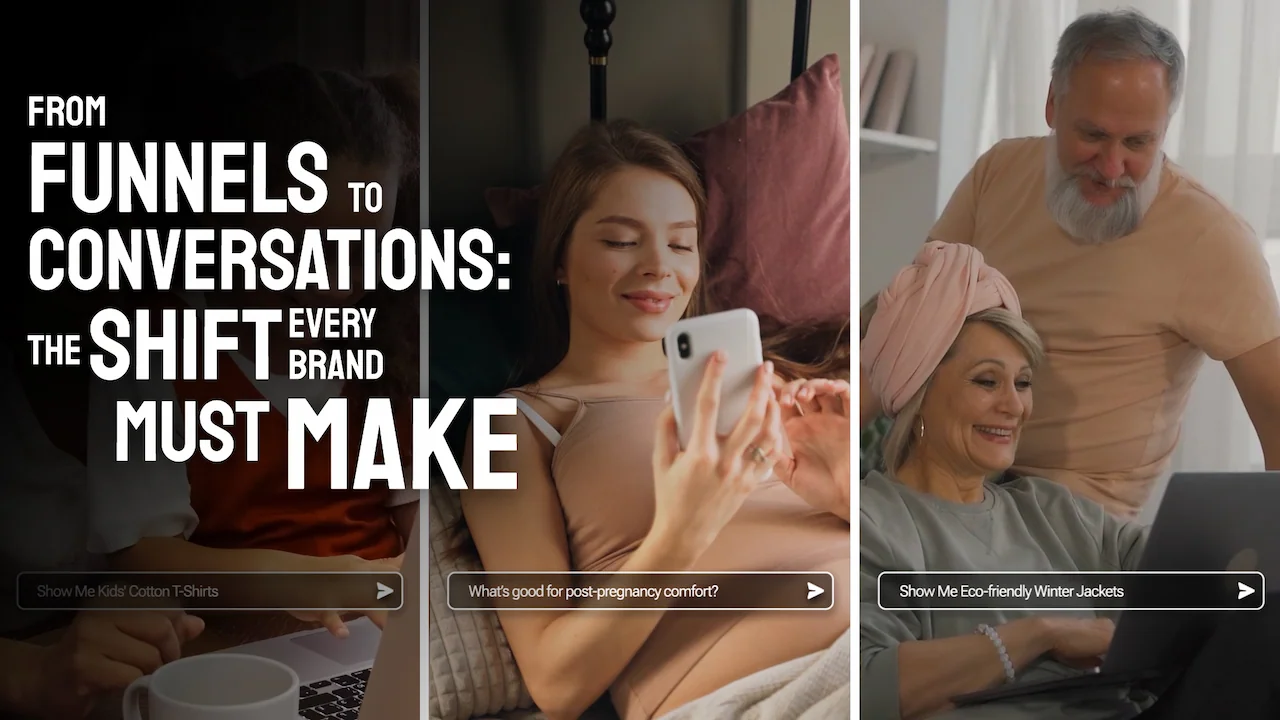
  • From Funnels to Conversations: The Shift Every Brand Must Make

    From Funnels to Conversations: The Shift Every Brand Must Make

    [videojs_video url=”https://vod.sparxworks.com/abc56b4c-e7a6-4e40-9f9b-ba50b4cdba0e/AppleHLS1/DOME_shopping_20250923.m3u8″ poster=”https://devdomewp.justdomeit.com/wp-content/uploads/2025/09/thumbnail.webp”]

    The Interface is Dead. Long Live the User.

    Your website is no longer just a digital brochure; it’s your first impression, your frontline sales rep, your customer onboarding tool, and often your only shot at a meaningful connection.

    However, most websites still treat users like passive readers instead of what they actually are: active, impatient decision-makers.

    Millennials and Gen Z expect to participate. They don’t want to scroll through pages of irrelevant content. They want to ask one question and get the perfect answer. They want the experience to adapt to them, not the other way around.

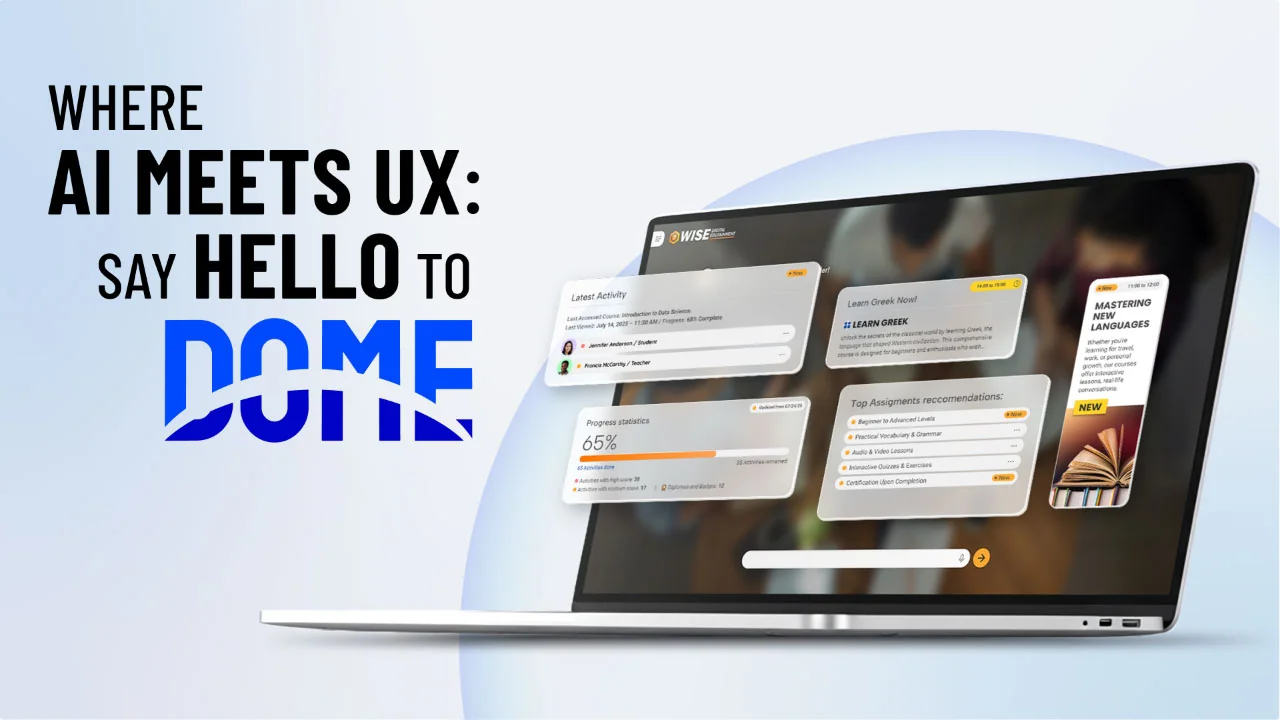
    That’s where DOME (Dynamic Omni Media Experience) comes in.

    DOME flips the outdated model of web navigation on its head. It lets users drive their own experience using natural questions, preferences, and behaviors. With voice or text, they describe what they need, and DOME responds with intelligent, real-time results: recommendations, comparisons, bundles, and next steps.

    Personalization isn’t just about improving conversion rates; it’s the foundation of brand relevance.

    When users feel understood, they don’t just buy, they remember. They trust. They come back. That moment when a customer thinks, “this brand gets me”? That’s where loyalty begins. And in a marketplace drowning in options, relevance is everything.

    Younger audiences especially view personalization as a baseline expectation. It’s their signal that your brand is modern, empathetic, and worth engaging with. When your digital experience adapts to them, they feel seen, not sold to.

    Brands that get this right don’t just make a sale, they make a connection. And in a world of fleeting attention, connection is currency.

    This is more than convenience. It’s survival.

    If your digital presence doesn’t feel personalized, intuitive, and user-driven, today’s consumers won’t wait around. They’ll leave. And they won’t come back.

    Personalization is now the expectation, not the extra. Brands that deliver it, the right way position themselves as modern, responsive, and customer-centric. Brands that don’t? They fall behind.

    DOME makes personalization effortless, scalable, and aligned with how people actually think.

    It’s not about patching your old system. It’s about evolving with your audience, and ideally staying one step ahead. Because the future isn’t about forcing people to adapt to interfaces.

    It’s about building experiences that adapt to people.

    Want to be seen as innovative, responsive, and human? It starts with how you deliver digital experiences. And personalization is your first language. Visit us at SparxWorks.com to learn more about DOME, or DM me.
  • Where AI Meets UX: Say Hello to DOME

    Where AI Meets UX: Say Hello to DOME

    I was talking to a small business owner the other day, let’s call him Sam.

    Sam’s a smart guy. Great product. Beautiful website. But he was frustrated.

    “People come to my site,” he said, “but they don’t stick around. My bounce rates are through the roof. I’ve tried videos, blogs, chat widgets… but it feels like my website is just sitting there, doing nothing for me.”

    Sound familiar?

    Here’s the thing, websites were designed 30 years ago for browsing (Windows, Icons, Menus, and Pointer), not for how we use the web today. We don’t want to click around. We don’t want to dig through tabs. We want answers now.

    That’s why we built DOME: The Dynamic Omni Media Experience.

    It’s like giving your website a superpower; suddenly, it actually thinks.

    • Your visitor asks a question, by voice or text.
    • DOME instantly responds with the right content: video, text, even 3D.
    • No endless clicks. No hunting. Just “ask → get → act.”

    Sam plugged DOME into his existing site, no rebuild, no drama. Within weeks:

    • Bounce rates dropped.
    • Leads went up.
    • His website went from “digital brochure” to digital assistant.

    Here’s my favorite part: DOME works for just about any industry, education, retail, wellness, you name it. And it doesn’t just make users happy; it makes Google happy too, because modular, AI-ready content is SEO gold.

    The internet is changing fast. Don’t let your website be the one still waving from 1995. DM for more info or to see a demo

    Just DOME it.

  • Beyond the Click: The Quiet Revolution in Digital Experiences

    Beyond the Click: The Quiet Revolution in Digital Experiences

    In the age of instant gratification, the way we design and interact with websites is reaching a tipping point. With average user engagement lasting under a minute and bounce rates exceeding 70% on many sites, it’s clear that traditional website structures no longer serve modern expectations.

    The current model, based on categories, menus, and static pathways, requires users to work for information. And they’re no longer willing to do that. Whether it’s a student searching for a course, a patient trying to book an appointment, or a shopper comparing products, the expectation is the same: “Give me what I want, right now.”

    The Illusion of Redesign

    Most website overhauls focus on aesthetics or reorganization, but the architecture stays the same. The assumption is that better design equals better performance. But what if the problem isn’t the design but the paradigm itself?

    Redesigning for the same behaviors, clicking, searching, and backtracking, keeps users trapped in outdated patterns. The result? Lost engagement, frustrated customers, and missed opportunities for real-time connection.

    What Users Want (But Aren’t Getting)

    Today’s digital consumers are shaped by intelligent systems. AI-powered tools like Siri, ChatGPT, and personalized shopping experiences have set a new bar. Users now expect systems to understand intent, not just respond to inputs. They want:

    • Relevant answers in 5 seconds or less
    • Media-rich content delivered instantly
    • Personalized paths, not generic funnels
    • Omnichannel access: mobile, desktop, voice, TV

    The Shift from Browsing to Asking

    The next generation of digital platforms won’t be about better clicks—they’ll be about eliminating clicks altogether. Websites and apps will become responsive systems that generate experiences on the fly, based on natural language input. Instead of navigating to a resource, users will summon it.

    Think of it not as navigation, but as orchestration.

    Designing for Zero Friction

    To meet these demands, content must be:

    • Modularized and tagged intelligently
    • Delivered in response to voice or text prompts
    • Compatible across any device or format
    • Connected with existing CRMs, CMSs, and LMSs
    • Updatable in real-time without manual intervention

    This isn’t just a design challenge; it’s an operational transformation. But for those who make the leap, the reward is immense: lower bounce rates, higher engagement, and a digital experience that actually feels intelligent

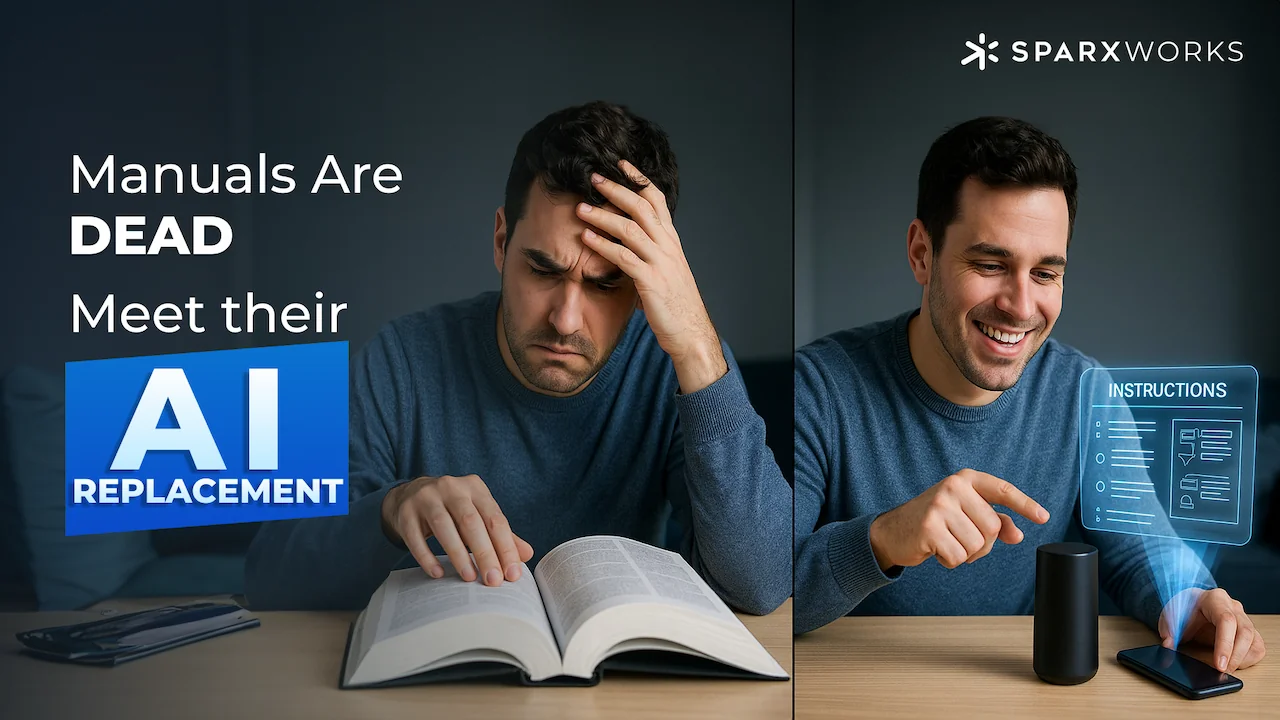
  • Manuals Are Dead. Meet Their AI Replacement.

    Manuals Are Dead. Meet Their AI Replacement.

    Ever been told to “see page 34” while trying to fix something urgent? Traditional manuals, no matter how well-written, often feel like a relic of another era. That’s about to change—radically.

    AI-powered instruction systems are ushering in a new era where real-time, voice- or text-driven assistance replaces static PDFs and cryptic diagrams. Instead of navigating 100+ pages, users can simply ask a question and get a direct, personalized response complete with visual walkthroughs, interactive elements, and video support.

    Imagine a customer asking, “How do I replace the battery?” and instantly receiving a context-aware, step-by-step guide, not a reference to a manual, but an experience tailored to their device, their version, and their use case.

    Why This Matters

    Dynamic Content Based on Intent: AI systems interpret user behavior and assemble the right content—text, video, audio, 3D diagrams from modular components you already own. This removes guesswork and improves comprehension.

    Rich Media = Better Retention: From AR-enhanced steps to SCORM-compliant video tutorials, instructions become multisensory, intuitive, and actually useful—for onboarding, support, or troubleshooting.

    Zero Overhead Integration: This doesn’t mean rebuilding your site or support stack. AI-enhanced instruction layers can wrap around existing systems like WordPress, Salesforce, and LMSs.

    Built-in Memory and Reusability: Every interaction is saved. Users can revisit, share, or print responses—ideal for industries where compliance and documentation trails matter.

    By transforming passive documents into modular, real-time support experiences, we’re not just making manuals smarter—we’re making users more confident, support more efficient, and products more enjoyable to own.

    Have you started exploring how AI could modernize your documentation and support experience? I’d love to hear what challenges and opportunities you’re seeing. Want to learn more about how AI can change and make your documentation efficient and effective? Give us a call or DM at your convenience.

  • Designing Realities: Where Brands, Behavior, and Immersive Tech Collide

    Designing Realities: Where Brands, Behavior, and Immersive Tech Collide

    I’ll never forget walking through a pop-up concept store for a major brand that had turned its physical space into an AR-enhanced playground. Shoppers weren’t just browsing—they were exploring, engaging, and immersed. What struck me most wasn’t the tech. It was the reaction. People lingered longer. Smiled more. Bought more.

    That’s when it hit me: the customer journey had changed—and it’s not going back.

    In a world where consumers fluidly shift between mobile screens, virtual environments, and real-world moments, the line between digital and physical has blurred. Today, immersive experiences aren’t a novelty—they’re an expectation.

    From personalized 3D environments to augmented in-store interactions, the brands that win are those that design for presence, not just presentation. This shift requires more than new tech. It demands rethinking how we discover, define, design, develop, and deploy experiences that create emotional resonance and measurable impact.

    But how do you do that at scale? What’s the role of AI, storytelling, and system design? And how do you ensure it doesn’t feel gimmicky, but human?

    I’ll be diving deeper into this topic with a group of brilliant thinkers and makers during an upcoming panel. I’m honored to moderate a conversation with:

    Together, we’ll unpack how immersive design is reshaping customer relationships—and what’s next. Let’s expand the way we think about experience.

    Are you ready to meet your customer in their reality?

  • Every Digital Interaction Is A Brand Interaction

    Every Digital Interaction Is A Brand Interaction

    A couple of years ago, I sat in on a cross-functional strategy session for a global brand. Marketing had just unveiled a campaign celebrating the company’s values: human-centric, transparent, and responsive. Meanwhile, IT was preparing to roll out a new chatbot experience—one that would route customers through 12 steps before they could talk to a real person.

    The disconnect was glaring.

    In many large organizations, the brand still lives in a slide deck. Strategy is crafted by one team. Execution is handled by another. And digital? That’s someone else entirely.

    But here’s the reality: Every digital interaction is a brand interaction. From an AR-powered retail experience to the way a service ticket is closed, every touchpoint communicates who you are. Brand is no longer a department—it’s a system.

    This is why modern enterprises are beginning to restructure, aligning creative strategy with operational and technical execution. Not by forming new committees, but by embedding brand logic into product design, customer experience, and even backend infrastructure. The leading edge of this shift? Integrated methodologies like our 5D approach at SparxWorks—where brand clarity is part of every phase, from Discovery to Deployment.

    True alignment happens when the brand isn’t just seen—it’s felt, at every level of interaction.

    Because in a world of fragmented attention and limitless choice, how you show up matters as much as what you say.