Tag: DigitalTransformation

  • From Clicks to Customers: The Solution to a $2 Trillion Problem

    From Clicks to Customers: The Solution to a $2 Trillion Problem

    [videojs_video url=”https://vod.sparxworks.com/792ac87d-f716-471f-8ab9-8944ff243d3e/AppleHLS1/animation-dome.m3u8″ poster=”https://devdomewp.justdomeit.com/wp-content/uploads/2025/09/thumbnail_1280x720.webp”]

    You built your business to help people.

    Maybe you’re selling handcrafted tea blends, managing an online course, or building a service that solves a problem you care deeply about.

    You set up your site. You tweaked every headline, optimized your product pages, maybe even ran some ads. But then, crickets.

    People show up… and leave. They don’t convert. They don’t stay long enough to understand what makes your offer different. You can feel the gap, even if you can’t name it.

    It’s not your product. It’s not your passion.

    It’s the interface.

    The Web’s Old Operating System

    Most of today’s websites still run on a 1980s concept called WIMP: Windows, Icons, Menus, Pointer. It was fine when desktops ruled, and we all navigated with clicks. But today, users don’t point; they talk, tap, and expect instant results.

    They’re not browsing for answers. They’re asking for them.

    And yet, we’re still giving them dropdowns. Still burying the return policy four clicks deep. Still asking them to figure out our system before they can get what they want.

    That friction? It’s costly.

    According to Google, bad online experiences cost businesses over $2 trillion globally annually. And most small and medium businesses feel that in miss opportunities and waste ad spend.

    Rethinking the Interface: From WIMP to Conversation

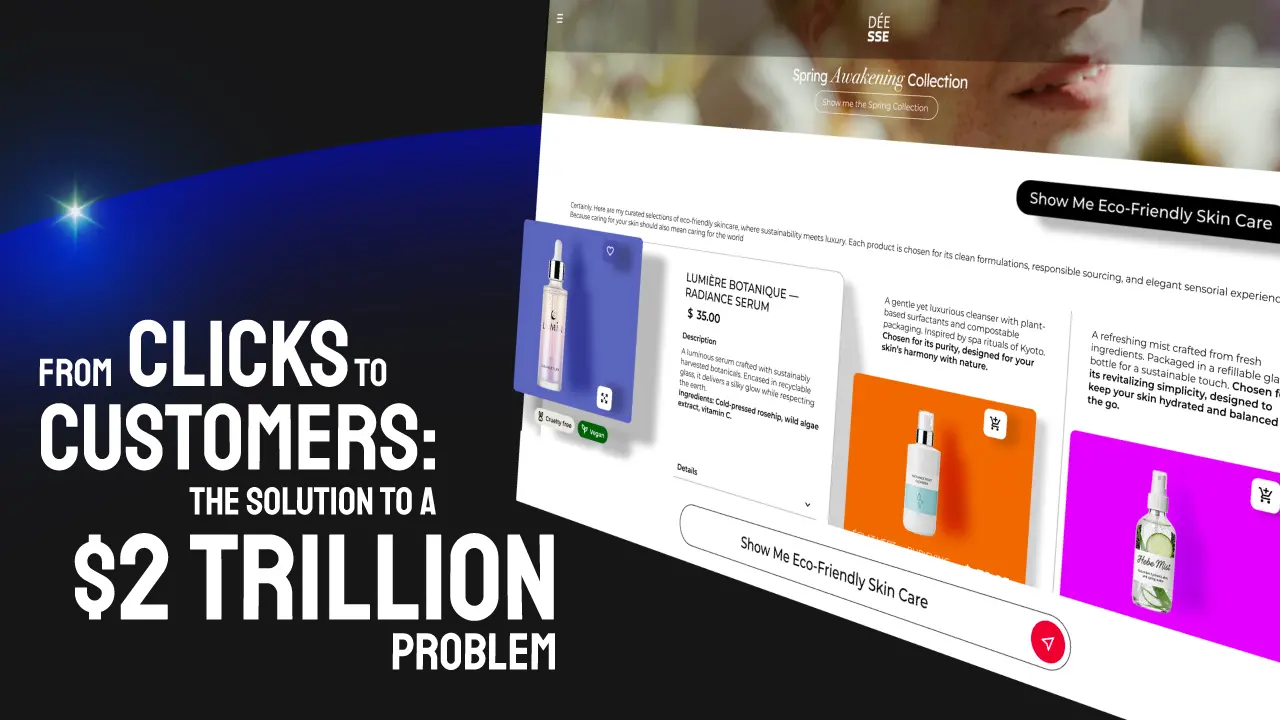
    That’s why we built DOME, the Dynamic Omni Media Experience.

    DOME isn’t a redesign. It’s a rethink.

    It wraps around your existing content, your product listings, FAQs, tutorials, documents, and transforms them into real-time, modular responses that adapt to every user.

    Your customers don’t want to scroll. They want to ask:

    • “Do you ship internationally?”
    • “Can I see this in another color?”
    • “What’s the difference between the plans?”

    And DOME responds, instantly, naturally.

    In 59 languages. As text, video, interactive cards, and even 3D. Across mobile, desktop, smart displays, and more.

    It feels less like browsing a website and more like having a conversation with someone who gets you.

    Why This Matters Now

    It’s not just about speed, it’s about relevance.

    DOME personalizes every interaction based on user behavior, intent, and even location. It remembers previous sessions. It adapts content format to fit the device and moment.

    This isn’t personalization as a marketing buzzword. This is content that speaks your customer’s language, literally and figuratively.

    And it works.

    • Bounce rates drop as users quickly find what they need.
    • Support inquiries shrink as self-service becomes intuitive.
    • Conversions rise, especially among mobile-first shoppers who no longer have to dig for answers.

    One customer is piloting DOME as a replacement for their traditional search bar, creating a faster, more conversational way for shoppers to discover what they’re looking for.

    The Takeaway

    You don’t need to rip and replace your website.

    You don’t need a $100K redesign.

    What you need is a digital layer that listens first and responds like a human.

    That’s what DOME does.

    It makes your site conversational, contextual, and ready for the way your customers already think.

    Because the future of digital isn’t more clicks. It has fewer barriers.

    Explore how DOME can work for your business at SparxWorks.com. Or just ask like your customers would.

  • Where AI Meets UX: Say Hello to DOME

    Where AI Meets UX: Say Hello to DOME

    I was talking to a small business owner the other day, let’s call him Sam.

    Sam’s a smart guy. Great product. Beautiful website. But he was frustrated.

    “People come to my site,” he said, “but they don’t stick around. My bounce rates are through the roof. I’ve tried videos, blogs, chat widgets… but it feels like my website is just sitting there, doing nothing for me.”

    Sound familiar?

    Here’s the thing, websites were designed 30 years ago for browsing (Windows, Icons, Menus, and Pointer), not for how we use the web today. We don’t want to click around. We don’t want to dig through tabs. We want answers now.

    That’s why we built DOME: The Dynamic Omni Media Experience.

    It’s like giving your website a superpower; suddenly, it actually thinks.

    • Your visitor asks a question, by voice or text.
    • DOME instantly responds with the right content: video, text, even 3D.
    • No endless clicks. No hunting. Just “ask → get → act.”

    Sam plugged DOME into his existing site, no rebuild, no drama. Within weeks:

    • Bounce rates dropped.
    • Leads went up.
    • His website went from “digital brochure” to digital assistant.

    Here’s my favorite part: DOME works for just about any industry, education, retail, wellness, you name it. And it doesn’t just make users happy; it makes Google happy too, because modular, AI-ready content is SEO gold.

    The internet is changing fast. Don’t let your website be the one still waving from 1995. DM for more info or to see a demo

    Just DOME it.

  • The Quiet Career Crisis: Retooling for AI

    The Quiet Career Crisis: Retooling for AI

    It’s easy to feel powerless when entire industries restructure seemingly overnight. In the past year, economic instability and automation have led to thousands of layoffs across sectors—from education and government to media and retail. And as AI takes center stage, many worry about being left behind.

    Especially for professionals in their 40s, 50s, and 60s, the fear isn’t just about losing income; it’s about becoming invisible in a system that increasingly favors digital fluency and tech agility.

    But here’s a different perspective: doing nothing in this moment is the biggest risk. Generative AI isn’t a threat—it’s a toolkit. And like all tools, its value depends on how you use it.

    From coaching others using AI-assisted insights, to launching micro-businesses, to simply landing a better job, this moment is ripe with possibility.

    Here’s how you can get started today:

    1. Use AI to Redesign Your Resume. Tools like ChatGPT or GrammarlyGO can help reframe your experience to match today’s hiring language. Ask it: “Rewrite my resume to highlight AI-readiness for marketing roles.”
    2. Generate Industry-Specific Cover Letters in Minutes. No more one-size-fits-all. Prompt AI to draft a tailored letter based on the job description.
    3. Upskill with AI-Assisted Learning. AI can tutor you. Literally. Use it to break down Python, prompt engineering, data storytelling, or product management into manageable lessons.
    4. Simulate Interview Practice. Prompt tools can emulate interviewers, offering role-specific questions and critique to build confidence.
    5. Create a Portfolio or Business Idea in Days. Use AI tools to draft your website copy, create brand assets, and even generate startup ideas.
    6. Launch a Side Hustle with AI Support. From writing newsletters to developing low-code apps, AI can help you ship faster and cheaper.
    7. Follow AI Trends and Curate Your Niche. Tools like Perplexity.ai or Feedly can keep you ahead. AI-curated content helps you build authority and relevance in a new space.
    8. Network Intelligently. Use LinkedIn’s AI tools to write thoughtful responses, summaries, and even introductions that open doors.
    9. Teach What You Learn. You don’t need to be an expert—just a few steps ahead. Sharing your learning publicly helps you attract opportunities.
    10. Mentor or Consult. There’s growing demand for people who understand both business and AI. Your existing domain knowledge paired with AI literacy is powerful.

    “AI can generate jobs and income. Don’t be afraid to change. Embrace it. Own it. There will be better times soon.”

    This isn’t just encouragement, it’s a call to action. Career reinvention isn’t just possible, it’s practical. And you don’t have to do it alone.

    With much love from your friends at SparxWorks. A company that cares about people.

  • Every Digital Interaction Is A Brand Interaction

    Every Digital Interaction Is A Brand Interaction

    A couple of years ago, I sat in on a cross-functional strategy session for a global brand. Marketing had just unveiled a campaign celebrating the company’s values: human-centric, transparent, and responsive. Meanwhile, IT was preparing to roll out a new chatbot experience—one that would route customers through 12 steps before they could talk to a real person.

    The disconnect was glaring.

    In many large organizations, the brand still lives in a slide deck. Strategy is crafted by one team. Execution is handled by another. And digital? That’s someone else entirely.

    But here’s the reality: Every digital interaction is a brand interaction. From an AR-powered retail experience to the way a service ticket is closed, every touchpoint communicates who you are. Brand is no longer a department—it’s a system.

    This is why modern enterprises are beginning to restructure, aligning creative strategy with operational and technical execution. Not by forming new committees, but by embedding brand logic into product design, customer experience, and even backend infrastructure. The leading edge of this shift? Integrated methodologies like our 5D approach at SparxWorks—where brand clarity is part of every phase, from Discovery to Deployment.

    True alignment happens when the brand isn’t just seen—it’s felt, at every level of interaction.

    Because in a world of fragmented attention and limitless choice, how you show up matters as much as what you say.

  • Why Businesses Struggle with AI Copilots—and How to Get It Right

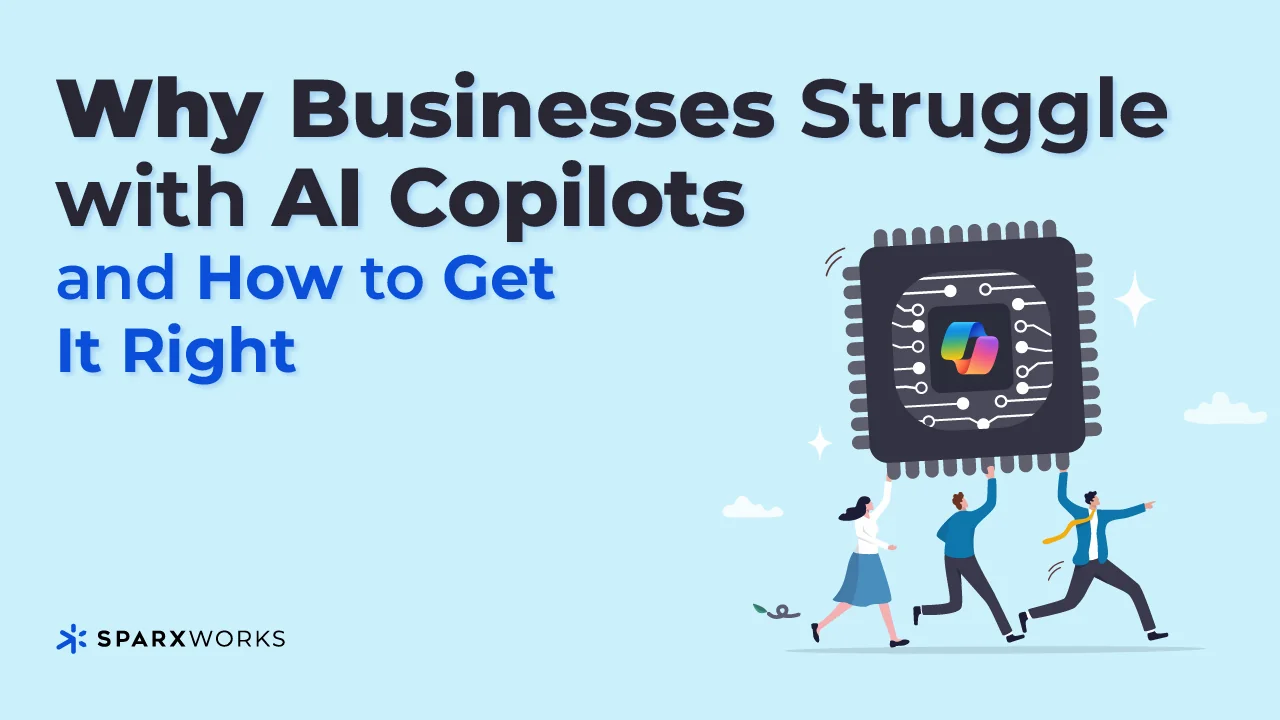
    Why Businesses Struggle with AI Copilots—and How to Get It Right

    AI copilots like Microsoft 365 Copilot are game-changers, promising to revolutionize the way businesses operate. Yet many companies are finding that integrating them into operations and services isn’t as seamless as advertised. Let’s talk about why—and how to overcome these challenges.

    One of the biggest hurdles is data preparation. Microsoft paints a picture of effortless AI adoption: connect your data, hit go, and watch the magic happen. But the reality is much more nuanced. Most organizations lack a clear roadmap for preparing their data, ensuring it’s clean, organized, and accessible for AI models. Without this foundation, copilots can’t deliver consistent, accurate results.

    Another challenge is complexity. While Microsoft offers tools to customize and connect copilots, navigating these capabilities requires more than basic technical know-how. Building effective prompts and customizing GPTs to meet unique business needs takes specialized skills. And let’s not overlook Microsoft’s tendency to oversimplify the process, which can leave executives blindsided when things don’t “just work.”

    Finally, there’s the issue of data security and oversharing. Recent reports show that copilots can unintentionally expose sensitive data. It’s a problem Microsoft is working on, but in the meantime, companies need robust governance to avoid unintended leaks.

    So, how do you tackle these challenges?

    1. Prioritize Data Readiness. Take a step back and assess your data. Is it structured, complete, and accessible? Invest in tools and workflows that clean and organize your data before introducing AI.
    2. Partner Strategically. Not every business has in-house expertise in prompt engineering or GPT customization—and that’s okay. Partnering with experts can accelerate your journey and minimize missteps. That’s why SparxWorks joined forces with PulseOne, a nationwide leader in Managed IT Services. Together, we’re helping businesses bridge these gaps, from data preparation to full-scale AI integration.
    3. Educate Your Team. Copilots require thoughtful implementation. Train your team to build better prompts and understand the nuances of AI behavior.

    The promise of AI copilots is real, but the path to unlocking their full potential requires careful planning. If you’re struggling with how to prepare your organization, let’s connect. SparxWorks and PulseOne are here to make the process as seamless—and impactful—as possible.

    I’d love to hear your feedback on Copilot implementations—what’s worked, what hasn’t, and any best practices (or lessons learned) along the way.

  • Launching Impact: Deployment in the 5D Methodology

    Launching Impact: Deployment in the 5D Methodology

    The hard work has been done coding is complete, functionality has been validated, and stakeholders are excited. But here’s the catch: deployment isn’t just about flipping a switch. It’s about ensuring your solution doesn’t just work but thrives in the real world.

    The Deployment phase is where your AI solution steps out of the lab and into production. For AI initiatives, this is where the rubber meets the road. It’s not just about launching; it’s about scaling and integrating AI seamlessly into workflows, products, or customer touchpoints without disruption.

    A successful deployment begins with a robust go-live strategy. This includes setting up monitoring systems to track performance, load testing to handle real-world traffic, and finalizing rollback plans—because even the most well-tested solutions need contingencies. Feedback loops also come into play here, capturing insights from users and stakeholders to inform post-launch optimizations.

    Consider, Deployment isn’t a one-and-done event. AI solutions often need continuous model retraining, updates to algorithms, and performance tuning as real-world data flows in. Clear documentation and training for end users and administrators are essential to sustaining momentum and driving adoption.

    At its core, Deployment is about ensuring your solution delivers the value it promised during the Define phase. It’s not just about a smooth launch but about laying the groundwork for long-term success—ensuring the AI system remains adaptable, scalable, and impactful in the face of change.

    Because here’s the truth: a great launch is only the beginning. How your AI solution evolves and performs after deployment is what truly defines its success.

    Are you ready for operations? Deployment is just the start. Share your strategies or lessons learned in the comments!

  • Building the Future: From Code to Impact in the Development Phase

    Building the Future: From Code to Impact in the Development Phase

    After months of discovery, definition, and design, your AI-powered solution is ready to move from ideas to execution. The vision is clear, the roadmap is set, and now it’s time to bring your innovation to life. Welcome to the Development Phase—the stage where ideas are translated into tangible solutions and where the promise of AI takes its first real steps toward delivering measurable impact.

    From a technical standpoint, this is where AI implementation becomes crucial. Teams must integrate machine learning models trained on historical and real-time data while designing workflows that balance automation with human oversight. Will the AI pipeline scale as the data volume grows? How do predictive models handle incomplete or delayed data? Addressing these challenges during Development ensures your system is robust, adaptable, and resilient under pressure.

    Beyond the code, rigorous testing is essential. Unit testing verifies individual components, while integration testing ensures the entire system works cohesively. For AI-specific solutions, real-world simulations and stress tests are critical to validate predictive accuracy and responsiveness. User acceptance testing (UAT) provides the final litmus test: does the interface enable logistics managers to reroute inventory quickly when disruption alerts are triggered?

    Finally, don’t overlook documentation—the unsung hero of long-term success. Clear and accessible documentation ensures that your AI platform remains maintainable, scalable, and ready for iterative growth as your business evolves. Think of it as an investment in future-proofing your innovation.

    The Development Phase isn’t just about writing code; it’s about creating systems that inspire trust, deliver seamless experiences, and build a foundation for transformative outcomes. By the end of this phase, you’re not just launching a product—you’re setting the stage for lasting innovation.

    What’s your experience with the Development Phase of AI implementation? Share your thoughts, lessons, or questions below!

  • Defining Success: Turning AI Ambitions into Actionable Plans

    Defining Success: Turning AI Ambitions into Actionable Plans

    Picture this: a C-suite roundtable buzzing with excitement over the promise of AI. The team just wrapped a robust Discovery phase, uncovering opportunities to automate operations, enhance customer experiences, or even reinvent an entire product line. Ideas are flowing, and the possibilities seem endless. But then comes the question no one wants to ask—”What’s next?” That’s where the Define phase steps in, turning lofty AI ambitions into a clear, actionable strategy.

    When it comes to leveraging AI, the Define phase is about more than just planning—it’s about focus. At this stage, you’re taking all those shiny ideas from Discovery and distilling them into a strategic roadmap. Think of it as translating enthusiasm into execution. The key? Clarity.

    For instance, say you’re implementing AI to streamline customer support. The Define phase is where you articulate the problem statement: Is the goal to reduce resolution time? Improve customer satisfaction scores? Or cut costs by X%? From there, you develop user personas to understand how AI will interact with your customers or employees, and you map out their journeys. Will it feel seamless to users, or will it create friction? These questions need answers now, not later.

    Scope management is also critical. AI projects are notorious for ballooning out of control—suddenly, that chatbot pilot becomes a full-blown omnichannel AI solution. The Define phase draws clear boundaries around what’s in and what’s out, avoiding the dreaded scope creep. And because AI thrives on measurement, we establish Key Performance Indicators (KPIs)—specific, measurable goals like reducing churn by 10% or increasing operational efficiency by 20%.

    Finally, we develop a roadmap with milestones and timelines, ensuring the team is aligned and prepared to handle challenges before they derail progress. Without this phase, you risk spinning your wheels—investing in AI without a tangible return on investment or clarity of purpose.

    The Define phase isn’t just a bureaucratic necessity; it’s the bridge between AI vision and execution. It ensures you’re not just adopting AI for the sake of it but creating real value. So, next time you’re eyeing that shiny new AI initiative, ask yourself: Have we truly defined what success looks like?

    How are you ensuring clarity and alignment in your AI initiatives? Share your experiences or challenges in the comments below!

  • Finding the Right AI Opportunities: A Conversation About Discovery

    Finding the Right AI Opportunities: A Conversation About Discovery

    The other day, I was talking with Frank, our COO, about how companies are approaching AI. He shared something that stuck with me: “The biggest challenge isn’t implementing AI—it’s figuring out where it will actually make a difference.” That’s exactly what the Discovery phase is all about.

    Discovery isn’t about diving headfirst into AI tools or building models just for the sake of it. It’s about stepping back and asking the right questions.  We discussed a client we worked with recently—a retail company eager to leverage AI to personalize customer experiences. Initially, they thought they needed to overhaul their entire data infrastructure. But by doing a  Discovery, we uncovered that the real opportunity wasn’t more data—it was better data. Their existing data was underutilized, and by focusing on streamlining how it was structured and accessed, they could deliver personalized recommendations faster without a massive rebuild.

    This is why Discovery is so powerful. It’s where we dig deep—conducting stakeholder interviews, analyzing user behaviors, and mapping out workflows—to uncover the real opportunities and avoid unnecessary distractions. Whether it’s identifying bottlenecks in processes or finding innovative ways to connect with users, Discovery ensures that AI investments align with business goals and deliver measurable ROI.

    Frank put it perfectly: “It’s about being intentional, not just innovative.” And he’s right. When Discovery is done right, you don’t just use AI—you unlock its full potential.

    So, what challenges or opportunities could Discovery uncover for your business? Let’s find out.