Tag: Google

  • Trust and Confidence: The Cornerstones of AI Adoption in Business

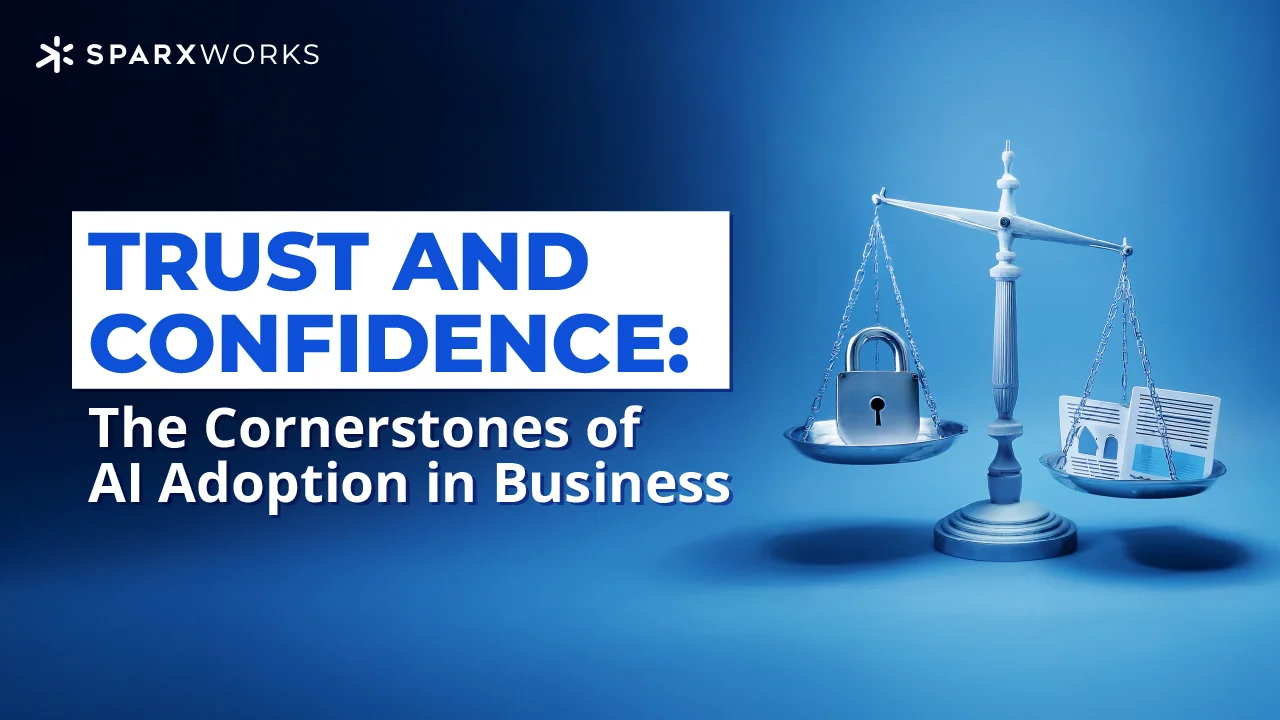
    Trust and Confidence: The Cornerstones of AI Adoption in Business

    The rapid expansion of AI solutions presents businesses with an incredible opportunity to enhance efficiency, decision-making, and customer engagement. However, as AI models become more powerful, businesses are rightly asking: Can we trust these platforms with our data? Confidence in data privacy isn’t just a nice-to-have—it’s essential for AI adoption at scale.

    Recent developments in AI, including the rise of models like DeepSeek and Gronk 3, offer exciting alternatives to OpenAI, Google, and Anthropic. But they also raise critical concerns: Who owns and controls these AI platforms? As AI becomes more integrated into business operations, the entity behind the technology—and their incentives—matters more than ever.

    Use case: The Risks of Data Exploitation: Lessons from Mobile Gaming

    To understand the potential risks of AI adoption, we only need to look at another digital revolution: mobile gaming. Many free-to-play games have evolved from simple entertainment into data-harvesting machines. Instead of just monetizing through ads or in-game purchases, some of these apps now track users across the internet, collecting behavioral data to sell to third parties.

    Even more concerning is how these companies circumvent regulations. A common tactic involves shifting app ownership to countries with weaker enforcement, like Cyprus, making it harder for regulators to hold them accountable. These business models prioritize surveillance over user experience, leading to justified concerns about privacy violations.

    The AI industry faces a similar challenge. If businesses entrust their customer data, intellectual property, or proprietary insights to an AI model, they need absolute confidence that it won’t be harvested, sold, or exploited—especially by entities operating under unclear jurisdictional oversight.

    Why AI Ownership Matters More Than Ever!

    AI platforms are not just tools; they are gateways to business intelligence. When evaluating AI models, companies must consider:

    1. Who owns the platform? A company’s data policies, legal jurisdiction, and governance structure determine how your information is handled. AI providers with opaque ownership or foreign control could pose compliance risks, particularly under data protection laws like GDPR and CCPA.
    1. What is their business model? Is the AI platform funded by advertising, data sales, or surveillance-driven monetization? If a product is “free” or significantly cheaper, businesses must ask: What’s the real cost?
    1. Can you trust their commitments to privacy? Public AI companies like OpenAI, Google, and Anthropic, while not perfect, have reputations to maintain and clear regulatory accountability. Comparatively, lesser-known or newer AI providers may have fewer safeguards or be more susceptible to outside influence.

    The Safer Bet for Businesses: Established AI Players

    While competition in AI is valuable, businesses can’t afford to take risks with their sensitive data. This is why platforms from OpenAI, Google, and Anthropic—despite their flaws—remain a safer bet than many emerging alternatives or Meta’s AI offerings.

    • These companies operate under strict scrutiny from regulators, investors, and enterprise customers, reducing the risk of unexpected policy shifts.
    • Their business models are less reliant on aggressive data monetization, unlike companies with ad-driven revenue models.
    • They provide clearer compliance and security measures that align with corporate data governance standards.

    For businesses looking to adopt AI without compromising privacy, compliance, and control, trusting the right AI partner isn’t just important—it’s non-negotiable.

    The AI revolution is here, but not all AI platforms are created equal. Businesses must prioritize trust and confidence in data privacy over the allure of new, untested models. Without these assurances, AI adoption could pose more risks than rewards.

    Before integrating an AI solution, ask the hard questions: Who controls it? Where is your data going? What’s the business model? In a world where data is more valuable than ever, ensuring its protection isn’t just a best practice—it’s a competitive advantage.

  • 9 Key Benefits of AR

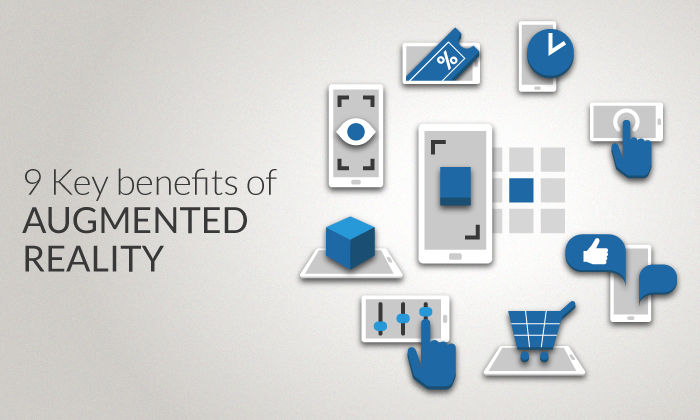
    9 Key Benefits of AR

    For the past three years I have been focused on augmented and mixed realities and to a lesser degree on virtual reality. I have conducted scores of demos, spoken at various conferences and immersed myself in these technologies. These experiences have led me to the following observations about the benefits of AR.

    1. Customized Choices: personalization is essential for marketing and media now and AR provides it.

    2. Engagement: AR offers a deep level of engagement visually and interactively. It is a must for retailers since it can provide just in time information at the point of sales.

    3. Real Time: this is not new, but it is different in that we can combine digital and real-world content in real time.

    4. Ability to Visualize Products: for retail and marketing this is essential for the future and growth of electronic content. You can see items you wish to buy in advance and even place them in your home or at the location where they would be used. This opens multiple possibilities for interior design, landscaping, renovation projects, and so much more.

    5. Interactivity: AR offers new choices, users can interact with digital content and the real world at the same time.

    6. Tracking: AR makes it possible for objects and print media to deliver the same or even better analytics than regular apps.

    7. Recognition: the use of visual recognition technologies helps businesses connect in a more personal way with their customers, while reinforcing their brand marks and presence.

    8. Education and Training: learning in general will never be the same. AR provides a high level of engagement; it is also social which is conducive to collaboration and team work or play.

    9. Call for Action: AR is immersive and makes it easy to guide / take a user to a call for action, like making a purchase, learning more about something, etc.


    AR and XR will continue to evolve at a fast pace. This means more choices, more features, and amazing possibilities for brands and companies, while delivering a superior engaging experience to end users.

    If you want to learn more about how AR, MR, and VR are impacting the way companies do business please join me at Digital Hollywood this October 16 at 10AM for a fantastic session www.digitalhollywood.com/DHFall2018.html. I will be joined by leading experts from Accenture, MediaMonks, Epson, Ryot, and Holmes Weinberg. We will distribute free to all session attendees a special PowerPoint containing forecasts, data, and information about AR. You can also check my blog for other XR articles and information.

  • Don’t Be Left Behind!  7 Tips to Develop an Extended Reality Strategy

    Don’t Be Left Behind! 7 Tips to Develop an Extended Reality Strategy

    I remember that in the late 90’s everyone realized they needed to have a website. Unfortunately for some of the largest businesses it was too late. Many big retail stores failed to recognize the impact of the web for business. As a result of this lack of vision, chains like Bullocks, The Broadway, Robinsons, etc. closed down while newcomers like Amazon gained momentum every month. We all know the rest of the story.

    We are now once again at one of those key moments in history where a significant leap in technology is happening.  If you don’t believe it just read the news. Apple, Google, Amazon, Facebook, and Microsoft are all investing heavily in augmented and virtual reality. Remaining retail giants like Walmart are also investing in these new technologies. Big brands, like Coca Cola, Pepsi, BMW, Audi, Ikea, Game of Thrones, L’Oréal, The Walking Dead, and many more are already developing AR and VR strategies. It is not a coincidence or a fad.

    So the big question is what are you doing for your brand, products, or services? You don’t want to be the next Bullocks or the IBM that let an unknown Microsoft become one of the most powerful companies in the world, right? Of course not!  But before you enthusiastically dive into XR, you must first determine which option, (AR) augmented reality, (VR) virtual reality, or (MR) mixed reality is the right fit for your business.  It depends on your products and services, and what is most effective with your audience. The answer could even be all three.

    Here are some simple tips you should consider as a starting point:

    1. Review your business goals for the next 3 to 5 years.

    2. Get information on all aspects of XR. If you don’t have someone on staff that can provide this knowledge, partner with a company or consultant that can help guide you. Consider what is possible now and in the future.

    3. Assemble a multi-disciplinary team that includes expertise in your business, competition, marketing, “XR”, creative, and financial business modeling.

    4. Create a plan that addresses current opportunities but allows for growth since  these technologies are going to be evolving over the next few years.

    5. Don’t stop doing what you are doing; just add ‘XR” as part of your comprehensive sales and marketing plan.

    6. Balance current market needs with paving the road for the future.

    7. Execute, measure, analyze, and adapt your strategy to the changing nature of technology.


    Take these steps and make sure you not only ensure the longevity of your business, but stake out a future for growth.  Don’t get left behind. Explore what extended reality can do for you!


    If you want to learn more about this topic, and get a jump into XR, you can meet me and many other XR experts at Digital Hollywood this coming May 22 through May 24 here is a link to the event http://www.digitalhollywood.com/DHSpring2018.html

    I will be moderating a panel on this very subject May 22, at 10AM. Here is a link to my session http://www.seminar.dhsessions.com/dh18springtuesone.html (Full disclosure, I do have an Augmented Reality company, but I am not at the conference to sell, but to share information and facilitate partnerships. I am always happy to answer questions and to share what I know.)

    It is really important that you develop a sound strategy in order to take full advantage of this amazing leap in technology. I’ll be posting other information about XR on my blog every other week. Hope to see you at the conference!