
Tag: MARKETING

  • 5 key tips to make sure your augmented reality initiative is a success

    5 key tips to make sure your augmented reality initiative is a success

    Let me start by saying that as a gamer at heart I love VR. However from a creative standpoint, real world application, and overall potential I am convinced that augmented reality (AR) provides a much bigger and interesting opportunity.

    Both AR and VR concepts have been around far longer than most people imagine. VR has been viewed for decades as the future, particularly for games, simulations, and at one point, to drive the creation of virtual worlds. For gaming and simulations VR can deliver a rich experience. But some of the old challenges still remain—limited social interaction, expensive to produce cool applications, risky ROI (the end user installed base is not as big as one would imagine and it is fragmented—accessed by multiple hardware systems).

    AR on the other hand is more social by nature because you don’t leave the real world. You can spend more screen time with it because you are not isolated. And in many cases you can use already existing devices to use the technology (2 billion mobile devices world wide). Don’t get me wrong. There are still many challenges to conquer, but there are also many more potential immediate applications for the technology.

    If you are interested in using AR for your business, products, promotions, etc. AR can definitely be a game changer for you. But there are some practical things you should keep in mind before you decide how to use this new technology.

    1. Like any media it all starts with a solid idea, objective—a clear vision of what you want to call attention to, or the point you want to make. Yes, writing is a big part of it, just like with movies, games, and any story.

    2. Consider that AR and mixed reality (MR) combine the real world with virtual elements. Planning, staging and particular attention to the user experience and user interface are super important. Simple is better.

    3. Think about it in three parts. First, setting. Next, context of the experience you are going to offer. And last, action or interaction you want the user to take during or towards the end of your AR experience.

    4. There are over 300 companies (and growing) dedicated to AR, but they are not all the same. Some companies provide core technologies and are essentially B2B businesses—oriented towards developers or publishers. Other companies specialize in vertical markets using other company’s technologies to deliver AR, and some companies are development teams, very similar to game or mobile applications development studios.

    5. Don’t forget, analytics are essential. The web, and mobile industry have shown the value and power of analytics. Analytics make it possible to improve user experience, fix defects, and add new features based on evidence and real-time feedback.


    There are of course other factors to consider, but you don’t have five hours to read now, right? To learn more about how North South Studios can help you use AR to extend your brand, you can contact me at 310-318-6156. Or join me and other AR experts at my upcoming panel at the Media Summit http://www.digitalhollywood.com/MediaSummit2017.html in New York this coming March 7 at 3.30PM
  • Thinking of Doing a Soft Launch for Your Mobile Game or App?

    Thinking of Doing a Soft Launch for Your Mobile Game or App?

    One of the great things about creating products and services is that every day is a learning experience. I love that about my job. I learn from our clients and their initiatives. I learn from my team, the experts and the interns. I have learned to appreciate that everyone has something to offer. I guess it’s part of growing (That’s a lesson that I started learning long before this, but truthfully it took me a while to master it.)

    I recently released a new mobile game. It’s a puzzle game named “Tolaca Rocks.” While this is not the first game I have released (been making games for a couple of decades), this one was special. Perhaps because it was the first direct release from my current company, with a very young team full of hope in Peru, South America.

    The game is not a commercial success, at least not yet, but it has helped us learn a lot about how to compete against larger budgets and companies that seem to have unlimited resources. We learned that the will to succeed, and a team’s dedication to the task, matters a lot. This is not a complete surprise since human capital is the most valuable asset of any company—when a talented group works together to achieve a goal, the goal is more accessible.

    I wanted to share what I learned about how to soft launch a game successfully, particularly when you need to do it with limited resources. Find below five easy steps for a best practice soft launch.

    Step One

    • Leverage friends and family, your immediate community.
    • Use all the free and low cost tools like social media, marketplaces, other free tools.

    Step two

    • Learn from your players.
    • Even a small sampling, let’s say 1,000 players can provide a good sampling of performance and areas to improve.
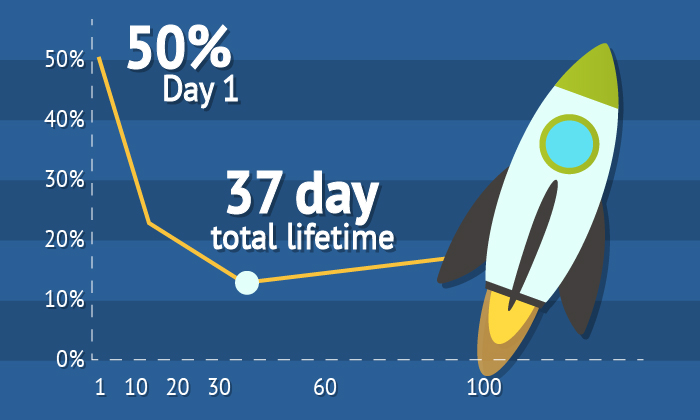
    • Pay attention to metrics, retention; day one, first week, first month are classic examples. Observe your conversion rate. It can help you project what you need to spend, or can help you decide next steps if your marketing budget is limited.
    • Carefully review performance, fun factor, difficulty, user interface, and overall user experience.

    Step Three

    • Survey your players whenever possible
    • Look for markets that have affinity for or need for your type of app or game.
    • If budget is limited, consider cost efficiencies.
    • Make sure that your OS requirements are correct.

    Step Four

    • Set up goals and monitor them.
    • Make adjustments to your game or app and release them as soon as possible. Don’t be concerned about updates. After all, this is a soft launch.

    Step Five

    • Once you have a proven build of your game or app you are ready for a hard launch.
    • Remember what you learned during the soft launch.
    • Be consistent, review analytics, pay attention to user satisfaction.
    • If possible, have an active community manager.


    You can learn more about my game “Tolaca Rocks” at www.tolacarocks.com. It’s free to play, so give it a try. I hope you find this information helpful, I will cover hard launch lessons learned in another post in the not too distant future.

    And speaking of the future, I will be moderating a Video Innovation panel at http://www.digitalhollywood.com  this Spring, My panel is on May 6, but I will be at the conference May 4, and 5. Look me up if you have questions about launching mobile applications or you need a game developer. I will also be demoing our latest samples for augmented reality. You can learn more about me and my company at www.northsouthstudios.com