Tag: OpenAI

  • Future-Proof Your Website: What Is GEO and Why It Matters

    Future-Proof Your Website: What Is GEO and Why It Matters

    For 35 years, websites have been built for human navigation: menus, tabs, categories, clicks. SEO, search engine optimization, was the system we used to get those human visitors in the door.

    But AI browsers like Comet and Operator are changing the rules. Instead of sending a user to a list of links, these browsers act as agents:

    • Comet lets you highlight text or ask a question in its sidebar, then delivers summaries, answers, and citations instantly, without leaving the page.
    • Operator (expected from OpenAI) will go further, executing multi-step tasks, comparing products, and proactively offering insights during your browsing session.

    In this environment, SEO’s “rank for keywords” approach matters far less. What matters is whether AI systems can understand, trust, and use your content in the exact moment a user needs it.

    That’s where GEO, Generative Experience Optimization, comes in.

    What is GEO?

    Generative Experience Optimization (GEO) is the evolution of SEO for the AI-first internet. Instead of optimizing for search engines that display a list of links, GEO optimizes for AI systems, like Comet, Operator, and other agentic browsers that read, summarize, synthesize, and act on your content in real time.

    With GEO, the goal isn’t just to be found, it’s to be understood, trusted, and directly used by AI models during a conversation or task execution. GEO shifts the focus from visibility to usability in the AI era:

    1. Clear Topic, Intent, Content Alignment – Content is structured not just by subject, but by the intent behind user queries. This ensures AI understands the “why” of a question, not just the “what,” allowing it to deliver more relevant answers.
    2. Semantic Match over Keyword Density – Instead of relying on exact keyword repetition, GEO makes content machine-readable through metadata, context-rich descriptions, and vectorization. AI retrieves based on meaning, so even varied phrasings or synonyms still connect to your content.
    3. Contextual Answer Extraction – Content is modularized into discrete, self-contained blocks so AI can pull precise, citation-ready answers, whether text, video, images, audio, or interactive elements, directly into the user’s flow without extra clicks.

    Why DOME Is GEO Ready

    Most websites scatter information across multiple pages. AI browsers must piece it together, often missing context or depth.

    A DOME-powered website, however, is different because DOME is AI-native. From its foundation, DOME was designed to work the way AI systems think and process information, not the way humans click through menus. It is optimized for GEO from the start, meaning every technical and structural decision supports AI-first comprehension and delivery.

    With DOME, you get:

    • Modular Content Structure – Every piece of content is broken into indexed, vectorized modules.
    • AI-Optimized Metadata – Each module is tagged by topic, sub-topic, and intent, making it easy for AI to match queries.
    • Omni-Format Output – DOME can serve text, video, audio, 3D, or interactive diagrams, whichever format answers the query best.
    • No Navigation Barriers – Users (or AI agents) don’t have to click through menus; DOME delivers exactly what’s asked for, instantly.
    • AI-Agent Ready – DOME’s modular, metadata-rich architecture allows AI agents like those in Comet and Operator to instantly retrieve, understand, and act on your content, making it a natural partner for task-executing, conversational browsing.

    Because DOME is built from the ground up for AI compatibility, it doesn’t have to “retrofit” for GEO; it’s already fluent in it.

    The Advantage

    When Comet or Operator encounters a DOME-powered site, it’s not crawling a series of static pages; it’s accessing a real-time, AI-readable knowledge base. That means:

    • Faster, more accurate answers for the user.
    • Higher likelihood that your content is cited (and linked) in AI responses.
    • Better engagement, even if users never “visit” in the traditional sense.

    In the AI browser era, visibility comes from comprehension, not clicks.

    SEO got you on page one. GEO makes you the answer.

    DM me or visit our website www.SparxWorks.com for more information.

  • Behind the Algorithm: Confronting the Real Risks of Biased AI

    Behind the Algorithm: Confronting the Real Risks of Biased AI

    At SparxWorks, our passion for leveraging emerging technologies is matched by our commitment to ethical standards and unbiased AI solutions. Over the past decade, the rise of social media and mobile devices has brought incredible convenience and significant challenges. As we integrate AI into our personal and professional lives, our priority is ensuring that these powerful tools serve everyone fairly, without hidden agendas or skewed information.

    The risk of individuals or groups influencing AI outputs to align with their political or personal views is very real. That is why SparxWorks follows a strict, transparent framework to ensure our solutions minimize bias and provide accurate, trustworthy results.

    Below are five key practices we uphold at SparxWorks to select the right AI models and avoid biased services:

    1. Conduct Thorough Due Diligence

    Before we incorporate or recommend any AI service, our team at SparxWorks performs a comprehensive vetting process.

    • Founders & Leadership Research: We examine the backgrounds of the AI provider’s leadership, scrutinizing past affiliations, sources of funding, and public statements.
    • Client Feedback Analysis: We research real-world case studies and user reviews to gain a deeper understanding of each model’s performance and potential pitfalls.

    2. Demand Transparency in Data and Training Methods

    We know that an AI tool is only as good as the data it is built upon. At SparxWorks, we require complete transparency from our AI partners regarding their data sourcing, labeling, and quality checks.

    • Comprehensive Documentation: We recommend requesting that AI providers clearly outline how data is collected, cleaned, and used in model training to ensure transparency and accountability.
    • Third-Party Audits: Whenever possible, we suggest seeking AI providers that engage unbiased, third-party organizations to assess their data and models. This adds an extra layer of credibility.

    3. Evaluate the Model’s Decision-Making Process

    Understanding why a model makes certain recommendations is vital. At SparxWorks, we stress model explainability to detect and mitigate any hidden biases.

    • Explainable AI: We ask for clear explanations of how inputs lead to specific outputs or decisions.
    • Continuous Monitoring: We establish real-time dashboards that monitor the model’s performance, flag unusual results, and trigger reviews whenever anomalies occur.

    4. Implement Human Oversight

    Even the most advanced AI cannot replace the ethical judgment and contextual knowledge that human experts bring to the table.

    • Diverse Review Teams: We recommend forming multidisciplinary committees with varied perspectives to evaluate AI decisions, ensuring more inclusive and balanced outcomes.
    • Active Testing Scenarios: Regularly conducting test runs using real-world and hypothetical situations can help identify and address potential biases before they impact decision-making.

    5. Foster a Culture of Ethical AI Use

    Beyond technical best practices, we emphasize an organizational culture that respects privacy and fairness at every stage of AI development and deployment.

    • Company-Wide Standards: To ensure responsible AI deployment, we recommend establishing clear, documented policies that define the ethical use of AI, data handling, and accountability measures.
    • Training & Workshops: Regularly hosting internal training sessions can help keep teams informed about emerging risks and best practices in AI ethics, fostering a culture of responsible AI use.
    • Open Door Policy: We actively encourage our staff to voice concerns or report potential biases in our systems, ensuring a transparent and collaborative environment.

    Conclusion

    In a world where AI’s influence grows daily, sparing no effort to ensure fairness and transparency is crucial for businesses and individuals alike. At SparxWorks, we believe that thorough vetting, continuous monitoring, human oversight, and a strong ethical culture are non-negotiables when it comes to delivering unbiased AI solutions.

    As new AI innovators like DeepSeek and Gronk3 emerge, our guiding principles remain the same: analyze carefully, act responsibly, and always prioritize honesty and integrity. Through this unwavering commitment, we aim to harness AI’s transformative power and create a future where technology truly serves the greater good.

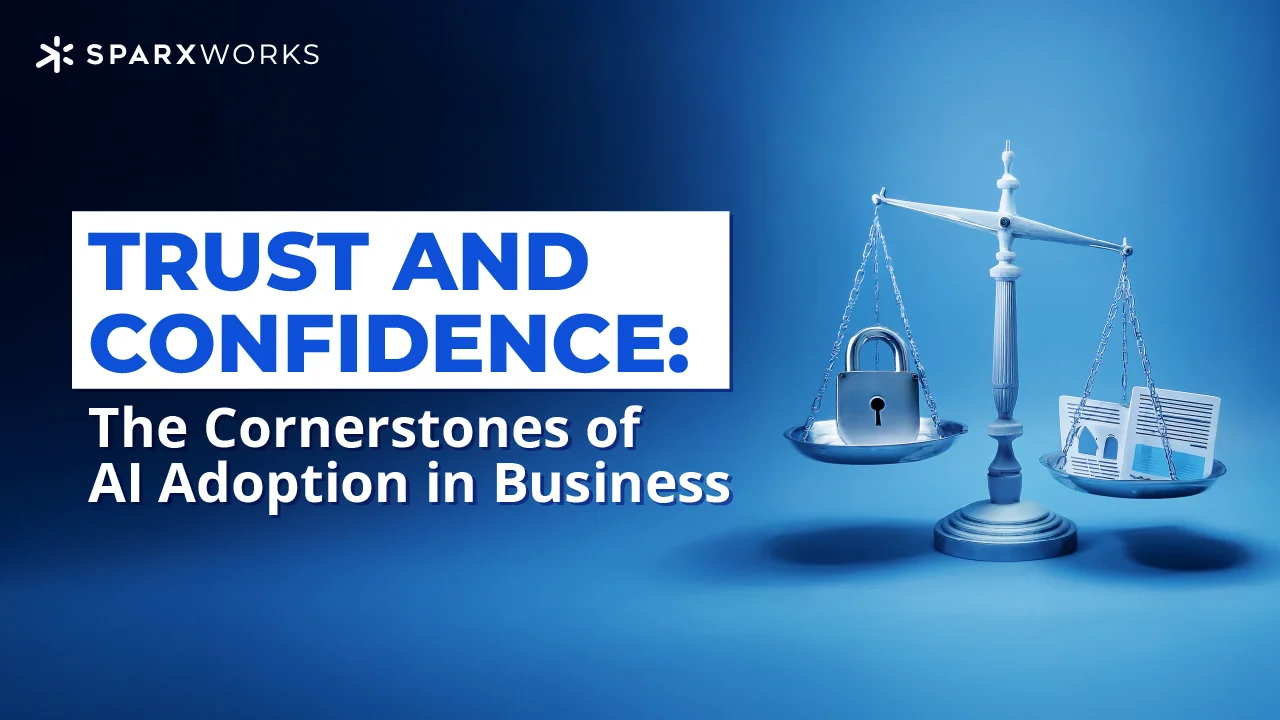
  • Trust and Confidence: The Cornerstones of AI Adoption in Business

    Trust and Confidence: The Cornerstones of AI Adoption in Business

    The rapid expansion of AI solutions presents businesses with an incredible opportunity to enhance efficiency, decision-making, and customer engagement. However, as AI models become more powerful, businesses are rightly asking: Can we trust these platforms with our data? Confidence in data privacy isn’t just a nice-to-have—it’s essential for AI adoption at scale.

    Recent developments in AI, including the rise of models like DeepSeek and Gronk 3, offer exciting alternatives to OpenAI, Google, and Anthropic. But they also raise critical concerns: Who owns and controls these AI platforms? As AI becomes more integrated into business operations, the entity behind the technology—and their incentives—matters more than ever.

    Use case: The Risks of Data Exploitation: Lessons from Mobile Gaming

    To understand the potential risks of AI adoption, we only need to look at another digital revolution: mobile gaming. Many free-to-play games have evolved from simple entertainment into data-harvesting machines. Instead of just monetizing through ads or in-game purchases, some of these apps now track users across the internet, collecting behavioral data to sell to third parties.

    Even more concerning is how these companies circumvent regulations. A common tactic involves shifting app ownership to countries with weaker enforcement, like Cyprus, making it harder for regulators to hold them accountable. These business models prioritize surveillance over user experience, leading to justified concerns about privacy violations.

    The AI industry faces a similar challenge. If businesses entrust their customer data, intellectual property, or proprietary insights to an AI model, they need absolute confidence that it won’t be harvested, sold, or exploited—especially by entities operating under unclear jurisdictional oversight.

    Why AI Ownership Matters More Than Ever!

    AI platforms are not just tools; they are gateways to business intelligence. When evaluating AI models, companies must consider:

    1. Who owns the platform? A company’s data policies, legal jurisdiction, and governance structure determine how your information is handled. AI providers with opaque ownership or foreign control could pose compliance risks, particularly under data protection laws like GDPR and CCPA.
    1. What is their business model? Is the AI platform funded by advertising, data sales, or surveillance-driven monetization? If a product is “free” or significantly cheaper, businesses must ask: What’s the real cost?
    1. Can you trust their commitments to privacy? Public AI companies like OpenAI, Google, and Anthropic, while not perfect, have reputations to maintain and clear regulatory accountability. Comparatively, lesser-known or newer AI providers may have fewer safeguards or be more susceptible to outside influence.

    The Safer Bet for Businesses: Established AI Players

    While competition in AI is valuable, businesses can’t afford to take risks with their sensitive data. This is why platforms from OpenAI, Google, and Anthropic—despite their flaws—remain a safer bet than many emerging alternatives or Meta’s AI offerings.

    • These companies operate under strict scrutiny from regulators, investors, and enterprise customers, reducing the risk of unexpected policy shifts.
    • Their business models are less reliant on aggressive data monetization, unlike companies with ad-driven revenue models.
    • They provide clearer compliance and security measures that align with corporate data governance standards.

    For businesses looking to adopt AI without compromising privacy, compliance, and control, trusting the right AI partner isn’t just important—it’s non-negotiable.

    The AI revolution is here, but not all AI platforms are created equal. Businesses must prioritize trust and confidence in data privacy over the allure of new, untested models. Without these assurances, AI adoption could pose more risks than rewards.

    Before integrating an AI solution, ask the hard questions: Who controls it? Where is your data going? What’s the business model? In a world where data is more valuable than ever, ensuring its protection isn’t just a best practice—it’s a competitive advantage.

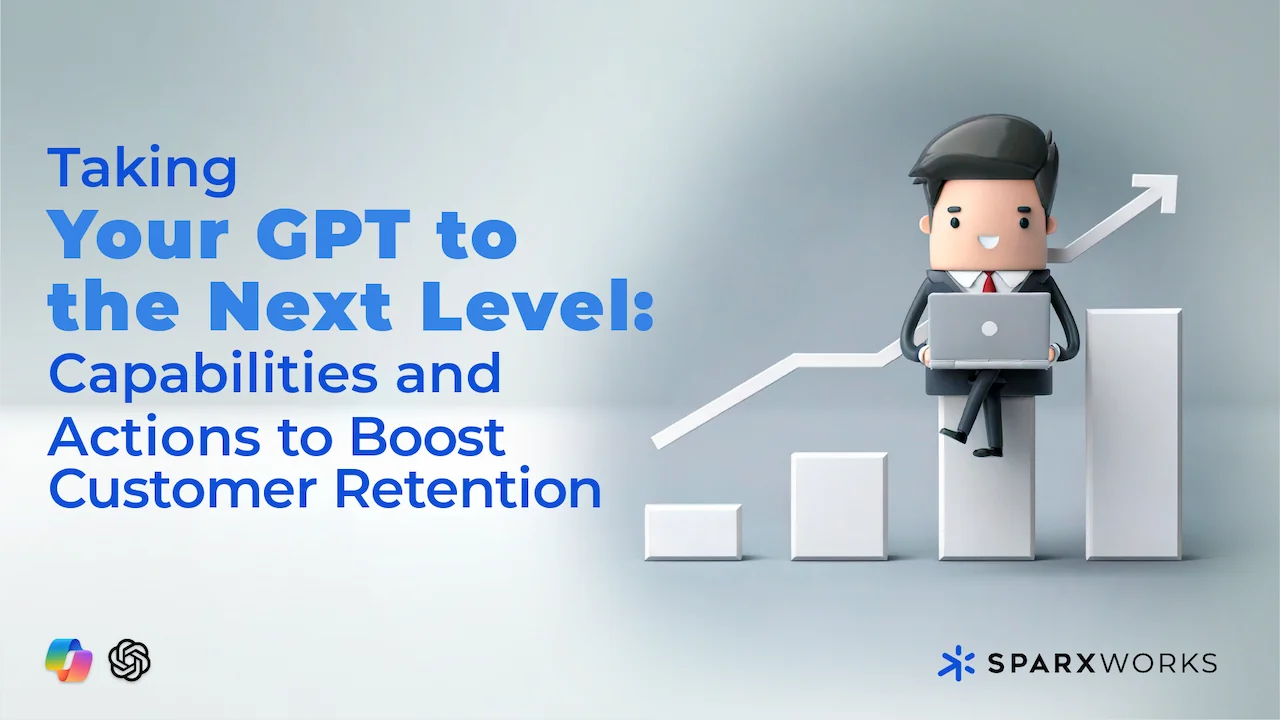
  • Part 2 – Taking Your GPT to the Next Level: Capabilities and Actions to Boost Customer Retention

    Part 2 – Taking Your GPT to the Next Level: Capabilities and Actions to Boost Customer Retention

    In my last article, “Easy step by step instructions to build your own AI chatbot to increase customer retention” we explored how to set up a GPT for creating polished, on-brand customer materials. Now, let’s take it a step further by leveraging the “Capabilities” and “Actions” features in the GPT builder interface to amplify customer retention strategies.

    These features are designed to enhance your GPT’s functionality, enabling it to perform tasks, analyze data, and respond in ways that directly impact customer engagement and satisfaction. Using the same customer retention use case from my January 16 post, “AI Made Easy: Your First Steps to Building a GPT for Work or Innovation” we’ll explore how these tools can take your AI assistant from useful to indispensable.

    Step 1: Understanding the “Capabilities” Feature

    Capabilities define what your GPT can “know” and “do.” By tailoring these settings, you empower your GPT to access and use the information it needs to deliver value in customer-facing tasks.

    Enhancing Capabilities for Customer Retention:

    1. Access to Customer Data:
      • Integrate your GPT with your CRM systems (e.g., Dynamics 365 or Salesforce) to access customer profiles, purchase histories, and communication records.
      • Use this data to tailor responses, making every interaction feel personal and relevant.
    2. Knowledge Base Integration:
      • Add FAQs, product documentation, and service guidelines to your GPT’s knowledge base.
      • For example, your GPT can provide instant answers to customer questions, reducing wait times and improving satisfaction.
    3. Real-Time Insights:
      • Connect your GPT to business intelligence tools (like Power BI) to retrieve and analyze customer data trends.
      • Use these insights to craft targeted proposals or recommend proactive solutions to recurring customer issues.

    Step 2: Leveraging the “Actions” Feature to Boost Retention

    Actions enable your GPT to perform specific tasks, such as creating documents, sending emails, or scheduling follow-ups. These features help automate and streamline workflows.

    Actions to Improve Customer Engagement:

    1. Automated Follow-Ups:
      • Configure your GPT to draft follow-up emails after meetings or customer interactions.
      • Example: “Send a follow-up email to [Customer Name] summarizing the discussion and including next steps.”
    2. Dynamic Document Creation:
      • Use pre-configured templates for proposals, RFPs, and marketing materials.
      • Your GPT can automatically pull customer-specific data from your CRM and format it into a polished document.
    3. Task Management and Reminders:
      • Integrate with Microsoft Teams or Outlook to create and assign tasks based on customer requests.
      • Example: “Remind the sales team to check in with [Customer Name] on [Date] regarding their recent inquiry.”
    4. Live Customer Support Assistance:
      • Equip your GPT to provide real-time guidance during customer interactions.
      • Example: During a Teams call, your GPT can suggest relevant solutions or provide quick access to product details based on the discussion.

    Bringing It All Together

    By combining Capabilities and Actions, you can transform your GPT into a full-scale Customer Retention Assistant. Let’s revisit the customer retention goals from my January 9 article and see how these features come to life:

    1. Creating High-Impact Customer Materials:
      Your GPT pulls customer data, applies templates, and generates polished proposals or follow-ups automatically.
    2. Meeting Preparation and Insights:
      It summarizes past interactions, highlights pain points, and suggests targeted questions, ensuring your team is always prepared.
    3. Faster, More Thoughtful Responses:
      With access to your knowledge base and CRM, your GPT drafts empathetic, personalized responses, helping you resolve issues efficiently.

    What’s Next?

    To fully unlock the potential of these features, start small. Choose one workflow—such as automated follow-ups—and test how well your GPT performs. Refine its capabilities and actions based on real-world feedback, then scale up to more complex tasks.

    By customizing capabilities and actions, your GPT doesn’t just support your team—it becomes an essential part of your customer retention strategy.