Tag: SOFTWARE DEVELOPMENT

  • Thinking of Doing a Soft Launch for Your Mobile Game or App?

    Thinking of Doing a Soft Launch for Your Mobile Game or App?

    One of the great things about creating products and services is that every day is a learning experience. I love that about my job. I learn from our clients and their initiatives. I learn from my team, the experts and the interns. I have learned to appreciate that everyone has something to offer. I guess it’s part of growing (That’s a lesson that I started learning long before this, but truthfully it took me a while to master it.)

    I recently released a new mobile game. It’s a puzzle game named “Tolaca Rocks.” While this is not the first game I have released (been making games for a couple of decades), this one was special. Perhaps because it was the first direct release from my current company, with a very young team full of hope in Peru, South America.

    The game is not a commercial success, at least not yet, but it has helped us learn a lot about how to compete against larger budgets and companies that seem to have unlimited resources. We learned that the will to succeed, and a team’s dedication to the task, matters a lot. This is not a complete surprise since human capital is the most valuable asset of any company—when a talented group works together to achieve a goal, the goal is more accessible.

    I wanted to share what I learned about how to soft launch a game successfully, particularly when you need to do it with limited resources. Find below five easy steps for a best practice soft launch.

    Step One

    • Leverage friends and family, your immediate community.
    • Use all the free and low cost tools like social media, marketplaces, other free tools.

    Step two

    • Learn from your players.
    • Even a small sampling, let’s say 1,000 players can provide a good sampling of performance and areas to improve.
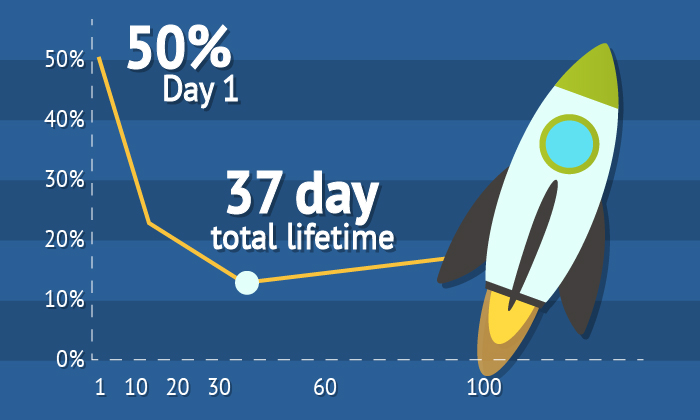
    • Pay attention to metrics, retention; day one, first week, first month are classic examples. Observe your conversion rate. It can help you project what you need to spend, or can help you decide next steps if your marketing budget is limited.
    • Carefully review performance, fun factor, difficulty, user interface, and overall user experience.

    Step Three

    • Survey your players whenever possible
    • Look for markets that have affinity for or need for your type of app or game.
    • If budget is limited, consider cost efficiencies.
    • Make sure that your OS requirements are correct.

    Step Four

    • Set up goals and monitor them.
    • Make adjustments to your game or app and release them as soon as possible. Don’t be concerned about updates. After all, this is a soft launch.

    Step Five

    • Once you have a proven build of your game or app you are ready for a hard launch.
    • Remember what you learned during the soft launch.
    • Be consistent, review analytics, pay attention to user satisfaction.
    • If possible, have an active community manager.


    You can learn more about my game “Tolaca Rocks” at www.tolacarocks.com. It’s free to play, so give it a try. I hope you find this information helpful, I will cover hard launch lessons learned in another post in the not too distant future.

    And speaking of the future, I will be moderating a Video Innovation panel at http://www.digitalhollywood.com  this Spring, My panel is on May 6, but I will be at the conference May 4, and 5. Look me up if you have questions about launching mobile applications or you need a game developer. I will also be demoing our latest samples for augmented reality. You can learn more about me and my company at www.northsouthstudios.com

  • Good Process Management is Good Project Management

    Good Process Management is Good Project Management

    All of us producing mobile applications, web apps, and software in general are always focused (or should be) on user experience—bringing relevant content to viewers in the best possible way. Whether you are working on a game, an educational product, an ecommerce site, or any other type of product, the common thread is that you are conveying an idea, information, and often a call to action.

    Top executives (no matter what size the company is) often spend a lot of time defining the strategic market, and selecting the “right” developer for a project. Once they select that developer they try to negotiate an airtight contract to ensure timely and cost-effective delivery. This are of course important factors, but much like John Lennon said, “Life is what happens to you while you are busy making other plans.”  Often “Your project is what happens to you while you are paying attention to other things”.

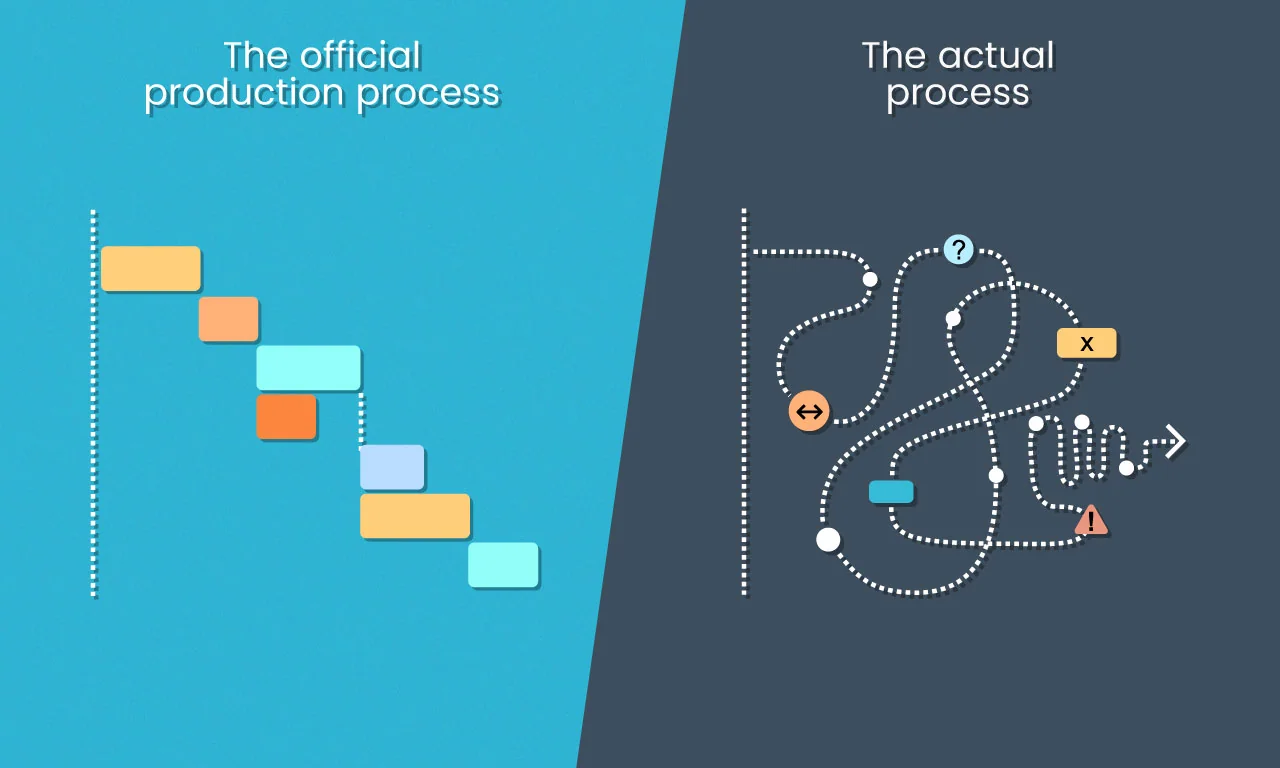
    I have implemented hundreds of projects and can’t tell you how often a project fails because the basics have not received enough attention. I started noticing this disturbing phenomenon many years ago and have given it considerable thought.  In my view, the problem is usually caused by one or more common missteps—lack of focus, lack of resources, or limited project management expertise. Over the years, I have seen companies underestimate how much effort and time it takes to complete a quality product and, perhaps even more confounding, underestimating the value of strong project management which inevitably causes chaos and poor results.

    I don’t think it takes a genius to remedy this problem.  It just takes focus and applying some simple (commonsense) steps

    1. Make sure you have a clear idea of what you want to accomplish

    2. Almost all projects start with writing, whether it is a script, a description, or documentation of facts, pay careful attention to what you write. Keep things organized. Remember other people have to read and make sense of this content.

    3. Be thorough with your business plan, analysis of the market place, creation of a business model, and survey of the landscape. I know no one likes to do this, but without it there is no end goal for the project, no understanding of why it will exist, who it is for, and how it will succeed.

    4. Don’t take on more than you can chew. Review what you are already doing. If you or your staff are completely booked, and what you want to start is mission critical, consider dropping other things or adding resources. If you can’t do either, then you’ll need to make a conscious effort and work more hours. If the goal is worth it, this should be fine right?

    5. If it needs to happen fast and it is important, don’t schedule vacations during the critical path. Your presence does not have just a practical impact on the project, it is also your leadership that is needed. Nothing is more demoralizing and uninspiring than working around the clock without leadership

    6. Project management and quality assurance are not an afterthought, but an important key to a successful project

    7. Make sure you have competence (not necessarily you personally).  For example, if you have a technology heavy project the person(s) directing the project should understand technology well.

    8. Set up a realistic time frame to complete your project. Consider that you need time to define and design it in detail, time to execute, time to do a limited launch so that you can do focus groups to test and make adjustments, and finally launch a product.

    9. Be prepared to support your service or product when it launches, not only from a service perspective, but have an active plan to promote it. “If we build it they will come” is not true in business.

    10. Be prepared to make adjustment. When you launch something on the web, mobile platform, or TV, your products and services are received by a community of people. These people communicate and expect to have the best experience possible. With their input you will be able to perfect your offering


    I hope you find these thoughts helpful for your next project. There are many great developers and consultants that can help you, but the best developers in the world can’t straighten a crooked tree.

    Love to hear your comments and suggestions. I will be posting regularly again. And if you need help my company North South Studios, in Los Angeles can help you.

  • 10 Tips for Choosing the Right Outsourcing Partner

    10 Tips for Choosing the Right Outsourcing Partner

    If you work in digital media, software development or publishing, chances are you have at least heard about outsourcing, or near sourcing.  Both terms are basically the same, though one suggests greater proximity to the US.  If you are considering outsourcing some or all of your production or QA work, you will fare better if you engage a provider that truly meets and understands your needs.

    [blockquote width=’35’]

    Choose someone who understands the value of planning

    [/blockquote]

    As someone with experience both as a client and a vendor I have learned how to optimize the outsourcing experience.  Here are some important guidelines derived from my experience.


    1. Assess Your NeedsBefore you engage an outsource partner evaluate your current capacity and future needs. If you are supplementing an in-house team, assess their strengths and weaknesses. Factor in the growth you are anticipating (future head count) and make a list of all key knowledge or skills you need to retain locally to be agile and successful.  Perhaps your company’s unique value rests in its editorial and art staff and it makes sense to outsource engineering.  Or, conversely maybe your company’s success is based on its engineering prowess, in which case art and editorial might be more appropriate for outsourcing. If you do not have an in-house team, make a forecast of the possible in-house resources you may need to complete your task.  At a minimum you will need someone to manage the outsource relationship, communicate your company values, and have the authority to approve or reject deliverables.  Ideally, if you intend to build a series of products that have ongoing importance to your company, you should consider putting a technical person and a project manager in place.  These people can not only manage and shepherd the process, they can insure that key product knowledge is always available locally and if you need to make a change in providers, you are not left out in the cold.
    2. Define Your Project Requirements as Best You CanIt is often difficult to plan your project requirements before you have a partner in place to help you.  However, at a minimum you should know what kind of product you want, what market it will have to compete in, what its approximate price point will be and how many units you will need to make a good rate of return.  Have a budget in mind, if at all possible.  If necessary, work backwards from your business model. Make sure your budget fits your potential market and pricing. Identify when you would like to launch your product into the market.  This information will be essential in discussing the project with potential partners. A good partner will tell you if your expectations are unreasonable and can help you modify them accordingly.  (If you don’t like what you hear, you can always go elsewhere though beware of the one provider in four who says it can be done when the others all say it can’t.) If there are any similar products already on the market that can give your prospective partner an idea of the style and scale of your project, make sure to let the partner know.  That will help the partner understand the scope of your vision and be better able to give you a reasonable projection. Finally, if your product is a web product or mobile app, remember to consider items like tracking, registration, multiple language versions, and community features, etc.  These variables add time and cost to projects and should be at least contemplated from the start.
    3. Check ReferencesBe sure to check provider references.  Too many clients have been burned by providers who did not deliver what they promise.  Clients end up with half-done projects and ¾ spent budgets. The last thing you want is to be seeking a patchwork solution which may not work and you cannot afford.
    4. Choose a provider that knows your marketIdeally, find a provider who has experience in your particular area of service or market.  Such a provider will have already “learned” the parameters of your market and will not have to learn on your dime.
    5. Be time-zone friendlyFind a provider in a time zone that is reasonably compatible with your own. Communication across multiple time zones can be inconvenient and slow at best.  At worst, it can cause missed deadlines and frayed tempers. Be wary of companies that promise to work all night to match your hours. This might work for small projects but for projects of any scale, you will most likely have an exhausted and minimally productive team.
    6. Interview outsourcers as you would interview any new employeeWhen interviewing prospective Outsourcers, draw from your own experience hiring employees.  Ask the same kinds of questions of your Outsourcer.  Does the Outsourcer have the skills, attitude and commitment you want on your team?  Does the Outsourcer share your work ethic, subscribe to your business values, and have a reputation for honesty and transparency?
    7. Evaluate communication skillsKey to outsourcing success. Good communication is absolutely essential to the success of an outsourced project.  When you talk to prospective outsourcing partners, assess the ability of their management teams to understand your needs and communicate effectively with you and your people.  Not all outsourced team members need to speak English, but those with whom you have contact should be fluent speakers who are capable of accurately communicating your needs to the development or QA team.
    8. It’s not just about priceIt’s hard to resist the temptation to go with the rock-bottom bidder and sometimes that bidder is indeed the best.  However, an extra 5%-15% savings has no value if your product is substandard.  Make sure the quality of your vendor’s work meets your market’s needs.
    9. Choose someone who understands the value of planningA good provider will insist that you begin your work together by planning it out carefully.  If you and your vendor are on the same page with respect to product design and expectations, your production phase will proceed more smoothly.  Many good providers will even suggest that you engage them first for a planning stage. While often clients resist this, experience shows that a planning stage can save valuable time and money later.
    10. Choose a partner with a US presenceWhile most outsourcing experiences are positive, you cannot ignore the possibility that you and your partner may someday have a disagreement.  For this reason it is prudent to choose an outsourcer that is a legal US entity or incorporated in the US. In the event of a problem or dispute, you want to be able to work it out with someone in your own country, governed under US laws.