Tag: VISUAL RECOGNITION

  • Augmented Reality: Epson Moverio

    Augmented Reality: Epson Moverio

    Having been talking about the future at different panels for the past three years, and researching, and prototyping, I am excited to write about the present in this post.

    I am preparing for a panel I will moderate October 10, at Digital Hollywood at 12 Noon about AR. the next generation applications. I have always had great panelists and this year is no exception. Today I want to focus on Leon Laroue, Product Manager New Ventures, for the Epson Moverio line of smart eyewear products.

    Yes, Epson. You probably know them for great projectors, printers, and other hardware devices. Well they have also entered the AR arena with the Moverio line. I am excited to learn about their technology since Epson definitely knows hardware.

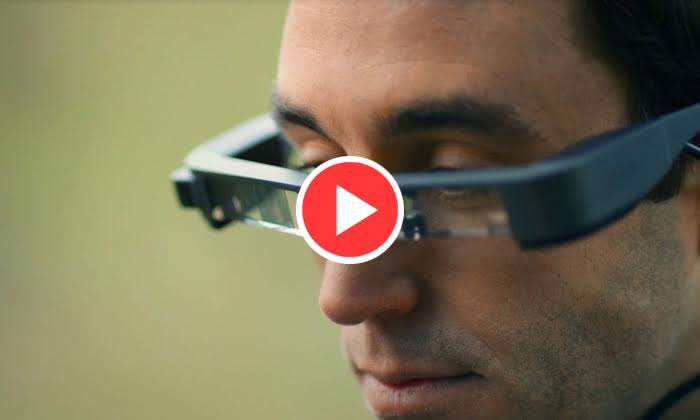
    My conversation with Leon was really interesting.  The first thing I learned is that Moverio AR smart eyewear products are commercially available today. You can pick them up at Amazon, for example. They have three models that include smart glasses for personal and enterprise/multi-user applications, and smart headsets for industrial applications. I also learned that these products support a wide range of commercial standards. You can learn more about this in their specifications page. This one is for the Moverio BT-300 model https://tech.moverio.epson.com/en/bt-300/

    Besides using Android as their development platform (more to come), some of the highlights include:

     A long life battery  (up to  6 hours)

     A light-weight (69g), truly wearable form factor

     Proprietary Si-OLED display technology, providing bright, HD (720p) picture

     Camera and various sensors for enabling AR experiences

     Support for applications that enable FPV for drone piloting

    While the technology is impressive, but perhaps even more exciting, is their ISV program. Epson may have one of the most open ISV programs available in the AR world. This is great news for content developers, publishers, and entrepreneurs looking for opportunities to enter the AR expanding market.

    If you want to learn more about this fantastic technology and meet Leon in person you can join us at my panel at Digital Hollywood this coming October 10, at 12 Noon http://www.dhsessions4.com/Tuesday17Fl6.html , or join the live webcast. We’ll also be joined by Eric Travold (Avegant), Michael Leventhal (Holmes Weinberg PC, Formerly Magic Leap), Soulaiman Itani (Atheer), Tom Wesselman (Plantronics), and Mike Hildebrandt (DAQRI). Come and learn about how your company can be part of this technological revolution and tremendous business opportunity.
  • Augmented Reality: Light Field technology is here!

    Augmented Reality: Light Field technology is here!

    For the past three years I have been researching, prototyping, and developing augmented reality (AR) demos and even some AR products for mobile devices. In parallel I have been fortunate enough to host AR panels for just about the same length of time. This has allowed me to meet with the very top companies in the industry.

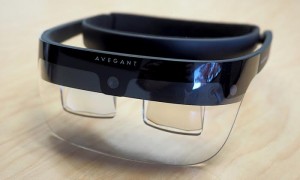
    Interestingly one of the first things I wrote about some time ago was Magic Leap. I loved their light field technology approach. My visit to their offices may have been the final push to make me a complete believer in AR as the next mega milestone in technology. But I am still waiting for Magic leap to enter the AR world publicly. But as often happens in life, while you are waiting for one thing, something else develops. I hosted a panel at GTC this past May thanks to my friend David Weinstein from NVIDIA, and I met a panelist from a company I did not know anything about. This company was Avegant, and the panelist was Eric Trabold, Chief Business Officer.

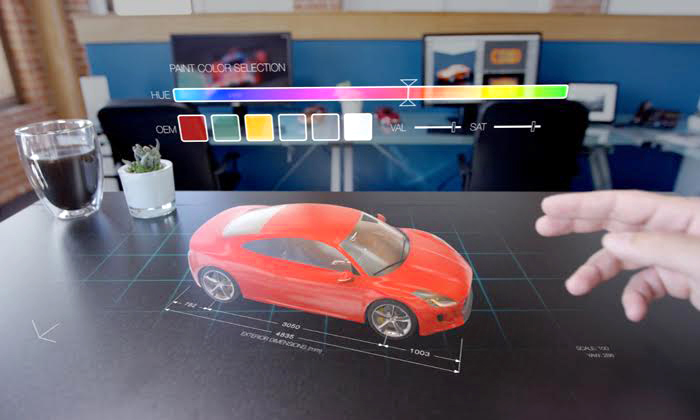
    I immediately enjoyed meeting Eric, and we went on to have a fantastic session at GTC together with other very talented panelists (they will the subject of other posts J). Soon after the panel I went and visited Avegant in Belmont. CA. My visit was, simply put, fantastic. Eric was kind enough to set up a full demo for me. What came next was really impressive.  I was able to walk through the solar system, where I was struck by the clarity of each detail – I could view individual asteroids passing by Jupiter, see the Mars’ Curiosity Rover, and view the weather patterns on the Earth. I spoke to a photorealistic volumetric 3D hologram where I could easily see features like her eyelashes and freckles, and I was able to hold animals in the palm of my hand!

    Augmented Reality: Light Field technology is here!

    It turns out Avegant has been around for a long time, the Founders started out with display research for the US military, evolving their technology over the course of time into a Consumer Product called The Glyph and now providing their Light Field technology to PC and Mobile OEMs that are going to bring Mixed Reality Headsets with Avegant Technology to the market. Other than Lytro, I think they are the only ones with this technology available today.

    Avegant blends the real world with digital images that you can interact with. I think image wise Avegant is in my top two (I go back and forth from one to two and vice versa). My understanding is that more robust interactivity and other features are in the works.

    If you want to learn more about this fantastic technology, and meet Eric in person, you can join us at my panel at Digital Hollywood this coming October 10, at 12 Noon http://www.dhsessions4.com/Tuesday17Fl6.html  We’ll also be joined by Leon Laroue (Epson Moverio), Michael Leventhal, (Holmes Weinberg PC, Formerly Magic Leap), Soulaiman Itani (Atheer), Tom Wesselman (Plantronics), and Mike Hildebrandt (DAQRI). Come and learn about how your company can be part of this technological revolution and tremendous business opportunity.

     

  • Augmented Reality: Working with Licenses and Securing Rights

    Augmented Reality: Working with Licenses and Securing Rights

    After Apple’s keynote just last week, which was preceded by the launch of Apple’s ARKit, and Google’s ARcore, you can safely assume that the avalanche of AR products and services is on!

    So, as we march into our first generation AR enterprise and consumer products, we find ourselves in a new frontier. Figuring out how to secure or assign rights, how to ask for or request royalties, and thinking how to protect your likeness, brand, and IP will be more important than ever. And of course, protecting new IP will be of equal importance.

    I wanted to put my arms around these issues, since I create content and also enable others to create content or services. So I reached out to my friend Michael Leventhal. Michael works at Holmes Weinberg, P.C. He has worked with media, and digital properties for a long time. He was also Magic Leap’s legal counsel. I think his combined experience puts him in a unique position to advise companies engaged in content creation and software development.

    Michael started by reminding me that you need to begin by asking yourself why you want to use AR as a starting point. How you negotiate for rights, how you handle a potential revenue share, or an advance on royalties starts there. You have to know why you are doing something to be able to determine who your audience is, the potential size of your market, and the business opportunity.  Once you have determined these factors, you are ready to approach the question of rights and brand protection with enough information to enable a qualified legal advisor to give you good input.  For many of us, knowing how to identify the right legal advisor is tricky.  I asked Michael for his thoughts on this matter and he suggested that in choosing legal help you should:


    Look for someone who is knowledgeable about the kind of project you are making; you probably don’t want someone learning on your dime.

    Broad knowledge of intellectual property.  It’s important for your attorney to understand what is protectable in what you are creating, and to be able to negotiate and document both your assignment of IP rights to third parties, and bringing necessary IP to your project from outside owners.

    Business/corporate knowledge.  Your attorney should be able to understand your corporate structure (or help you create it, if that hasn’t happened yet), and assist you in documenting financing, whether that is from project based or equity investment.  You’ll be bringing on employees and consultants, so, an understanding of the legal issues related to these categories, and the ability to draft and negotiate these agreements is crucial.

    Connections in the AR/MR/VR world.  Attorneys don’t traditionally play the role of matchmaker, but, if you have an attorney who knows the experts in the fields you’re working in, and can connect you with thought leaders, all the better.

    Partnerships, licenses, collaborations, etc.  Often, financing, distribution, and marketing, among other areas, can be critical to the growth and success of your project.  Having an attorney who understands how to structure these kinds of deals can be a powerful asset to your company.


    If you want to learn more about this topic, how to create an AR experience, and meet Michael in person, you can join us at my panel at Digital Hollywood this coming October 10, at 12 Noon http://www.dhsessions4.com/Tuesday17Fl6.html . We’ll also be joined by Leon Laroue (Epson Moverio), Eric Trabold (Avegant), Soulaiman Itani (Atheer), Tom Wesselman (Plantronics), and Mike Hildebrandt (DAQRI). Come and learn about how your company can be part of this technological revolution and tremendous business opportunity.
  • Visual Recognition: A Key Factor for AR

    Visual Recognition: A Key Factor for AR

    Continuing with my series of posts about Augmented Reality, let’s take a look at visual recognition. For those of you who are just starting to evaluate AR as a potential addition to your services or products, visual recognition is at the very heart of this new technology. Whether you are producing AR or MR content, visual recognition is the life and soul of the user experience.

    Several companies have filed patents, created algorithms, and platforms that employ visual recognition. Today we are going to look at one of the leaders in the space, EyeCue Vision Technologies, www.eyecue-tech.com

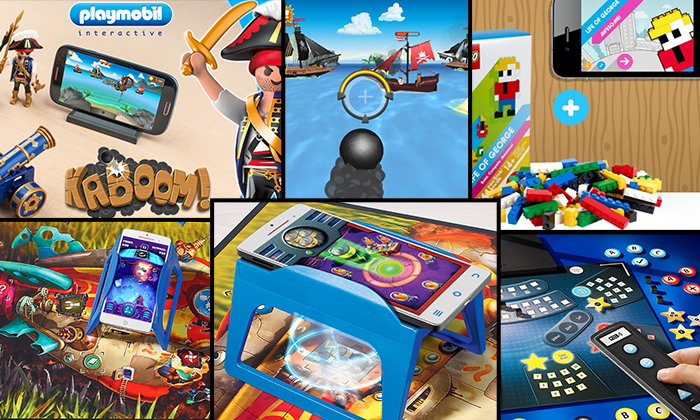
    Partners Ronen Horovitz, Ran Kaftory and Yaky Yanay founded EyeCue in 2007. Ronen and his team have always been innovators, and their earliest efforts were already paving the road for AR as a commercially viable technology. Their focus has always been visual recognition for education and entertainment applications.

    The EyeCue team includes brilliant algorithm experts, software developers, and visionaries. They are behind the success of great toys like LEGO Life of George, Playmobil Kaboom! SickBricks, Fashion Creator, and many more. Their visual recognition technology can power AR apps by scanning any 2D or 3D objects, digitally bringing them to life. They can even work with 3D printers. Imagine the possibilities—you can create an interactive experience where physical elements can be recognized and instantly become part of a digital adventure! Or perhaps you have a linear experience, or print based experience that can become interactive just by looking at it with eyewear, or through a mobile device. This is all possible today.

    So what exactly is visual recognition? trying to mimic our human vision, It’s a technology that uses complex math and learning algorithms to analyze images full of pixels and give you relevant information about them. This information typically focuses on detecting / recognizing what an object is. You can then organize these images, classify them, and be able to generate / trigger specific actions based on what you are trying to achieve. For example if you create a documentaries you can create a second screen experience by using AR to recognize places, objects, or print materials to trigger a complementary or tutoring experience. If marketing is your trade you can create campaigns that make every print add or billboard an interactive add that comes to life with a call to action, and capture data and performance for the ad.

    To learn more about visual recognition, I suggest you come to the session I am moderating at Digital Hollywood on October 18th http://www.dhsessions3.com/Tuesday16Fl5.html. We will focus on the next generation of AR apps from education to entertainment, and Ronen Horovitz will be a panelist.

    AR experts Roy Ashok (DAQRI), Brian Blau (Gartner), Jim Marggraff (Eyefluence), David Weinstein (NVIDIA), and Michael Leventhal (Formerly of Magic Leap) will also be on the panel. Come meet the leaders of the companies that are making AR possible!

  • Augmented Reality: The Importance of UI /UX Innovation

    Augmented Reality: The Importance of UI /UX Innovation

    I think it’s fair to say that most people in the tech industry agree that AR and VR are the future of computing. Companies around the world are spending vast sums of money and resources exploring the opportunities. Most efforts have centered on hardware like smart glasses, visors, helmets, and other form factors. A great deal of attention has been placed on visual recognition, but a challenge that comes along every time we go through a quantum leap in technology remains—user interface.

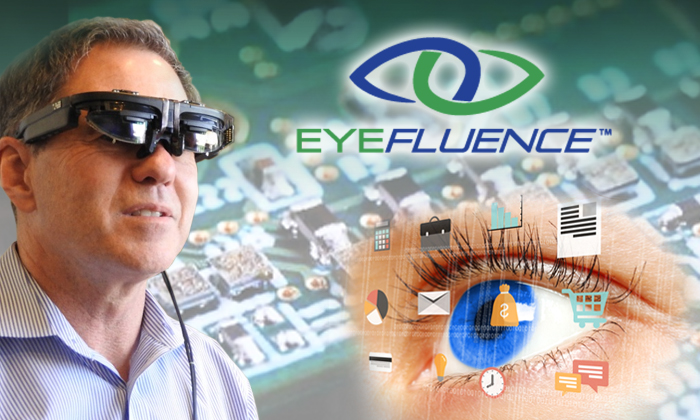
    Without intuitive access, new technologies cannot thrive. That’s why I was so excited when I learned about Eyefluence, a company that has taken on the challenge and come up with intuitive interactions that really work with the new form factors. Eyefluence, lead by CEO Jim Marggraff, one of the brightest minds in technology innovation, focuses on what makes sense. Tapping and swiping, while natural for a hand held device, are not really natural for a HMD or smart glasses, so Eyefluence focuses on your eyes!

    Eyefluence’s vision- driven interface focuses on the eye-brain connection. You use eye movement, to interact and as quick as you can think, you can interact. As they describe it on their website, “eyes can instantaneously transform intent into action.” In just a few minutes a typical user can master the “language” of their eye-interaction technology. Undoubtedly you’ve heard of or seen eye-tracking technologies in the past, but they usually follow the basic principles of standard mouse interaction. With Eyefluence there is no need to look at objects and dwell on them to activate them.

    Intriguing isn’t it? I wish I could fully explain the subtlety of their interface to you in writing but this is one you have to see to truly understand. Luckily, Jim Marggraff will be discussing the technology at my AR session at Digital Hollywood this October 18th http://www.dhsessions3.com/Tuesday16Fl5.html. Please do stop by to learn more about eye-interaction technology. And if you can’t join us, you can learn more about Eyefluence at www.eyefluence.com.

    Roy Ashok (DAQRI), Brian Blau (Gartner), Ronen Horovitz (EyeCue-tech), David Weinstein (NVIDIA), Michael Leventhal (Formerly of Magic Leap) will also be on the panel. Come meet the leaders of the companies that are making AR possible. We’ll all be available to answer your questions. Come and learn how your company can be part of this technological revolution and tremendous business opportunity.
  • Augmented Reality: Next Generation Apps

    Augmented Reality: Next Generation Apps

    I started working on Augmented Reality (AR) and Mixed Reality (MR) almost two years ago. At first I focused on creating demos, proofs of concepts that could serve to spark the imagination. Later I joined Google’s Project Tango initiative and began looking at the possibilities more in depth. I examined HMDs (head-mounted displays) and various technologies, learning about new approaches to UI (user interface) and UX (user experience).

    [blockquote width=’30’]

    AR and MR technologies allow us to superimpose computer-generated images on a person’s view of the real world. The result is a blended view of both the real world and the computer generated images, which can be interactive.

    [/blockquote]

    I was immediately fascinated by the possibilities, imagining a future where computers and mobile devices are replaced by something as simple as smart glasses. I continued learning about the finer aspects of AR and MR: visual recognition, gesture technologies, the use of our own eyes as part of a revolutionary UI, and more.

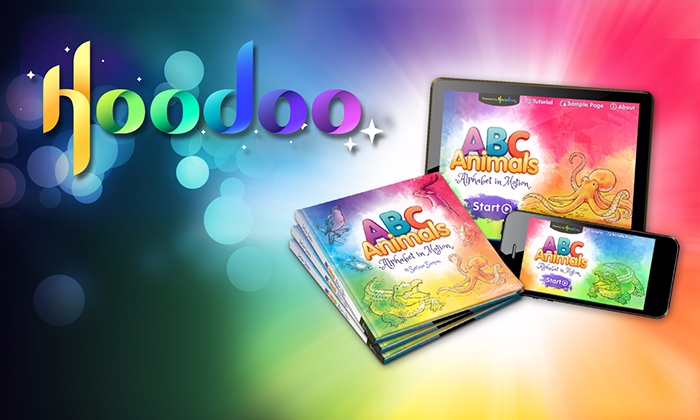
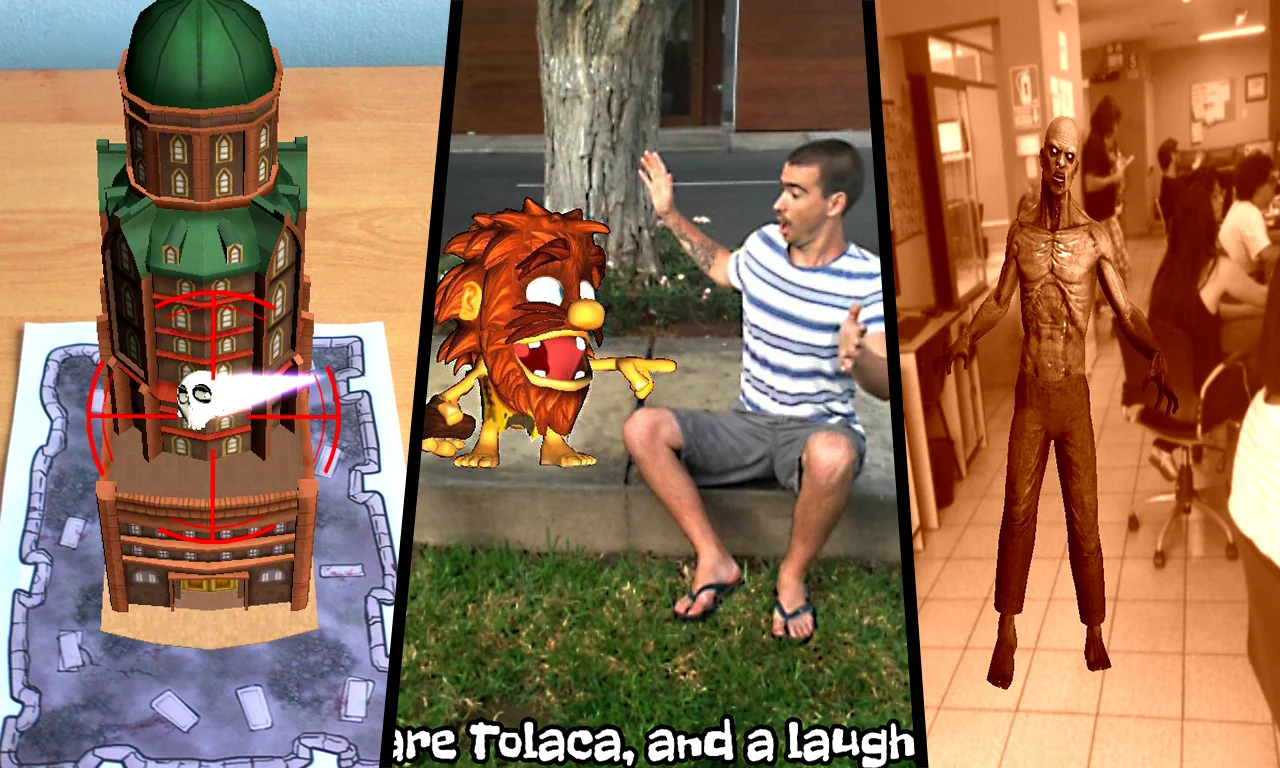
    As a result, NorthSouth Studios launched a division focused on AR and MR and we have grown from creating demos to developing a line of our own products. Our first-generation application, like Pokémon Go, ties in with over a billion mobile devices in the world. It’s called Hoodoo and it allows publishers to share augmented reality experiences with their audiences and customers with minimal cost and effort.

    At its simplest level, publishers provide print media or visual elements for display and Hoodoo makes it come alive. For example, say you have a magazine ad for a new car and some video footage that demonstrates the car’s most exciting features. With the Hoodoo app, users can point their mobile devices over the ad and see and hear the video content. Your ad literally jumps off the page and you and your team do not have to write a single line of code! And that’s just the first tier, basic service we offer. Hoodoo also allows more complex interactions, suitable for games, training and other uses.

    Our second AR/MR offering is a new line of educational products. First in line, and hitting the market in October, is ABC Animals: Alphabet in Motion written by NorthSouth Studios co-founder Sarina Simon (www.sarinasimon.com). The book and app combine the traditional joy of reading a picture book to a child with the entrancing vibrancy of AR.

    And there’s plenty more to come! We’re keeping our eye on the ball and focusing on HMDs and more immersive experiences. Toward that goal I have put together a spectacular Digital Hollywood panel which will take place on October 16th in Los Angeles. If you want to learn about the latest technologies, possibilities and meet the absolute experts in AR and MR come join us: see http://www.dhsessions3.com/Tuesday16Fl5.html. Our expert panel will cover the next generation of apps, from education to entertainment. I will be moderating the panel and afterwards I will be available to give demos and answer questions.

    I’ll be posting more articles covering our panel, panelists and their companies, and of course a great deal of information about AR and MR.

  • Augmented Reality the New Marketing Frontier

    Augmented Reality the New Marketing Frontier

    In the many years I have worked in the digital arena I have worn several hats. I have overseen technical projects, designed games, acted as a creative director, and handled financial modeling. But no matter what hat I have had to wear, essentially my role has always been to help people and businesses launch and promote products and services.

    One of the most frequent challenges I face is working with people who don’t know how to use media to best tell a story or should I say, sell a story. Writers love words and sometimes they forget the old axiom that a picture is worth a thousand words. This was driven home to me again recently when I found a piece of research:

    James McQuivey of Forrest Research says one minute of video has the value of 1.8 million words, in context that is approximately 3,600 pages”

    Isn’t that the truth! Most of the time, you can use a few well-chosen words combined with the right imagery and convey a strong message in less than two minutes. Apple has shown us that minimalism works, that we need to focus on an intuitive approach to creating user interfaces, and a straight to the point message. Once interest has been established, the user is willing to explore an offering in depth. This confirms what I have long felt—that if you want an effective advertisement campaign with a high conversion rate, focus on video.

    But how do you focus on video if you’re using print ads? To me, this is the beauty and promise of Augmented Reality and this is why I am so excited about its prospects. With AR you can incorporate video into just about any print ad and deliver a full commercial, a call to action, generate a lead, demo a game—all just from a magazine, billboard, or sales sheet. You name it!

    I wish I could tell you that I am a genius, but I am not (although I think I am pretty smart). I just happen to be a great fan of video production, know a thing or two about streaming video, and more importantly have been lucky enough to work with AR in the early stages of its development. AR is currently in full expansion, I think that at the moment, the sky is the limit. There are various platforms to work with, techniques to get started, and plenty of room to innovate.

    If you are interested in developing products with Augmented Reality, or want to know how your print or video content can leverage this innovative technology, please come see me at the Game Developers Conference in San Francisco, I will be taking some meetings on 3/14 and 3/15 and will be available on 3/16, 3/17, and 3/18 at booth number 436 on the exhibits hall, courtesy of Prom Peru. If you want to make an appointment drop me a line at bnewell@northsouthstudios.com Want to visit Peru? Have a business that can use some production help? Come visit me at the booth and ask me how.

  • Augmented Reality is Here

    Augmented Reality is Here

    Many years ago I was blessed with participating in the launch of Philips CD-I. CD-I was the precursor of DVD and many set top boxes. Philips pioneered the use of full screen video playing from a disc. At the time, it was a quantum leap from VHS and Betamax technologies. Little did I know that the platform was the first step in what would become a once unimaginable technology revolution.

    Recently I visited Magic Leap and this time, having worked on launching a platform in the past I quickly recognized that we are on the eve of another exciting revolution. For those of you who are not familiar with Magic Leap, most people would define it by its focus on augmented reality, but after visiting with their team I think they are much more than a technology-driven group. Yes, the area of technology they are working on is augmented reality, but the real focus of the company is on ideas, creativity, and connecting people.

    Magic Leap has the two key ingredients for catapulting a new platform—a clear vision and the team to execute that vision. They are a strong team that has invested heavily in prototyping, paying close attention to the user experience, and the potential user interface. For those of us who are researching and working on how to implement new experiences in virtual reality (via Oculus rift) or in augmented reality, it is clear that UI is going to be very different from the common conventions we employ today in mobile and desktop development. The use of gestures and voice-activated commands are just the beginning of another chapter in the technology revolution. Without a clear understanding of how the UI will enable and be enabled by the technology, a new platform cannot reach its full potential.

    Augmented reality opens us so many possibilities. You can enhance print media, bring a map to life to learn about places around you in a way that no 2D map can equal, explore a landmark in detail, learn music, make your videos come to life by breaking the fourth wall. The potential implications for innovation are multiple, from educational methodologies, to industrial applications, to games, and traveling. And in my view, augmented reality is far more exciting than virtual reality because it incorporates the real world we live in–the actual physical space we occupy, as opposed to a completely unrelated setting. You name it; augmented reality is going to change the way we do many things in our lives.

    Magic Leap is not alone in the AR revolution. There are several technologies that are being created with the goal of enabling augmented reality for consumers. Microsoft and Daqri are two other companies that are investing their resources in doing it right. I will make sure to blog about these other companies and other advances in this field in the weeks ahead.

    I have focused my post today on Magic Leap because I was very impressed with their vision and with the quality of the team they have put together to execute that vision. I expect to hear and see great things from them, and I look forward to the next opportunity to collaborate with them.

    If you like to learn more about Magic Leap please visit their website at http://www.magicleap.com

    If you are interested in developing products with augmented reality, or want to know how your print or video content can take advantage of these innovative technologies please come see me at Digital Hollywood at the Ritz Carlton in Marina del Rey this coming Thursday, October 22 at 11:05 AM where I will be moderating a panel on Video Innovations, or drop me a line, or comment on this post.