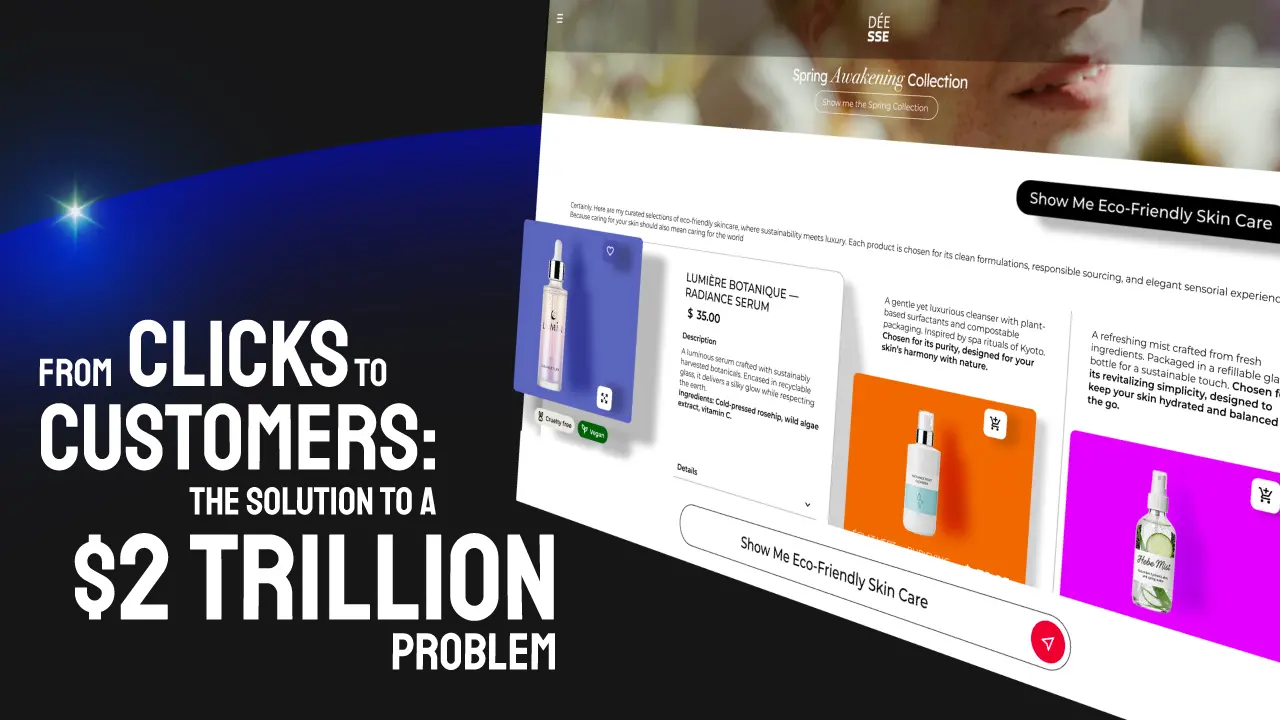
[videojs_video url=”https://vod.sparxworks.com/792ac87d-f716-471f-8ab9-8944ff243d3e/AppleHLS1/animation-dome.m3u8″ poster=”https://devdomewp.justdomeit.com/wp-content/uploads/2025/09/thumbnail_1280x720.webp”]
You built your business to help people.
Maybe you’re selling handcrafted tea blends, managing an online course, or building a service that solves a problem you care deeply about.
You set up your site. You tweaked every headline, optimized your product pages, maybe even ran some ads. But then, crickets.
People show up… and leave. They don’t convert. They don’t stay long enough to understand what makes your offer different. You can feel the gap, even if you can’t name it.
It’s not your product. It’s not your passion.
It’s the interface.
The Web’s Old Operating System
Most of today’s websites still run on a 1980s concept called WIMP: Windows, Icons, Menus, Pointer. It was fine when desktops ruled, and we all navigated with clicks. But today, users don’t point; they talk, tap, and expect instant results.
They’re not browsing for answers. They’re asking for them.
And yet, we’re still giving them dropdowns. Still burying the return policy four clicks deep. Still asking them to figure out our system before they can get what they want.
That friction? It’s costly.
According to Google, bad online experiences cost businesses over $2 trillion globally annually. And most small and medium businesses feel that in miss opportunities and waste ad spend.
Rethinking the Interface: From WIMP to Conversation
That’s why we built DOME, the Dynamic Omni Media Experience.
DOME isn’t a redesign. It’s a rethink.
It wraps around your existing content, your product listings, FAQs, tutorials, documents, and transforms them into real-time, modular responses that adapt to every user.
Your customers don’t want to scroll. They want to ask:
- “Do you ship internationally?”
- “Can I see this in another color?”
- “What’s the difference between the plans?”
And DOME responds, instantly, naturally.
In 59 languages. As text, video, interactive cards, and even 3D. Across mobile, desktop, smart displays, and more.
It feels less like browsing a website and more like having a conversation with someone who gets you.
Why This Matters Now
It’s not just about speed, it’s about relevance.
DOME personalizes every interaction based on user behavior, intent, and even location. It remembers previous sessions. It adapts content format to fit the device and moment.
This isn’t personalization as a marketing buzzword. This is content that speaks your customer’s language, literally and figuratively.
And it works.
- Bounce rates drop as users quickly find what they need.
- Support inquiries shrink as self-service becomes intuitive.
- Conversions rise, especially among mobile-first shoppers who no longer have to dig for answers.
One customer is piloting DOME as a replacement for their traditional search bar, creating a faster, more conversational way for shoppers to discover what they’re looking for.
The Takeaway
You don’t need to rip and replace your website.
You don’t need a $100K redesign.
What you need is a digital layer that listens first and responds like a human.
That’s what DOME does.
It makes your site conversational, contextual, and ready for the way your customers already think.
Because the future of digital isn’t more clicks. It has fewer barriers.
Explore how DOME can work for your business at SparxWorks.com. Or just ask like your customers would.