Tag: XR

  • Is AI going to take my job?

    Is AI going to take my job?

    Like many of you, I am thrilled by the advancements in AI, particularly large language models (LLM), which are ushering us into a new era. AI is certainly enhancing a variety of domains like services, AR, XR, VR, and marketing. However, as my grandma used to say, “You have to take it with a grain of salt.”

    With the media highlighting AI’s latest achievements, it’s easy to get caught up in the excitement. I often hear phrases like, “It’s incredible how it thinks and responds so accurately.” Let’s set the record straight: AI does not think. It operates based on intricate combinations of mathematical concepts including probability, statistics, linear algebra, calculus, game theory, logistics, regression, and more.

    Data management poses a significant challenge. Ensuring the correct data is fed into the LLM, while avoiding copyright, patent, and trademark infringements, is essential.

    AI is unlikely to take over your job unless it involves straightforward processes, such as automating checkout counters or parking stations. Instead of replacing you, AI will augment your abilities, helping you excel in your role and become more productive.

    With LLM, we have the potential to develop tools, services, and virtual assistants that can manage routine tasks. This allows employees to focus on strategic aspects of their roles, potentially improving work-life balance by reducing overtime and weekend commitments.

    For students, integrating AI with technologies like NoSQL will usher in true adaptive learning.
    This promises a tailored educational experience, adjusting content to suit individual learning needs, ensuring a deeper understanding of topics.

    Furthermore, AI will enable the creation of a genuine Omnichannel experience, as it facilitates precise content modularization, allowing smart templates to function optimally.

    While the potential is immense, it’s important to recognize that AI also presents new opportunities for misuse. A cautious and methodical approach is imperative when implementing AI in any business setting.

    Are you considering integrating AI into your business, services, or sales strategies? Need guidance on the right approach? We have extensive experience in AI (having developed an XR platform that’s programming-free) and have garnered invaluable insights over the years. AI offers tremendous benefits, but it requires careful handling. Reach out to us. Let’s harness the power of AI responsibly.

  • What Will Happen with Print Media in the Age of the Metaverse?

    What Will Happen with Print Media in the Age of the Metaverse?

    “Print media is dead. No one wants to read anymore.”   These are things we often hear on the news.  These opinions, or trends, are heavily influenced by current video consumption habits and consumers’ well-documented resistance to reading long pieces. But these statements are just not true. Indeed no one wants to read a manual. However, we all like to read a good novel, a book about something we are interested in, or perhaps an excellent social post. Books are not going away; they are just transforming.

    Augmented reality (AR) will become an essential transformation tool for print media. Through AR, already existing books, newspapers, signs, etc., can all be enhanced, bringing new life and renewed interest from consumers.

    Imagery from printed materials can be made interactive through Image recognition. With this technology, any image in a book could become alive.  You might see a photo of George Washington in a book, and he will start talking to you, or perhaps another image will trigger an interactive map of a famous battle. Billboards, signs, and logos will all also become interactive. All the analytics we get from using the web and mobile apps can now also be obtained from print media and objects, thanks to AR.

    AR will elevate the level of engagement and connection between the product or brand and the end user. Books, articles, and other printed materials will no longer be your “Father’s” read but rather a new interactive and dynamic way to experience a story or learn about something.

    Schoolchildren Use Digital Tablet Computers and Smartphones with Augmented Reality Software

    Books and printed materials can have digital companion applications. These applications could make portions or contents in a book interactive, can trigger digital experiences, and can provide further support for the story or concept the reader is exploring. Imagine opening a history book and reading about the declaration of independence, and suddenly, you are there, fully immersed in 3D, witnessing the signing of our constitution! Volumetric, like the real thing!

    If you want to see a simple example, you can explore our ABC Animals Alphabet in Motion title. This is a simple ABC book that engages early readers with the help of mom and dad to develop an early love for reading the magical experiences reading can bring.  Each page has a special surprise; making the first time your child sees the alphabet truly memorable. You can find the book on Amazon Tap or click to view the book

    Digital companion art, interactive content, or 3D objects combined with an NFT can create additional value for products (the Metaverse will create many new distribution channels). Or additional sales (digital), collectibles, and more.

    We all love a good story and inspiring, unforgettable characters We also love to read about things that interest us in detail. Books will need to evolve, like all media. We at SparxWorks have been working with print media, education, training, and family entertainment for the past two decades, with almost ten years of experience with AR. We share the love of reading and learning and have created an amazing ecosystem to support print media’s transition into the Metaverse. If you want to learn more about available tools and options for print media, contact us by tapping or clicking here.

  • Is Augmented Reality the Actual Path to Virtual Reality?

    Is Augmented Reality the Actual Path to Virtual Reality?

    Is AR the road to real VR? If you have asked yourself the same question, please comment or share your thoughts with this post. I am working on two (very different) immersive projects and would love to hear what other people are working on, AR or VR, think about this. Hear me out and let me share briefly what I am doing and see what you think

    I am working on an AR project, a “life-size-location event,” a “Haunted House.” It is a real size environment; it will need to be experienced outdoors, on a field, gym, or some other area where you can fit a house J (baseball, football fields are great choices).


    As we’ve worked on the project, the journey has been incredible. I have often stopped and asked our team, “Wait, are we still doing augmented reality? Or are we now doing VR?” It was both a moment of reflection and realization. We can deliver a closer experience to the “Holodeck from Star Trek” in terms of the user experience with AR—you can walk, interact with objects, digital elements, and characters, etc.


    Don’t get me wrong. I love the Oculus VR products and their super talented developers; they make fantastic stuff, too. But in terms of the overall experience, I would suggest that AR is indeed the true path to VR. With 5G fast growth and multi-access edge computing, we’ll be able to deliver a unique realistic experience of the same quality as a PlayStation or Xbox. Furthermore, you will no longer be bound to a chair or small room, or computer for that matter.


    I, of course, started to think about the possibilities for education, retail, architecture, hospitality, wellness, and entertainment, to name a few natural fits for AR. For example, take a walk through the city of Troy, or observe the battle of Waterloo, Conduct a science experiment, and so much more. Combined with props, you can have a completely interactive experience that includes touch in addition to an audio-visual experience. We have been able to also experiment with a store, apartment, and even a stadium.


    Our second project I can tell you more about. It is a small micro-game. I am releasing it next week (it is free). This is a very light shooter game. As I played the game, I became as immersed in it as when I played simple games on a console-based or mobile device, except that I was an active participant this time. I also played with others (I was at a park), which made it fun and social, something I think we all need. Since we were outside, we were also safe.


    Please take a minute to share your experiences if you are working on similar initiatives; I’d love to hear from you.

    If you would like to know more about our augmented reality services, please contact us through our website www.sparxworks.com. Also, we are going to be demonstrating various immersion concepts this November 15 at www.ARExperience.us. This experiential conference will bring together the top brands and agencies with the hottest companies and services in AR in a collaborative way to foster the growth of our AR community.

    We look forward to seeing you there at the Faena Hotel in Miami beach.

  • Augmented Reality: how do I get started? Five easy steps.

    Augmented Reality: how do I get started? Five easy steps.

    OK, I want to use AR. How do I get started? Five easy steps.


    Do you work in marketing? Or advertisement, branding or sales? Would you like to take advantage of the many benefits AR brings but are new to or inexperienced with immersive technologies? I think I can offer some help.

    Selecting the right cost-effective AR solution for your company can be a mind-boggling task. However, if you ask the right questions you’ll find that AR is surprisingly affordable.  A simple AR strategy may add less than $10K to your budget.


    1. Identify and set up your goal
      • What do you want to do with AR? Extend your brand? Provide support for your products and services?
      • What tools do you already have? Website? Mobile application(s)? How or where do you plan to add AR?
    2. Set up a budget
      • If you are exploring if AR is suitable for you, running a pilot project is a good idea. Decide on the sum you want to invest.
      • Set up a period of time for the pilot or initiative. This will help you measure success with analytics.
    3. Keep in mind the audience you are trying to reach
      • This is important in selecting a distribution channel (for example, if you are trying to reach users over 35, Snapchat would not be a good choice, on the other hand, if your audience is under 35 it is a great choice.)
    4. Understand the logistics and timing
      • Be clear on the kind of AR you are interested in implementing.
      • Understand the main differences between AR technologies.
      • Make sure you set up a realistic timeline.
    5. Use analytics, make sure you can measure results
      • Make sure you collect and analyze data.
      • What you learn will be directly linked to the goals you set up for the project.
      • Make sure the data sampling you are using covers enough ground to make an objective assessment.


    If you don’t have a team well versed in immersive technologies, the best approach is to start with a platform or tools of well-established AR platforms. While AR technologies and platforms are growing fast, here is a list of some of the top options you may want to consider


    If you want to learn more about our versatile AR platform, please contact me or visit our website www.sparxworks.com or see us on November 15 at www.ARExperience.us. This experiential conference will bring together the top brands and agencies with the hottest companies and services in AR in a collaborative way to foster the growth of our AR community. We look forward to seeing you there at the Faena Hotel in Miami beach.

  • AR publishing in 3 easy steps under 5 minutes!

    AR publishing in 3 easy steps under 5 minutes!

    As I’ve explained in the past, devising an AR strategy for your business is a complex process with many variables, but the good news is that with SparkWorks’ AR technology, publishing AR content is very simple!  What if you could spend your time designing, asking the right questions, leveraging AR across print media, objects, mobile applications, and your eCommerce/website without worrying about programming? At SparxWorks, we are 100% focused on making the process of publishing AR content simple, safe, fun, and measurable.

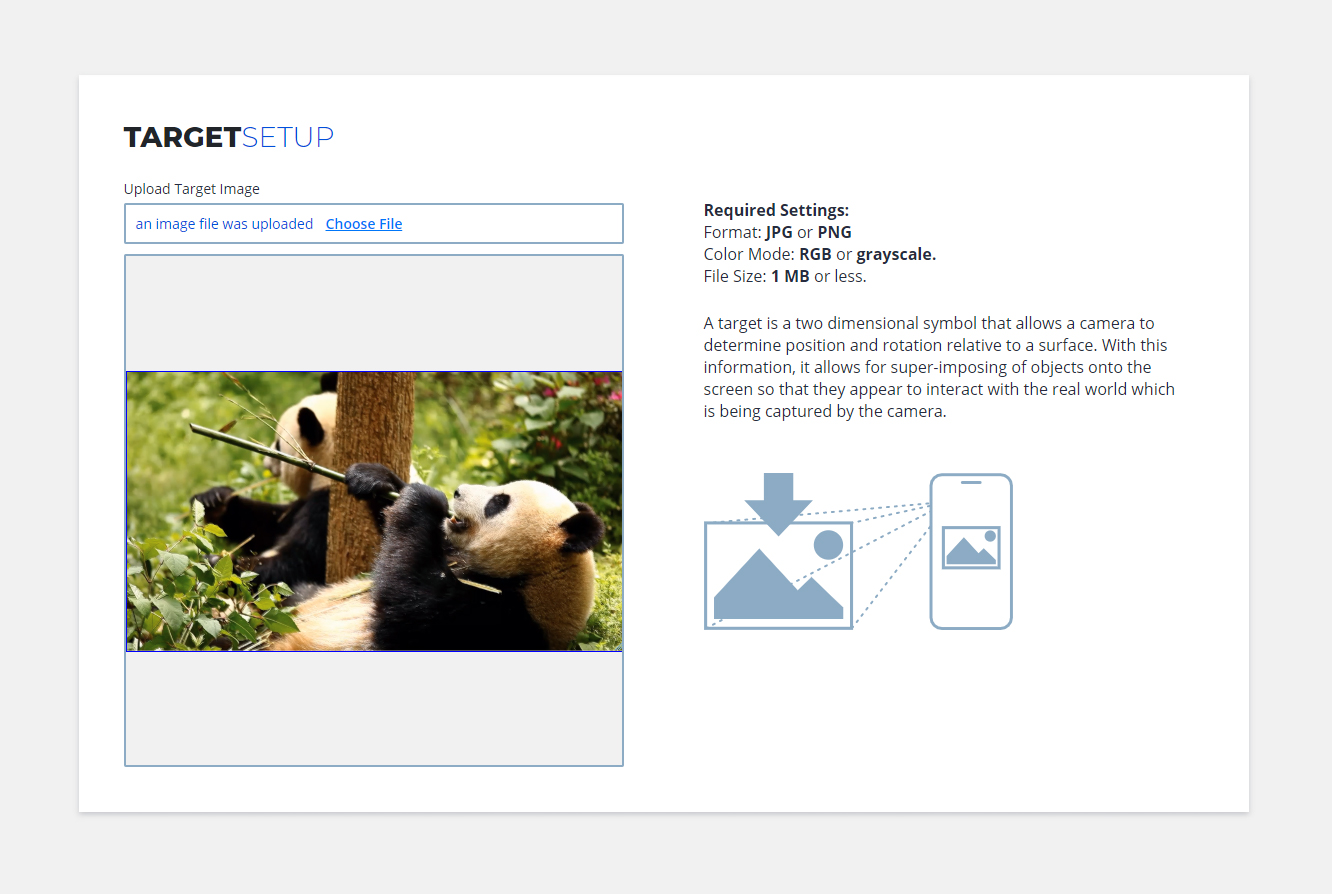
    I am going to show you how you can use image recognition to enhance print media in minutes. Here is an example of how quickly you can add a brand new experience with our platform, three easy steps.


    Step 1


    • Name your target
    • Upload the image to be recognized (the target)


    target setup 1

    With a simple drag and drop interface, you can upload the image you want to use. For example, it could be the cover of a magazine, a photo, drawing or painting in a textbook, or perhaps a travel brochure.


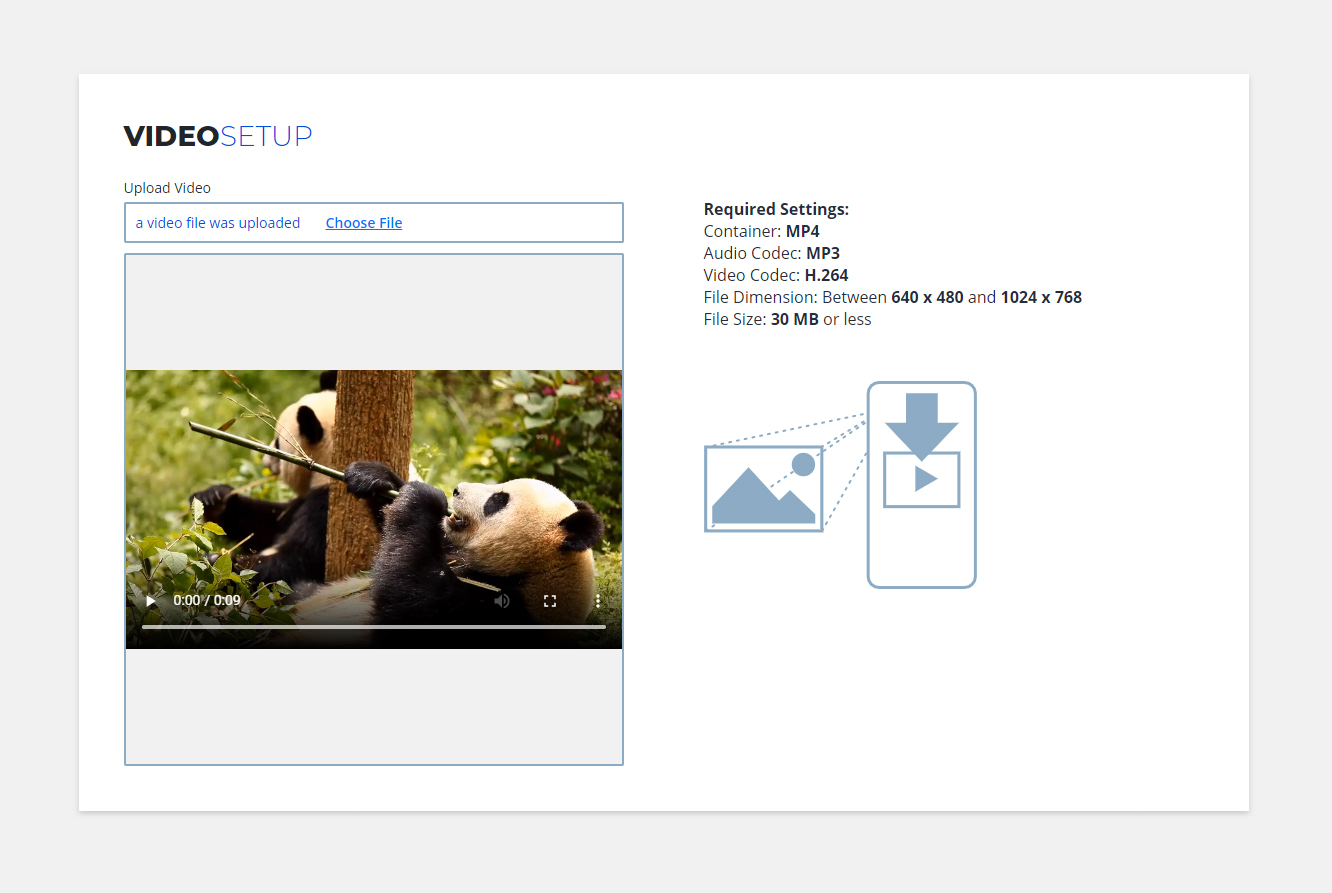
    Step 2


    • Upload a video or animation (optimal file size etc. Is explained on the screen)


    target setup 2

    Add a video with our simple drag and drop interface.


    Step 3


    This is a crucial step as measuring the success of your projects and initiatives is critical.

    • Drag and drop an image (optional)
    • Enter an HTML link for the image (optional)
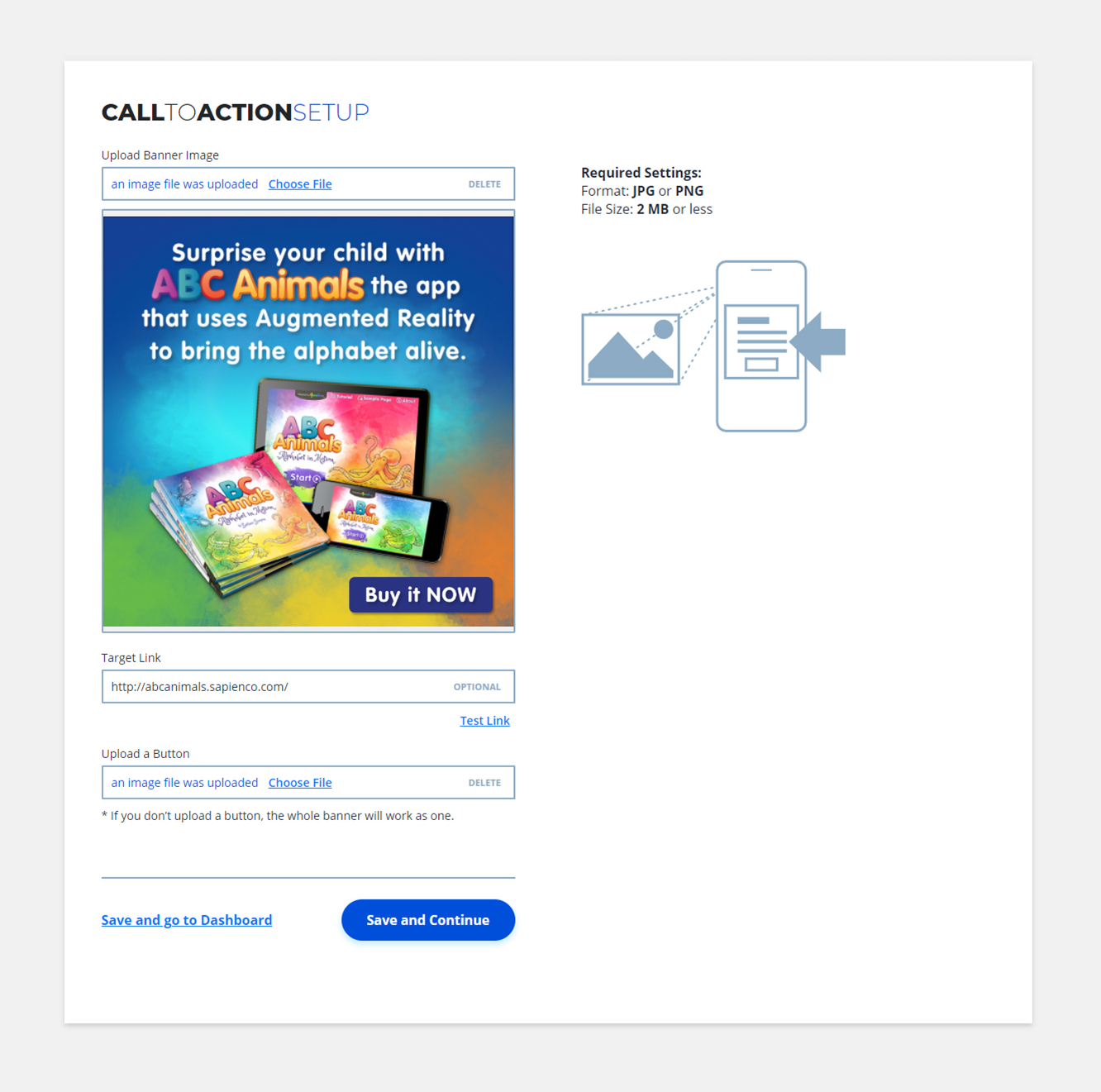
    • Upload a button (optional) or let the image be the button


    target setup 3


    Our imaged-based call to action allows us to present the user with additional information, product pages, polls, surveys, interactive content, deep-links, anything you can include in an image with a simple HTML link.


    After you complete the three easy steps, you tap or click on save and continue; this will take you to our confirmation page. Finally, if everything is OK, you can press publish.

    In our system, you can make changes at any time. And you can control expenses by limiting the number of recognitions and views you want to allow in a given period of time. As long as your project is live, you can make any changes you want. But be careful—your changes take effect in 30 seconds to five minutes. Your content is live; and no programming knowledge is required!


    Technologies we have seamlessly incorporated into our platform include:


    Other tools we believe are viable and well supported include:


    AR is affordable, immersive, and becoming a proven technology; it is essential to evaluate whether it  should be part of your business strategy.

    Work collaboratively (you can add your team to the platform at no additional cost), schedule content release ahead of time, make adjustments to your projects anytime.

    Release target-based, target-less, object tracking, scene tracking, self-facing, and real world-facing augmented reality experiences in minutes (not including creating creative content).


    In my next post, I plan to show you easy it is to publish browser-based augmented reality content in three easy steps at SparxWorks. Visit us at www.sparxworks.com to learn more about our AR business solutions. You can also come to see us in action this coming November 15 at www.ARExperience.us. This experiential conference will bring together the top brands and agencies with the hottest companies and services in AR in a collaborative way to foster the growth of our AR community.

    We look forward to seeing you there at the Faena Hotel in Miami beach.

  • Augmented Reality: Why do you need an AR strategy?

    Augmented Reality: Why do you need an AR strategy?

    Undoubtedly many businesses are asking themselves this very question, is AR a key part of our strategy moving forward? This, of course, is a very sensible question to ask. The simple answer is that you do need an AR strategy.   AR is, in a way, like the mobile revolution. It allows us to connect the world (physical) with the digital world in a way that VR could only dream of.

    When planning your strategy, there are a few suggestions I think you will find helpful.


    1. Identify what the goal is. For example:

      • Discover – Brand awareness, reach (views/impressions)

      • Experience – Engagement, does the user trigger the experience?

      • Action item – This would be an outcome. Did the user made a purchase, or take the action you were suggesting? (sign up, vote, survey, etc.)

    2. Tracking is a natural thing to do with all AR options. You will need to track a combination of metrics to measure success at various points in your AR strategy plan.

    3. Keep in mind quantitative metrics and qualitative metrics that help you measure things like how your brand is perceived, overall experience, etc. Surely your creative team will have plenty to contribute here.

    4. Analyze the overall impact of AR on your media plan.


    Remember, AR is not a strategy in and of itself, but a way to extend your addressable market and make sure your products and services reach the target customer.  AR leverages mobile devices (and HMDs) and connects all media to provide a consistent user experience.

    • AR connects all your print media, making their performance measurable.

    • AR connects objects to your digital strategy making it possible to track usage and overall user experience.

    • AR extends your commerce efforts not by replacing the store experience but rather by complementing it. AR allows users to see items in their own space; if a consumer is shopping for a couch, the consumer can see if it fits the desired area. The consumer may still want to go to the store and try it, but AR facilitates that process by resolving, in this case, a practical issue which is size.

    • AR increases engagement and immersion without taking you out of the real world.

    • AR can provide target search.


    In sum, AR can connect your store, eCommerce, website, products, and your consumer behavior data and areas of interest, allowing businesses to improve user experience, product assortment, and positioning and information about products and services.

    If you want to learn more about how AR can help your business, please contact me or visit our website www.sparxworks.com or come see us on November 15 at www.ARExperience.us. This experiential conference will bring together the top brands and agencies with the hottest companies and services in AR in a collaborative way to foster the growth of our AR community. We look forward to seeing you there at the Faena Hotel in Miami beach.

  • Augmented Reality has Reached the Tipping Point: 10 Tips to take advantage of AR

    Augmented Reality has Reached the Tipping Point: 10 Tips to take advantage of AR

    We hear a lot about Extended Reality these days and, while neither AR or VR has reached maturity, AR is already having a significant impact on most business sectors. Retailers, advertisers, educators, travel experts, and more have begun to incorporate AR into their products, services, and marketing campaigns.

    In a couple of years, 5G will be a reality, at least for all of the US, and probably many countries in the European Union and Asia. If you are just learning about 5G and wondering how it is going to impact AR’s growth and subsequently your products or services, you are not alone. 5G is the fifth generation cellular network technology that will allow us to stream content directly into mobile devices and computers, in most cases without a download.

    With over 1,000 AR companies already in existence, sometimes it’s hard to understand the landscape.  Are they all the same? Which company or technology will suit your needs?, What kind of AR, or aspect of it, matters to you? I hope the tips below help you better understand your options, and how you may start to develop a solid strategy, use cases, and analyses to leverage AR for your business moving forward.

    1. Focus on mobile. It is the real addressable market and is being propelled by both Apple and Google,with critical hardware innovation. Over a billion devices are now AR ready.

    2. I Love Magic Leap, and Hololens, and others, but consumers, and most small and medium businesses are not ready to spend thousands of dollars per device any time soon (and perhaps never will be.). Furthermore consumers are not going to walk around with bulky HMDs that make Googles’ smart glasses from a few years ago look cool. These kinds of devices are many years away from becoming mainstream (other than in amusement parks and some entertainment venues).

    3. Current market-leading technologies you should learn about, including their differences are ARKit, ARCore, Vuforia, Wikitude for software and Qualcomm if you are interested in hardware.

    4. Leading enabling services and platforms you should investigate are: SparxWorks, Augmania, Spark Studio, Lens Studio (Snapchat).

    5. Three key things you need to be mindful of so past mistakes are not repeated

      1. No proprietary authoring environment! Pay attention to services that let you leverage your team’s expertise, the tools you know how to use, and enable creativity and that basically makes it easy and efficient to publish AR. Don’t go down the Betamax hole!

      2. Choose a platform or development solution that is flexible, efficient and easy to use.

      3. When you investigate financing options, remember that flexible licensing plans are hallmarks of companies committed to being true partners. No one shoe can fit all!

    6. Usability, as it relates to your products and services, is extremely important. Do your homework, create strong use cases, be practical, sometimes less is more.

    7. Understand what tools, platforms, or distribution ecosystems can actually reach your market. For example don’t try to reach baby boomers with SnapChat, or millennials with Facebook.

    8. Seek the right help. If you don’t have an in-house expert seek a consultant that has real experience, and is actively engaged in developing real solutions, Accenture, Media Monks, RYOT, SparxWorks, are some companies that come to mind.

    9. Understand the legal issues that can arise from the use of AR, and VR for that matter.

    10. And finally, you don’t have to hit a half-court shot. To use a well worn but true cliché, Rome was not built in a day. Take it step by step. Start simple. Remember what your products and brands are about before creating AR /XR experiences. Make a lasting impression, not a “saw it, cool, next” moment.


    I hope this basic list helps you get started or steers you in the right direction. If you’d like to learn more about Augmented, Mixed, and Virtual realities please join us at the Mobile World Congress in Los Angeles from 10/22 through 10/24. I will be discussing strategy opportunities with an amazing panel on10/23 at 11 AM. I will be joined by Raffaella Camera (Accenture), Olivier Koelemij (MediaMonks), Nigel Tierney (RYOT), Silke Meixner (IBM), and Patrick Costello (Qualcomm). We look forward to sharing what we have learned with you. If you can’t attend, request our PPT presentation which includes valuable information and analytics about the industry. It is free!

    If you can’t make the date, we’ll also be presenting at Digital Hollywood November 12, CES January 6, and Mobile World Congress in Barcelona this coming February.

    I look forward to seeing you and answering your questions.

  • How to Make Money with AR: Introducing “SpectatAR”

    How to Make Money with AR: Introducing “SpectatAR”

    Over the past two years, we have seen numerous examples of how AR is becoming a game-changer for many industries. Among those examples/pilots some have actually made a lot of money, others a little bit, and most have served just as  examples of things to come.

    This year we have focused on working with companies that are ready to integrate AR as part of their business model. The first adopters for business uses have come from retail, advertisement, entertainment, and hospitality vertical markets, and on a smaller scale, from training and education.

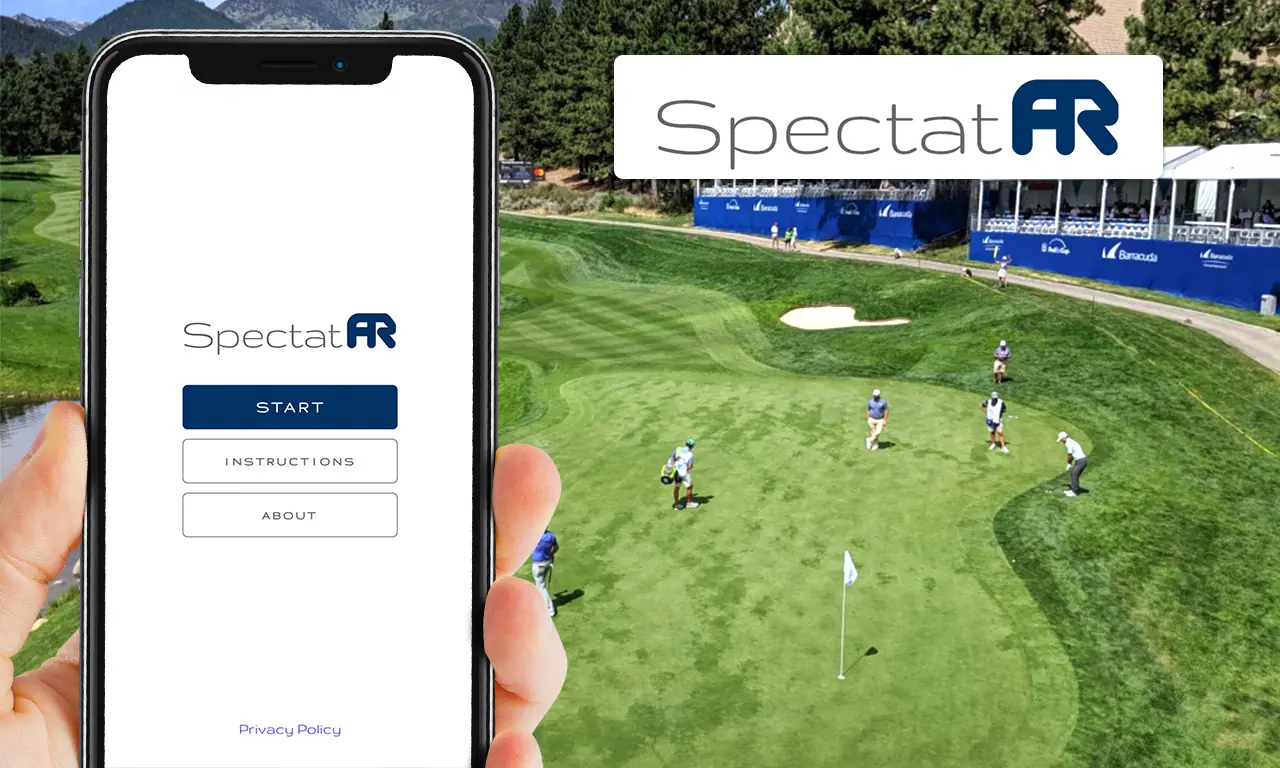
    Today I want to introduce you to “SpectatAR” a new application we built for Carpe Diem International, Inc. / BizNevada, a premier publication in Nevada,  “SpectatAR” is the first app they are rolling out, It is focused on promoting events before they take place, enhancing live events, and retaining users and brand building after events are concluded.


    “SpectatAR” Use Case 

    This is an interesting case.“BizNevada” was looking to add value to the print side of their business. After spending time analyzing their marketing strategies and goals and creating personas to better understand their end-users, AR was chosen as the best way to add value. The pluses include creating an immersive experience for the readers, access to special offers and services, and more importantly an expansion opportunity. With this new AR app they are now able to support and promote live events, opening new sponsorship, sales, and branding opportunities. Of equal importance is that by using the Hoodoo AR platform, all the services provided by “SpectatAR” will include strong analytics, which gives sponsors, content creators and publishers the ability to measure success and reach.

    A great deal of thinking, exploring and researching went into the final product. The insight and leadership provided by Chris O’Sullivan, and Richard Moore were key to arriving at the right solution. As Chris explained their go-to- market strategy, “We want to encourage sponsor and event organizers to use AR through SpectatAR to add excitement and boost the ‘cool factor’ for their events”.

    While coming up with a strategy took several months of hard work, creating the new app was fast and simple thanks to our cloud-based integrated AR Platform, “SpectatAR” was built, submitted for approval and launched in less than two weeks!

    “SpectatAR” is powered by our Hoodoo platform www.gethoodoo.com and can be downloaded via the Apple and Google app stores or through these links https://play.google.com/store/apps/details?id=com.nss.spectatar&hl=en_US and https://apps.apple.com/us/app/spectatar/id1473297416

    If you want to learn more about our “Hoodoo platform”, or about “SpectatAR” please follow the links above, join my blog, or just reach out to us.

    I will be blogging again with more use cases and practical ways to add AR to your marketing strategy to create added value and extend your brands.

    I will be speaking at the Mobile World Congress conference in October, and Digital Hollywood in November.  More on this in my next blog post.


  • Augmented Reality Highlights from Digital Hollywood—What We Learned!

    Augmented Reality Highlights from Digital Hollywood—What We Learned!

    I just finished day one at Digital Hollywood. What an exciting day! I had the honor of kicking off the day moderating an amazing panel with Raffaella Camera (Accenture), Tony Parisi (Unity), Olivier Koelemij (Media Monks), Nigel Tierney (Ryot), Silke Meixner (IBM), and Michael Leventhal (Holmes Weinberg). Our conversation focused on real use cases, opportunities and challenges, and what we can expect in the near future. We ended the session distributing a PowerPoint loaded with information about the industry, success stories and more. You can download a copy free (no tracking, no login, no sale J) by clicking here: https://news.sparxworks.com/2019/05/21/dh_may2019/ and you can see the webcast of the session at http://www.videodigitalhollywood.com/SessionListTuesday.html Special thanks to Victor Harwood and his team for giving us a platform to inform people about this powerful technology.

    Of course mine was not the only session and there was much more to see and learn at Digital Hollywood. I was able to attend several sessions focused on the delivery of holographic images, virtual reality, investors’ perspective on XR, and more. Nancy King’s session was very interesting. It focused on how AR and MR are transforming digital interaction. One of her panelists was Ariella Lehrer, the creator of the AR app for “Game of Games” for the Ellen Degeneres show. This use of AR was “smashing success” to quote Austin Powers. You can see the webcast of the session at the Digital Hollywood website.

    For day two I am looking forward to Ted Cohen’s session on AR/VR/MR as new branding strategies, or as additions to your current strategy,. Among other panelists, Natasha French from VNTANA will participate.   Natasha’s company is one of the early pioneers delivering holographic images to consumers. If you attending DH, you should check it out!

    My next stop is  Augmented World Expo in Santa Clara. I will be there for the entire event. If you are interested in learning about how AR can be an asset to your advertising or branding efforts, or if you need help formulating your strategy to use AR for your brand, products, or services please come to my session “How to Make Money with XR” https://www.awexr.com/usa-2019/agenda/538-how-to-make-money-with-xr. I’ll be addressing how to make money with AR citing real experiences, oriented to the addressable market, with the most innovative approach and flexibility to create instant AR experiences, together with a marketing-friendly financial model.

    I will also be available for meetings from 5/29 through 5/31 along with our company chairman, Paran Johar.  We look forward to seeing you and learning about how we can help you incorporate AR into your brand and offerings.

  • Augmented Reality Advertising Strategy—a  Must!

    Augmented Reality Advertising Strategy—a Must!

    If you are working in marketing, advertising, PR, or retail, now is the time to develop an AR strategy for your brands and clients.  Everyone knew that AR was a powerful tool for gaming when Pokemon became an amazing success and created a billion dollar company in just 60 days.  And today, the success stories in retail and advertising are so numerous it’s hard to keep track all of them all.  L’Oreal, Ikea, 19 Crimes, Ellen’s Game of Games, and so many others have already proven the impact AR can have on a brand or campaign.  If these stories aren’t convincing enough, just look at where the smart money is going—Apple, Google, Amazon, Facebook, and Microsoft are all investing heavily in AR.  The question now is can you as a marketer, advertiser or brand afford to be left behind when we hit the big tipping point?

    If you’re not aware of its many use cases  you may wonder what makes AR such a powerful advertising tool.  Put simply, AR can take consumers directly to a website, or specific content; advertisers can engage users much more creatively bringing them directly to a video, commerce opportunity, or to an immersive experience.

    AR can also dramatically increase engagement with products as well.   Along these lines, I am proud to share that our company will soon be launching  two new AR enhanced toys with our superpartners at What Kids Want https://www.whatkidswant.com/.  These toys use AR to provide children with exciting immersive experiences while at the same time employing time-honored  play patterns. Jordan Kort, CEO of What Kids Want, reached out to us to create a joint venture and together we created the beginning of what we all hope will be an extensive line of products. Jordan’s experience with toys is amazing and the collaboration was a great blend of his toy knowledge and our tech skills. We are looking forward to creating more amazing products in the coming months. Extra thanks to Caroline Kim for all her marketing help!

    If you are planning to attend Augment World Expo this year in Santa Clara, clearly the premier event for AR, please do attend  my session “How to Make Money with XR”  https://www.awexr.com/usa-2019/agenda/538-how-to-make-money-with-xr. We’ll be addressing how to make money with AR. Well discuss real experiences, oriented to the addressable market, with the most innovative approach and flexibility to create instant AR experiences, together with a marketing-friendly financial model.

    I will be available for meetings from 5/29 through 5/31 together with our Chairman Paran Johar.  We look forward to seeing you and learning about how we can help you incorporate AR into your brand and offerings.