Author: William Newell

  • Augmented Reality: Light Field technology is here!

    Augmented Reality: Light Field technology is here!

    For the past three years I have been researching, prototyping, and developing augmented reality (AR) demos and even some AR products for mobile devices. In parallel I have been fortunate enough to host AR panels for just about the same length of time. This has allowed me to meet with the very top companies in the industry.

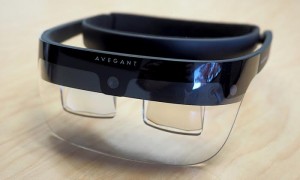
    Interestingly one of the first things I wrote about some time ago was Magic Leap. I loved their light field technology approach. My visit to their offices may have been the final push to make me a complete believer in AR as the next mega milestone in technology. But I am still waiting for Magic leap to enter the AR world publicly. But as often happens in life, while you are waiting for one thing, something else develops. I hosted a panel at GTC this past May thanks to my friend David Weinstein from NVIDIA, and I met a panelist from a company I did not know anything about. This company was Avegant, and the panelist was Eric Trabold, Chief Business Officer.

    I immediately enjoyed meeting Eric, and we went on to have a fantastic session at GTC together with other very talented panelists (they will the subject of other posts J). Soon after the panel I went and visited Avegant in Belmont. CA. My visit was, simply put, fantastic. Eric was kind enough to set up a full demo for me. What came next was really impressive.  I was able to walk through the solar system, where I was struck by the clarity of each detail – I could view individual asteroids passing by Jupiter, see the Mars’ Curiosity Rover, and view the weather patterns on the Earth. I spoke to a photorealistic volumetric 3D hologram where I could easily see features like her eyelashes and freckles, and I was able to hold animals in the palm of my hand!
    Augmented Reality: Light Field technology is here!

    It turns out Avegant has been around for a long time, the Founders started out with display research for the US military, evolving their technology over the course of time into a Consumer Product called The Glyph and now providing their Light Field technology to PC and Mobile OEMs that are going to bring Mixed Reality Headsets with Avegant Technology to the market. Other than Lytro, I think they are the only ones with this technology available today.

    Avegant blends the real world with digital images that you can interact with. I think image wise Avegant is in my top two (I go back and forth from one to two and vice versa). My understanding is that more robust interactivity and other features are in the works.

    If you want to learn more about this fantastic technology, and meet Eric in person, you can join us at my panel at Digital Hollywood this coming October 10, at 12 Noon http://www.dhsessions4.com/Tuesday17Fl6.html  We’ll also be joined by Leon Laroue (Epson Moverio), Michael Leventhal, (Holmes Weinberg PC, Formerly Magic Leap), Soulaiman Itani (Atheer), Tom Wesselman (Plantronics), and Mike Hildebrandt (DAQRI). Come and learn about how your company can be part of this technological revolution and tremendous business opportunity.


     

  • Augmented Reality: Working with Licenses and Securing Rights

    Augmented Reality: Working with Licenses and Securing Rights

    After Apple’s keynote just last week, which was preceded by the launch of Apple’s ARKit, and Google’s ARcore, you can safely assume that the avalanche of AR products and services is on!

    So, as we march into our first generation AR enterprise and consumer products, we find ourselves in a new frontier. Figuring out how to secure or assign rights, how to ask for or request royalties, and thinking how to protect your likeness, brand, and IP will be more important than ever. And of course, protecting new IP will be of equal importance.

    I wanted to put my arms around these issues, since I create content and also enable others to create content or services. So I reached out to my friend Michael Leventhal. Michael works at Holmes Weinberg, P.C. He has worked with media, and digital properties for a long time. He was also Magic Leap’s legal counsel. I think his combined experience puts him in a unique position to advise companies engaged in content creation and software development.

    Michael started by reminding me that you need to begin by asking yourself why you want to use AR as a starting point. How you negotiate for rights, how you handle a potential revenue share, or an advance on royalties starts there. You have to know why you are doing something to be able to determine who your audience is, the potential size of your market, and the business opportunity.  Once you have determined these factors, you are ready to approach the question of rights and brand protection with enough information to enable a qualified legal advisor to give you good input.  For many of us, knowing how to identify the right legal advisor is tricky.  I asked Michael for his thoughts on this matter and he suggested that in choosing legal help you should:


    Look for someone who is knowledgeable about the kind of project you are making; you probably don’t want someone learning on your dime.

    Broad knowledge of intellectual property.  It’s important for your attorney to understand what is protectable in what you are creating, and to be able to negotiate and document both your assignment of IP rights to third parties, and bringing necessary IP to your project from outside owners.

    Business/corporate knowledge.  Your attorney should be able to understand your corporate structure (or help you create it, if that hasn’t happened yet), and assist you in documenting financing, whether that is from project based or equity investment.  You’ll be bringing on employees and consultants, so, an understanding of the legal issues related to these categories, and the ability to draft and negotiate these agreements is crucial.

    Connections in the AR/MR/VR world.  Attorneys don’t traditionally play the role of matchmaker, but, if you have an attorney who knows the experts in the fields you’re working in, and can connect you with thought leaders, all the better.

    Partnerships, licenses, collaborations, etc.  Often, financing, distribution, and marketing, among other areas, can be critical to the growth and success of your project.  Having an attorney who understands how to structure these kinds of deals can be a powerful asset to your company.


    If you want to learn more about this topic, how to create an AR experience, and meet Michael in person, you can join us at my panel at Digital Hollywood this coming October 10, at 12 Noon http://www.dhsessions4.com/Tuesday17Fl6.html . We’ll also be joined by Leon Laroue (Epson Moverio), Eric Trabold (Avegant), Soulaiman Itani (Atheer), Tom Wesselman (Plantronics), and Mike Hildebrandt (DAQRI). Come and learn about how your company can be part of this technological revolution and tremendous business opportunity.

  • 5 key tips to make sure your augmented reality initiative is a success

    5 key tips to make sure your augmented reality initiative is a success

    Let me start by saying that as a gamer at heart I love VR. However from a creative standpoint, real world application, and overall potential I am convinced that augmented reality (AR) provides a much bigger and interesting opportunity.

    Both AR and VR concepts have been around far longer than most people imagine. VR has been viewed for decades as the future, particularly for games, simulations, and at one point, to drive the creation of virtual worlds. For gaming and simulations VR can deliver a rich experience. But some of the old challenges still remain—limited social interaction, expensive to produce cool applications, risky ROI (the end user installed base is not as big as one would imagine and it is fragmented—accessed by multiple hardware systems).

    AR on the other hand is more social by nature because you don’t leave the real world. You can spend more screen time with it because you are not isolated. And in many cases you can use already existing devices to use the technology (2 billion mobile devices world wide). Don’t get me wrong. There are still many challenges to conquer, but there are also many more potential immediate applications for the technology.

    If you are interested in using AR for your business, products, promotions, etc. AR can definitely be a game changer for you. But there are some practical things you should keep in mind before you decide how to use this new technology.

    1. Like any media it all starts with a solid idea, objective—a clear vision of what you want to call attention to, or the point you want to make. Yes, writing is a big part of it, just like with movies, games, and any story.

    2. Consider that AR and mixed reality (MR) combine the real world with virtual elements. Planning, staging and particular attention to the user experience and user interface are super important. Simple is better.

    3. Think about it in three parts. First, setting. Next, context of the experience you are going to offer. And last, action or interaction you want the user to take during or towards the end of your AR experience.

    4. There are over 300 companies (and growing) dedicated to AR, but they are not all the same. Some companies provide core technologies and are essentially B2B businesses—oriented towards developers or publishers. Other companies specialize in vertical markets using other company’s technologies to deliver AR, and some companies are development teams, very similar to game or mobile applications development studios.

    5. Don’t forget, analytics are essential. The web, and mobile industry have shown the value and power of analytics. Analytics make it possible to improve user experience, fix defects, and add new features based on evidence and real-time feedback.


    There are of course other factors to consider, but you don’t have five hours to read now, right? To learn more about how North South Studios can help you use AR to extend your brand, you can contact me at 310-318-6156. Or join me and other AR experts at my upcoming panel at the Media Summit http://www.digitalhollywood.com/MediaSummit2017.html in New York this coming March 7 at 3.30PM

  • AR: New Frontiers, New Deals

    AR: New Frontiers, New Deals

    In my past few posts I have repeatedly expressed my enthusiasm for AR. There’s no question that as a geek at heart, looking at new technologies, tools, platforms, form factors, UI and other innovations is tremendously exciting. But I am also a businessman and I know that new technologies and new distribution channels also bring new challenges that can’t be ignored. The art of making deals, licensing content, knowing with whom, and how to partner, or set up a joint venture is as essential as knowing the technology options intimately. Just think about the opportunity that IBM left on the table when it let a little company named Microsoft lead the personal computer revolution! Or when Philips chose OS9 for its CD appliance instead of choosing MS DOS. Ancient history, I know, but so telling, and there are plenty more stories like this one in the annals of computing.

    As you know by my prior posts, I am moderating a panel on AR Next Generation Apps from Education to Gaming at Digital Hollywood http://www.dhsessions3.com/Tuesday16Fl5.html this coming October 18th. I wanted this session to be the most informative session of its kind and towards that end I have put together a group of the most talented tech innovators in the industry. And, given the lessons of the past and our shared interest in prospering, I made sure to have a person with great insight into the business aspects of AR as well.

    His name is Michael Leventhal. He is a partner at Holmes Weinberg, PC. and was formerly VP of Legal Affairs for Magic Leap Inc. Michael has been helping creative, technology, and investment teams put together successful partnerships, licensing, and distribution agreements for many years. And he is one of the very few professionals in his field that has significant real experience putting together content, and partnership deals with AR as the key technology.

    Michael will help us address aspects of AR that are related to business—things like how we are going to look at distribution rights and licensing in this new field. Michael is one of those rare birds who, in addition to his business experience, has a lot of experience on the creative side. He has worked with start-ups and large corporations, which gives him a broad perspective that addresses many different constituencies.

    If you are a film or television content creator, distributor, or perhaps involved in the creation of content, or materials for training, or information in other fields, you will want to join us at our session. We’ll address technology, UI, best practices, and of course, deal making.

  • GPU Essential hardware component for AR and VR

    GPU Essential hardware component for AR and VR

    Continuing with my current series of post covering AR and VR I thought it would be a good idea to talk a little bit about hardware. I know is not the sexiest part of the story with AR and VR, but I think it is a key component for those who really want to learn and understand the ins and outs of these two emerging technologies.

    For years we focused on the CPU as a central component for strong performance in a computer, and of course that has not changed. Today the current CPUs available, for example Intel’s i5 and i7, are extremely powerful and can handle the workload in any scenario. This does not mean there is no room for improvement, of course there is, but for now we have most of the power we need.

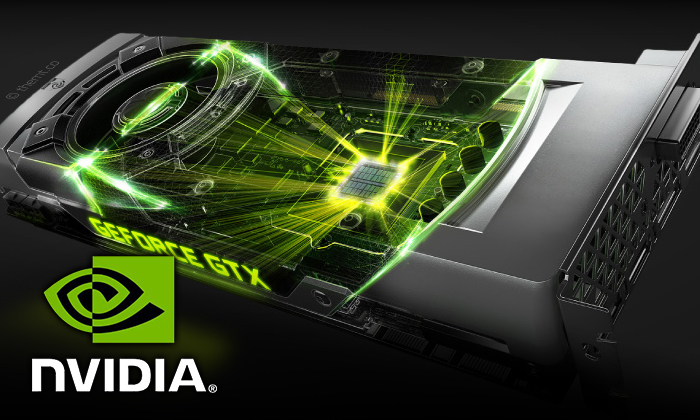
    The hardware revolution is now more focused on another key component for any computer or mobile device. It is focused on the ability to process graphics. GPUs (Graphic Processing Units) are a key to enabling a rich display of video and images on any device. In your computer you have a video card, in your mobile device you typically have a dedicated co-processor designed to accelerate graphics’ applications, 3D content, etc.

    In this and my past few posts I have been trying to share information regarding key technologies that are behind AR principally, and also VR. One key company behind this new technological revolution is NVIDIA, a pioneer in visual computing with more than 20 years of experience and success. NVIDIA is based in Santa Clara California, and its focus in the creation of GPU’s (Graphic Processing Units). Their technologies are behind advances in AR, VR, and even self driving cars!

    So why are GPU’s so important? Well the simple answer is because AR (and VR for that matter) rely on the ability to process super rich graphics to provide an engaging experience, functions like multi-res shading, 360-degree video, and many others are key ingredients to a rich, immersive user experience, which is essential to AR and VR.

    [blockquote width=’50’]

    What exactly is a GPU? If you look it up online you will get the following definition “graphics processing unit, used primarily for 3-D applications. It is a single-chip processor that creates lighting effects and transforms objects every time a 3D scene is redrawn. These are mathematically-intensive tasks, which otherwise, would put quite a strain on the CPU.”

    [/blockquote]

    NVIDIA’s wide range of products, continuing effort to create drivers, and ongoing investment in research makes them a key contributor to technology in general, and also a key player in the future of AR. Perhaps by now you are wondering why I concentrate so heavily on AR in my posts. I guess I agree with Tim Cook, Apple’s CEO when he said “”There’s virtual reality and there’s augmented reality — both of these are incredibly interesting. But my own view is that augmented reality is the larger of the two, probably by far.”

    David Weinstein, Director of Professional AR and VR at NVIDIA will be with a select group of AR innovators at Digital Hollywood this coming October 18th http://www.dhsessions3.com/Tuesday16Fl5.html. David holds a Computer Science PhD, and is the former COO of Numira. He holds several patents and has a lot of experience with algorithms, image processing and related technologies. David will bring attendees up to date on his view of AR and its possibilities for storytelling, and his thoughts on how this technology may impact the use of video or the creation of content.

    Roy Ashok (DAQRI), Brian Blau (Gartner), Jim Marggraff (Eyefluence), Ronen Horovitz (Eyecue-tech), Michael Leventhal (Former Magic Leap), and I will also participate in the panel. Please do come and learn how your company can be part of this technological revolution and tremendous business opportunity.
  • The Value of Platforms for AR: The DAQRI Solution

    The Value of Platforms for AR: The DAQRI Solution

    If you are looking to incorporate AR into your products and services, there are many things you need to consider in terms of technology. Fortunately, a few companies have focused on making the task as painless as possible.

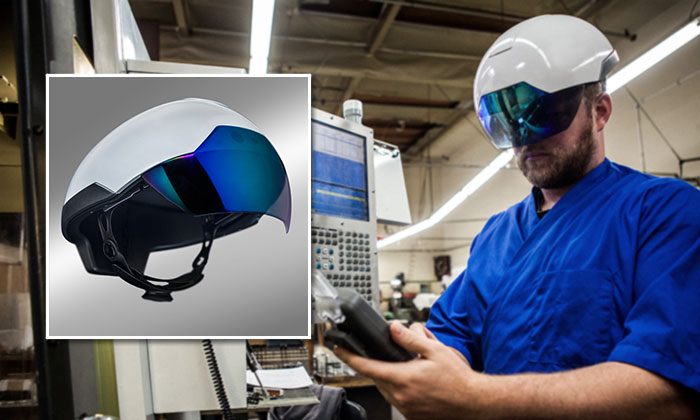
    DAQRI is one of the leaders in this space and I recently had the privilege of spending some time with their Chief Product Officer, Roy Ashok.  During our conversation I learned about DAQRI’s commitment to creating the strongest set of tools to transform the way we work in many fields.  By focusing on cutting-edge devices and tools, they are enabling developers to create a new wave of next generation applications.

    DAQRI is focused on bringing AR everywhere. Their flagship product is the DAQRI Smart Helmet, which will increase productivity, efficiency and safety for workers. And for those of us in content creation, they will offer a wide range of tools to easily create experiences for the helmet.

    DAQRI also owns and supports ARToolKit, which is an open source, cross platform software development kit (SDK) that allows developers to create AR applications for all major platforms.

    ARToolKit, enables creativity and opportunity. At NorthSouth Studios, we have already been able to create amazing experiences with it.  For example, download our free Snap Tolaca application (available on IOS https://itunes.apple.com/us/app/snap-tolaca/id1081059890?mt=8 and Android https://play.google.com/store/apps/details?id=com.ar.nss.demo&hl=en) and give it a try.  This app allows users to take pictures of themselves with a fictional game character in any real world setting.  It’s fun and it only begins to scratch the surface of what you can do with the ARToolkit!

    Some key pluses about the ARToolKit are:

    • open source
    • multiplatform
    • mobile focused,
    • supports the development of next generation apps for smart glasses
    • fast enough for real time AR applications

    One of the biggest challenges in creating AR applications is the tracking of the users viewpoint.  The ARToolkit uses vision algorithms to solve this problem, enabling easy development of a wide variety of AR applications.

    To learn more about DAQRI, go to their website http://daqri.com/ or better yet, come hear Roy Ashok at Digital Hollywood October 18. http://www.dhsessions3.com/Tuesday16Fl5.html at the panel I am moderating. Roy will be joined by David Weinstein (NVIDIA), Brian Blau (Gartner), Jim Marggraff (Eyefluence), Ronen Horovitz (Eyecue-tech), and Michael Leventhal (Formerly of Magic Leap)—all leaders in the AR field.

  • Visual Recognition: A Key Factor for AR

    Visual Recognition: A Key Factor for AR

    Continuing with my series of posts about Augmented Reality, let’s take a look at visual recognition. For those of you who are just starting to evaluate AR as a potential addition to your services or products, visual recognition is at the very heart of this new technology. Whether you are producing AR or MR content, visual recognition is the life and soul of the user experience.

    Several companies have filed patents, created algorithms, and platforms that employ visual recognition. Today we are going to look at one of the leaders in the space, EyeCue Vision Technologies, www.eyecue-tech.com

    Partners Ronen Horovitz, Ran Kaftory and Yaky Yanay founded EyeCue in 2007. Ronen and his team have always been innovators, and their earliest efforts were already paving the road for AR as a commercially viable technology. Their focus has always been visual recognition for education and entertainment applications.

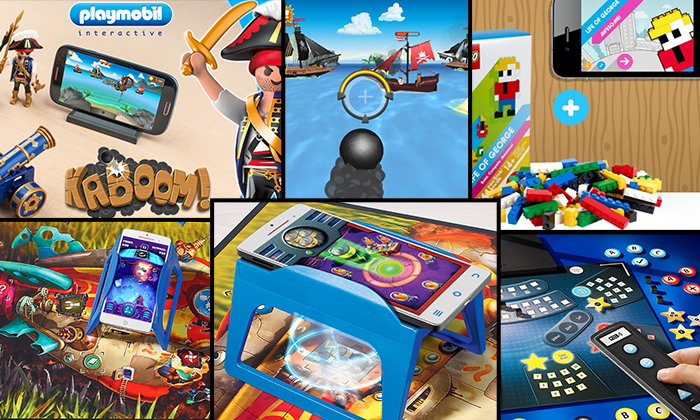
    The EyeCue team includes brilliant algorithm experts, software developers, and visionaries. They are behind the success of great toys like LEGO Life of George, Playmobil Kaboom! SickBricks, Fashion Creator, and many more. Their visual recognition technology can power AR apps by scanning any 2D or 3D objects, digitally bringing them to life. They can even work with 3D printers. Imagine the possibilities—you can create an interactive experience where physical elements can be recognized and instantly become part of a digital adventure! Or perhaps you have a linear experience, or print based experience that can become interactive just by looking at it with eyewear, or through a mobile device. This is all possible today.

    So what exactly is visual recognition? trying to mimic our human vision, It’s a technology that uses complex math and learning algorithms to analyze images full of pixels and give you relevant information about them. This information typically focuses on detecting / recognizing what an object is. You can then organize these images, classify them, and be able to generate / trigger specific actions based on what you are trying to achieve. For example if you create a documentaries you can create a second screen experience by using AR to recognize places, objects, or print materials to trigger a complementary or tutoring experience. If marketing is your trade you can create campaigns that make every print add or billboard an interactive add that comes to life with a call to action, and capture data and performance for the ad.

    To learn more about visual recognition, I suggest you come to the session I am moderating at Digital Hollywood on October 18th http://www.dhsessions3.com/Tuesday16Fl5.html. We will focus on the next generation of AR apps from education to entertainment, and Ronen Horovitz will be a panelist.

    AR experts Roy Ashok (DAQRI), Brian Blau (Gartner), Jim Marggraff (Eyefluence), David Weinstein (NVIDIA), and Michael Leventhal (Formerly of Magic Leap) will also be on the panel. Come meet the leaders of the companies that are making AR possible!

  • Augmented Reality: The Importance of UI /UX Innovation

    Augmented Reality: The Importance of UI /UX Innovation

    I think it’s fair to say that most people in the tech industry agree that AR and VR are the future of computing. Companies around the world are spending vast sums of money and resources exploring the opportunities. Most efforts have centered on hardware like smart glasses, visors, helmets, and other form factors. A great deal of attention has been placed on visual recognition, but a challenge that comes along every time we go through a quantum leap in technology remains—user interface.

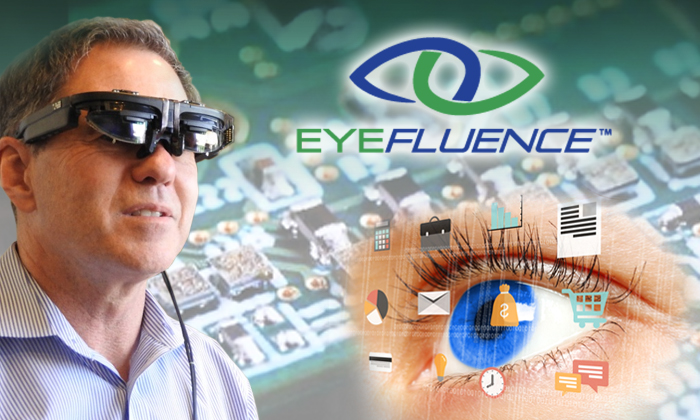
    Without intuitive access, new technologies cannot thrive. That’s why I was so excited when I learned about Eyefluence, a company that has taken on the challenge and come up with intuitive interactions that really work with the new form factors. Eyefluence, lead by CEO Jim Marggraff, one of the brightest minds in technology innovation, focuses on what makes sense. Tapping and swiping, while natural for a hand held device, are not really natural for a HMD or smart glasses, so Eyefluence focuses on your eyes!

    Eyefluence’s vision- driven interface focuses on the eye-brain connection. You use eye movement, to interact and as quick as you can think, you can interact. As they describe it on their website, “eyes can instantaneously transform intent into action.” In just a few minutes a typical user can master the “language” of their eye-interaction technology. Undoubtedly you’ve heard of or seen eye-tracking technologies in the past, but they usually follow the basic principles of standard mouse interaction. With Eyefluence there is no need to look at objects and dwell on them to activate them.

    Intriguing isn’t it? I wish I could fully explain the subtlety of their interface to you in writing but this is one you have to see to truly understand. Luckily, Jim Marggraff will be discussing the technology at my AR session at Digital Hollywood this October 18th http://www.dhsessions3.com/Tuesday16Fl5.html. Please do stop by to learn more about eye-interaction technology. And if you can’t join us, you can learn more about Eyefluence at www.eyefluence.com.

    Roy Ashok (DAQRI), Brian Blau (Gartner), Ronen Horovitz (EyeCue-tech), David Weinstein (NVIDIA), Michael Leventhal (Formerly of Magic Leap) will also be on the panel. Come meet the leaders of the companies that are making AR possible. We’ll all be available to answer your questions. Come and learn how your company can be part of this technological revolution and tremendous business opportunity.
  • Augmented Reality: Next Generation Apps

    Augmented Reality: Next Generation Apps

    I started working on Augmented Reality (AR) and Mixed Reality (MR) almost two years ago. At first I focused on creating demos, proofs of concepts that could serve to spark the imagination. Later I joined Google’s Project Tango initiative and began looking at the possibilities more in depth. I examined HMDs (head-mounted displays) and various technologies, learning about new approaches to UI (user interface) and UX (user experience).

    [blockquote width=’30’]

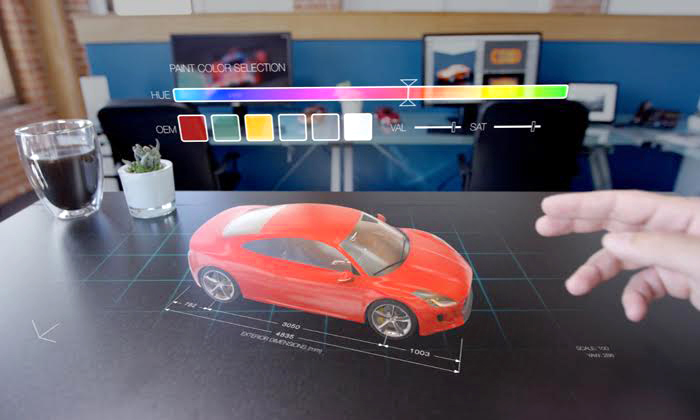
    AR and MR technologies allow us to superimpose computer-generated images on a person’s view of the real world. The result is a blended view of both the real world and the computer generated images, which can be interactive.

    [/blockquote]

    I was immediately fascinated by the possibilities, imagining a future where computers and mobile devices are replaced by something as simple as smart glasses. I continued learning about the finer aspects of AR and MR: visual recognition, gesture technologies, the use of our own eyes as part of a revolutionary UI, and more.

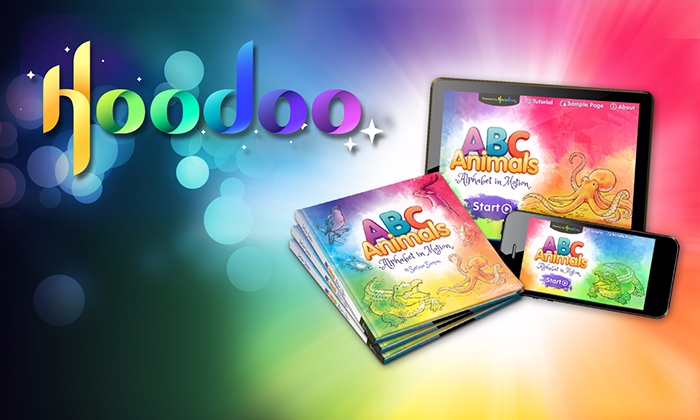
    As a result, NorthSouth Studios launched a division focused on AR and MR and we have grown from creating demos to developing a line of our own products. Our first-generation application, like Pokémon Go, ties in with over a billion mobile devices in the world. It’s called Hoodoo and it allows publishers to share augmented reality experiences with their audiences and customers with minimal cost and effort.

    At its simplest level, publishers provide print media or visual elements for display and Hoodoo makes it come alive. For example, say you have a magazine ad for a new car and some video footage that demonstrates the car’s most exciting features. With the Hoodoo app, users can point their mobile devices over the ad and see and hear the video content. Your ad literally jumps off the page and you and your team do not have to write a single line of code! And that’s just the first tier, basic service we offer. Hoodoo also allows more complex interactions, suitable for games, training and other uses.

    Our second AR/MR offering is a new line of educational products. First in line, and hitting the market in October, is ABC Animals: Alphabet in Motion written by NorthSouth Studios co-founder Sarina Simon (www.sarinasimon.com). The book and app combine the traditional joy of reading a picture book to a child with the entrancing vibrancy of AR.

    And there’s plenty more to come! We’re keeping our eye on the ball and focusing on HMDs and more immersive experiences. Toward that goal I have put together a spectacular Digital Hollywood panel which will take place on October 16th in Los Angeles. If you want to learn about the latest technologies, possibilities and meet the absolute experts in AR and MR come join us: see http://www.dhsessions3.com/Tuesday16Fl5.html. Our expert panel will cover the next generation of apps, from education to entertainment. I will be moderating the panel and afterwards I will be available to give demos and answer questions.

    I’ll be posting more articles covering our panel, panelists and their companies, and of course a great deal of information about AR and MR.

  • Thinking of Doing a Soft Launch for Your Mobile Game or App?

    Thinking of Doing a Soft Launch for Your Mobile Game or App?

    One of the great things about creating products and services is that every day is a learning experience. I love that about my job. I learn from our clients and their initiatives. I learn from my team, the experts and the interns. I have learned to appreciate that everyone has something to offer. I guess it’s part of growing (That’s a lesson that I started learning long before this, but truthfully it took me a while to master it.)

    I recently released a new mobile game. It’s a puzzle game named “Tolaca Rocks.” While this is not the first game I have released (been making games for a couple of decades), this one was special. Perhaps because it was the first direct release from my current company, with a very young team full of hope in Peru, South America.

    The game is not a commercial success, at least not yet, but it has helped us learn a lot about how to compete against larger budgets and companies that seem to have unlimited resources. We learned that the will to succeed, and a team’s dedication to the task, matters a lot. This is not a complete surprise since human capital is the most valuable asset of any company—when a talented group works together to achieve a goal, the goal is more accessible.

    I wanted to share what I learned about how to soft launch a game successfully, particularly when you need to do it with limited resources. Find below five easy steps for a best practice soft launch.

    Step One

    • Leverage friends and family, your immediate community.
    • Use all the free and low cost tools like social media, marketplaces, other free tools.

    Step two

    • Learn from your players.
    • Even a small sampling, let’s say 1,000 players can provide a good sampling of performance and areas to improve.
    • Pay attention to metrics, retention; day one, first week, first month are classic examples. Observe your conversion rate. It can help you project what you need to spend, or can help you decide next steps if your marketing budget is limited.
    • Carefully review performance, fun factor, difficulty, user interface, and overall user experience.

    Step Three

    • Survey your players whenever possible
    • Look for markets that have affinity for or need for your type of app or game.
    • If budget is limited, consider cost efficiencies.
    • Make sure that your OS requirements are correct.

    Step Four

    • Set up goals and monitor them.
    • Make adjustments to your game or app and release them as soon as possible. Don’t be concerned about updates. After all, this is a soft launch.

    Step Five

    • Once you have a proven build of your game or app you are ready for a hard launch.
    • Remember what you learned during the soft launch.
    • Be consistent, review analytics, pay attention to user satisfaction.
    • If possible, have an active community manager.


    You can learn more about my game “Tolaca Rocks” at www.tolacarocks.com. It’s free to play, so give it a try. I hope you find this information helpful, I will cover hard launch lessons learned in another post in the not too distant future.

    And speaking of the future, I will be moderating a Video Innovation panel at http://www.digitalhollywood.com  this Spring, My panel is on May 6, but I will be at the conference May 4, and 5. Look me up if you have questions about launching mobile applications or you need a game developer. I will also be demoing our latest samples for augmented reality. You can learn more about me and my company at www.northsouthstudios.com