Blog

  • Augmented Reality: Next Generation Apps

    Augmented Reality: Next Generation Apps

    I started working on Augmented Reality (AR) and Mixed Reality (MR) almost two years ago. At first I focused on creating demos, proofs of concepts that could serve to spark the imagination. Later I joined Google’s Project Tango initiative and began looking at the possibilities more in depth. I examined HMDs (head-mounted displays) and various technologies, learning about new approaches to UI (user interface) and UX (user experience).

    [blockquote width=’30’]

    AR and MR technologies allow us to superimpose computer-generated images on a person’s view of the real world. The result is a blended view of both the real world and the computer generated images, which can be interactive.

    [/blockquote]

    I was immediately fascinated by the possibilities, imagining a future where computers and mobile devices are replaced by something as simple as smart glasses. I continued learning about the finer aspects of AR and MR: visual recognition, gesture technologies, the use of our own eyes as part of a revolutionary UI, and more.

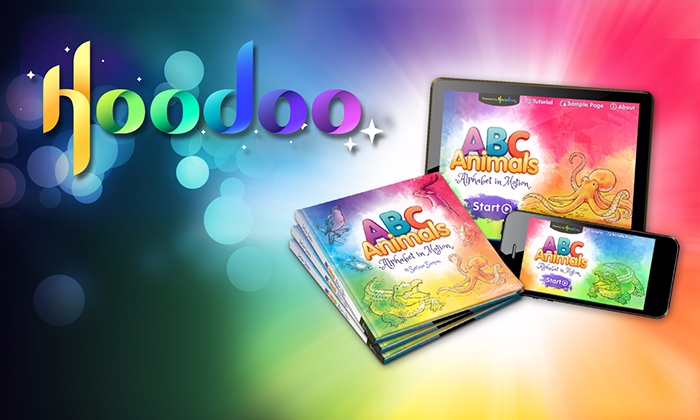
    As a result, NorthSouth Studios launched a division focused on AR and MR and we have grown from creating demos to developing a line of our own products. Our first-generation application, like Pokémon Go, ties in with over a billion mobile devices in the world. It’s called Hoodoo and it allows publishers to share augmented reality experiences with their audiences and customers with minimal cost and effort.

    At its simplest level, publishers provide print media or visual elements for display and Hoodoo makes it come alive. For example, say you have a magazine ad for a new car and some video footage that demonstrates the car’s most exciting features. With the Hoodoo app, users can point their mobile devices over the ad and see and hear the video content. Your ad literally jumps off the page and you and your team do not have to write a single line of code! And that’s just the first tier, basic service we offer. Hoodoo also allows more complex interactions, suitable for games, training and other uses.

    Our second AR/MR offering is a new line of educational products. First in line, and hitting the market in October, is ABC Animals: Alphabet in Motion written by NorthSouth Studios co-founder Sarina Simon (www.sarinasimon.com). The book and app combine the traditional joy of reading a picture book to a child with the entrancing vibrancy of AR.

    And there’s plenty more to come! We’re keeping our eye on the ball and focusing on HMDs and more immersive experiences. Toward that goal I have put together a spectacular Digital Hollywood panel which will take place on October 16th in Los Angeles. If you want to learn about the latest technologies, possibilities and meet the absolute experts in AR and MR come join us: see http://www.dhsessions3.com/Tuesday16Fl5.html. Our expert panel will cover the next generation of apps, from education to entertainment. I will be moderating the panel and afterwards I will be available to give demos and answer questions.

    I’ll be posting more articles covering our panel, panelists and their companies, and of course a great deal of information about AR and MR.
  • Thinking of Doing a Soft Launch for Your Mobile Game or App?

    Thinking of Doing a Soft Launch for Your Mobile Game or App?

    One of the great things about creating products and services is that every day is a learning experience. I love that about my job. I learn from our clients and their initiatives. I learn from my team, the experts and the interns. I have learned to appreciate that everyone has something to offer. I guess it’s part of growing (That’s a lesson that I started learning long before this, but truthfully it took me a while to master it.)

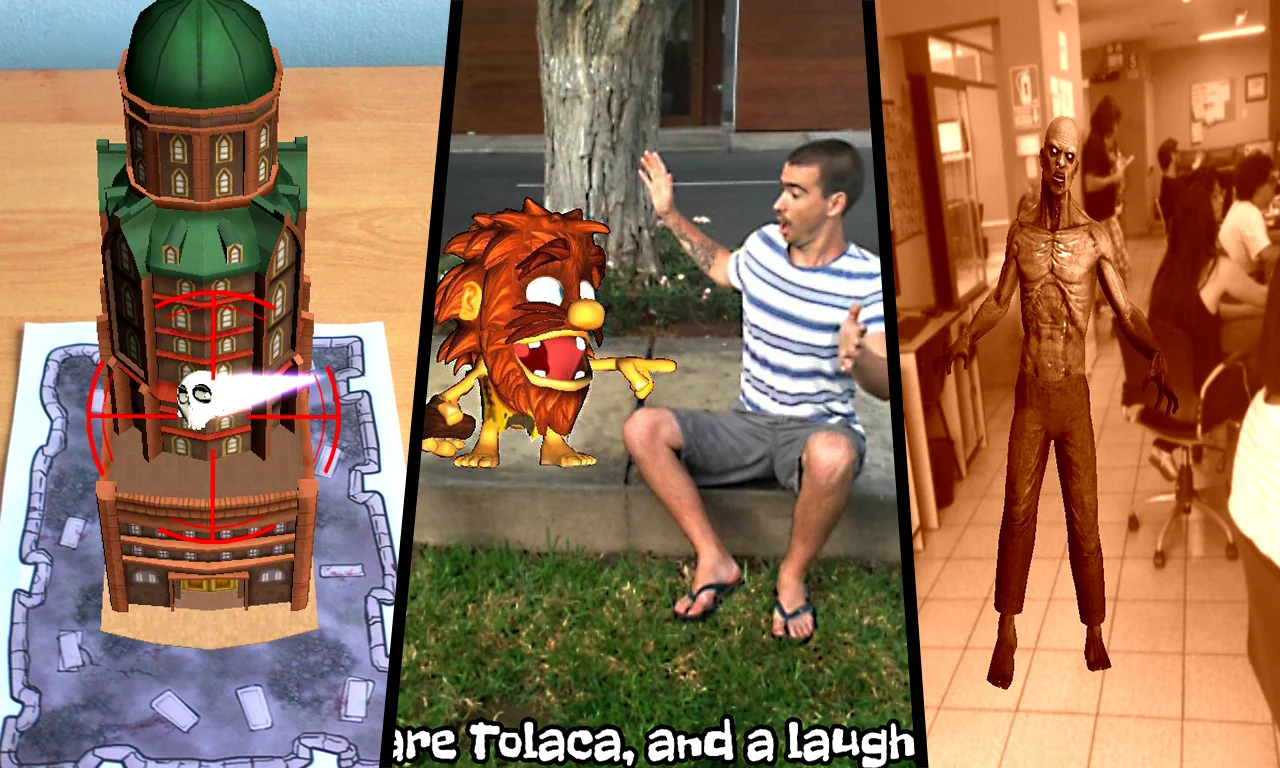
    I recently released a new mobile game. It’s a puzzle game named “Tolaca Rocks.” While this is not the first game I have released (been making games for a couple of decades), this one was special. Perhaps because it was the first direct release from my current company, with a very young team full of hope in Peru, South America.

    The game is not a commercial success, at least not yet, but it has helped us learn a lot about how to compete against larger budgets and companies that seem to have unlimited resources. We learned that the will to succeed, and a team’s dedication to the task, matters a lot. This is not a complete surprise since human capital is the most valuable asset of any company—when a talented group works together to achieve a goal, the goal is more accessible.

    I wanted to share what I learned about how to soft launch a game successfully, particularly when you need to do it with limited resources. Find below five easy steps for a best practice soft launch.

    Step One

    • Leverage friends and family, your immediate community.
    • Use all the free and low cost tools like social media, marketplaces, other free tools.

    Step two

    • Learn from your players.
    • Even a small sampling, let’s say 1,000 players can provide a good sampling of performance and areas to improve.
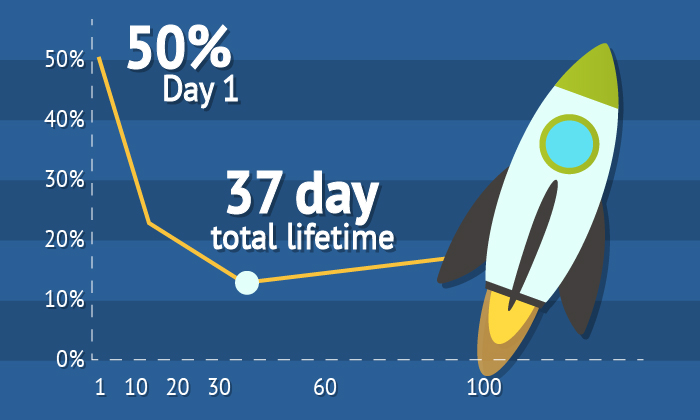
    • Pay attention to metrics, retention; day one, first week, first month are classic examples. Observe your conversion rate. It can help you project what you need to spend, or can help you decide next steps if your marketing budget is limited.
    • Carefully review performance, fun factor, difficulty, user interface, and overall user experience.

    Step Three

    • Survey your players whenever possible
    • Look for markets that have affinity for or need for your type of app or game.
    • If budget is limited, consider cost efficiencies.
    • Make sure that your OS requirements are correct.

    Step Four

    • Set up goals and monitor them.
    • Make adjustments to your game or app and release them as soon as possible. Don’t be concerned about updates. After all, this is a soft launch.

    Step Five

    • Once you have a proven build of your game or app you are ready for a hard launch.
    • Remember what you learned during the soft launch.
    • Be consistent, review analytics, pay attention to user satisfaction.
    • If possible, have an active community manager.


    You can learn more about my game “Tolaca Rocks” at www.tolacarocks.com. It’s free to play, so give it a try. I hope you find this information helpful, I will cover hard launch lessons learned in another post in the not too distant future.

    And speaking of the future, I will be moderating a Video Innovation panel at http://www.digitalhollywood.com  this Spring, My panel is on May 6, but I will be at the conference May 4, and 5. Look me up if you have questions about launching mobile applications or you need a game developer. I will also be demoing our latest samples for augmented reality. You can learn more about me and my company at www.northsouthstudios.com

  • Augmented Reality the New Marketing Frontier

    Augmented Reality the New Marketing Frontier

    In the many years I have worked in the digital arena I have worn several hats. I have overseen technical projects, designed games, acted as a creative director, and handled financial modeling. But no matter what hat I have had to wear, essentially my role has always been to help people and businesses launch and promote products and services.

    One of the most frequent challenges I face is working with people who don’t know how to use media to best tell a story or should I say, sell a story. Writers love words and sometimes they forget the old axiom that a picture is worth a thousand words. This was driven home to me again recently when I found a piece of research:

    James McQuivey of Forrest Research says one minute of video has the value of 1.8 million words, in context that is approximately 3,600 pages”

    Isn’t that the truth! Most of the time, you can use a few well-chosen words combined with the right imagery and convey a strong message in less than two minutes. Apple has shown us that minimalism works, that we need to focus on an intuitive approach to creating user interfaces, and a straight to the point message. Once interest has been established, the user is willing to explore an offering in depth. This confirms what I have long felt—that if you want an effective advertisement campaign with a high conversion rate, focus on video.

    But how do you focus on video if you’re using print ads? To me, this is the beauty and promise of Augmented Reality and this is why I am so excited about its prospects. With AR you can incorporate video into just about any print ad and deliver a full commercial, a call to action, generate a lead, demo a game—all just from a magazine, billboard, or sales sheet. You name it!

    I wish I could tell you that I am a genius, but I am not (although I think I am pretty smart). I just happen to be a great fan of video production, know a thing or two about streaming video, and more importantly have been lucky enough to work with AR in the early stages of its development. AR is currently in full expansion, I think that at the moment, the sky is the limit. There are various platforms to work with, techniques to get started, and plenty of room to innovate.

    If you are interested in developing products with Augmented Reality, or want to know how your print or video content can leverage this innovative technology, please come see me at the Game Developers Conference in San Francisco, I will be taking some meetings on 3/14 and 3/15 and will be available on 3/16, 3/17, and 3/18 at booth number 436 on the exhibits hall, courtesy of Prom Peru. If you want to make an appointment drop me a line at bnewell@northsouthstudios.com Want to visit Peru? Have a business that can use some production help? Come visit me at the booth and ask me how.

  • Augmented Reality is Here

    Augmented Reality is Here

    Many years ago I was blessed with participating in the launch of Philips CD-I. CD-I was the precursor of DVD and many set top boxes. Philips pioneered the use of full screen video playing from a disc. At the time, it was a quantum leap from VHS and Betamax technologies. Little did I know that the platform was the first step in what would become a once unimaginable technology revolution.

    Recently I visited Magic Leap and this time, having worked on launching a platform in the past I quickly recognized that we are on the eve of another exciting revolution. For those of you who are not familiar with Magic Leap, most people would define it by its focus on augmented reality, but after visiting with their team I think they are much more than a technology-driven group. Yes, the area of technology they are working on is augmented reality, but the real focus of the company is on ideas, creativity, and connecting people.

    Magic Leap has the two key ingredients for catapulting a new platform—a clear vision and the team to execute that vision. They are a strong team that has invested heavily in prototyping, paying close attention to the user experience, and the potential user interface. For those of us who are researching and working on how to implement new experiences in virtual reality (via Oculus rift) or in augmented reality, it is clear that UI is going to be very different from the common conventions we employ today in mobile and desktop development. The use of gestures and voice-activated commands are just the beginning of another chapter in the technology revolution. Without a clear understanding of how the UI will enable and be enabled by the technology, a new platform cannot reach its full potential.

    Augmented reality opens us so many possibilities. You can enhance print media, bring a map to life to learn about places around you in a way that no 2D map can equal, explore a landmark in detail, learn music, make your videos come to life by breaking the fourth wall. The potential implications for innovation are multiple, from educational methodologies, to industrial applications, to games, and traveling. And in my view, augmented reality is far more exciting than virtual reality because it incorporates the real world we live in–the actual physical space we occupy, as opposed to a completely unrelated setting. You name it; augmented reality is going to change the way we do many things in our lives.

    Magic Leap is not alone in the AR revolution. There are several technologies that are being created with the goal of enabling augmented reality for consumers. Microsoft and Daqri are two other companies that are investing their resources in doing it right. I will make sure to blog about these other companies and other advances in this field in the weeks ahead.

    I have focused my post today on Magic Leap because I was very impressed with their vision and with the quality of the team they have put together to execute that vision. I expect to hear and see great things from them, and I look forward to the next opportunity to collaborate with them.

    If you like to learn more about Magic Leap please visit their website at http://www.magicleap.com

    If you are interested in developing products with augmented reality, or want to know how your print or video content can take advantage of these innovative technologies please come see me at Digital Hollywood at the Ritz Carlton in Marina del Rey this coming Thursday, October 22 at 11:05 AM where I will be moderating a panel on Video Innovations, or drop me a line, or comment on this post.

  • Good Process Management is Good Project Management

    Good Process Management is Good Project Management

    All of us producing mobile applications, web apps, and software in general are always focused (or should be) on user experience—bringing relevant content to viewers in the best possible way. Whether you are working on a game, an educational product, an ecommerce site, or any other type of product, the common thread is that you are conveying an idea, information, and often a call to action.

    Top executives (no matter what size the company is) often spend a lot of time defining the strategic market, and selecting the “right” developer for a project. Once they select that developer they try to negotiate an airtight contract to ensure timely and cost-effective delivery. This are of course important factors, but much like John Lennon said, “Life is what happens to you while you are busy making other plans.”  Often “Your project is what happens to you while you are paying attention to other things”.

    I have implemented hundreds of projects and can’t tell you how often a project fails because the basics have not received enough attention. I started noticing this disturbing phenomenon many years ago and have given it considerable thought.  In my view, the problem is usually caused by one or more common missteps—lack of focus, lack of resources, or limited project management expertise. Over the years, I have seen companies underestimate how much effort and time it takes to complete a quality product and, perhaps even more confounding, underestimating the value of strong project management which inevitably causes chaos and poor results.

    I don’t think it takes a genius to remedy this problem.  It just takes focus and applying some simple (commonsense) steps

    1. Make sure you have a clear idea of what you want to accomplish

    2. Almost all projects start with writing, whether it is a script, a description, or documentation of facts, pay careful attention to what you write. Keep things organized. Remember other people have to read and make sense of this content.

    3. Be thorough with your business plan, analysis of the market place, creation of a business model, and survey of the landscape. I know no one likes to do this, but without it there is no end goal for the project, no understanding of why it will exist, who it is for, and how it will succeed.

    4. Don’t take on more than you can chew. Review what you are already doing. If you or your staff are completely booked, and what you want to start is mission critical, consider dropping other things or adding resources. If you can’t do either, then you’ll need to make a conscious effort and work more hours. If the goal is worth it, this should be fine right?

    5. If it needs to happen fast and it is important, don’t schedule vacations during the critical path. Your presence does not have just a practical impact on the project, it is also your leadership that is needed. Nothing is more demoralizing and uninspiring than working around the clock without leadership

    6. Project management and quality assurance are not an afterthought, but an important key to a successful project

    7. Make sure you have competence (not necessarily you personally).  For example, if you have a technology heavy project the person(s) directing the project should understand technology well.

    8. Set up a realistic time frame to complete your project. Consider that you need time to define and design it in detail, time to execute, time to do a limited launch so that you can do focus groups to test and make adjustments, and finally launch a product.

    9. Be prepared to support your service or product when it launches, not only from a service perspective, but have an active plan to promote it. “If we build it they will come” is not true in business.

    10. Be prepared to make adjustment. When you launch something on the web, mobile platform, or TV, your products and services are received by a community of people. These people communicate and expect to have the best experience possible. With their input you will be able to perfect your offering


    I hope you find these thoughts helpful for your next project. There are many great developers and consultants that can help you, but the best developers in the world can’t straighten a crooked tree.

    Love to hear your comments and suggestions. I will be posting regularly again. And if you need help my company North South Studios, in Los Angeles can help you.

  • Innovations in Video Streaming

    Innovations in Video Streaming

     The growth and popularity of services like Amazon, Netflix, Disney, and ESPN, have been instrumental in positioning video streaming as the new way to deliver video content. Recent announcements by HBO and CBS about soon-to-be launched streaming services confirm that video streaming is not only new, but perhaps on its way to becoming the preferred delivery system.

    In a prior post, see Good News for Video Content Creators and Distributers, I described several of the services which enable video streaming and I explained criteria for selecting the best one for you.  Today I would like to talk about how you can make your content rise to the top and avoid getting lost in all the noise. There is no single answer to this question of course, since many factors come into play when deciding how to market or spread the word about a product or service.

    Here are some technologies you should familiarize with that can help you rise to the top in a crowded market. One of the key issues is to make sure people can find you. To this end, a strong SEO (Search Engine Optimization) strategy together with a solid user acquisition campaign is essential.

    [blockquote width=’50’]

    You can learn more about video innovation and other related topics at the Digital Hollywood conference next week in Los Angeles. And, if you do come, be sure to drop by and say hello. I will be moderating a panel on Video Innovation on Thursday October 23 at 11:05 in the Ballroom Terrace and would love to meet you.

    [/blockquote]

    If you are one of those folks that has a very unique video, perhaps something that is growing through a viral movement, you can capitalize on your good fortune by using a service like www.jukinmedia.com.  This service is like having your own agent to represent you and syndicate your content.

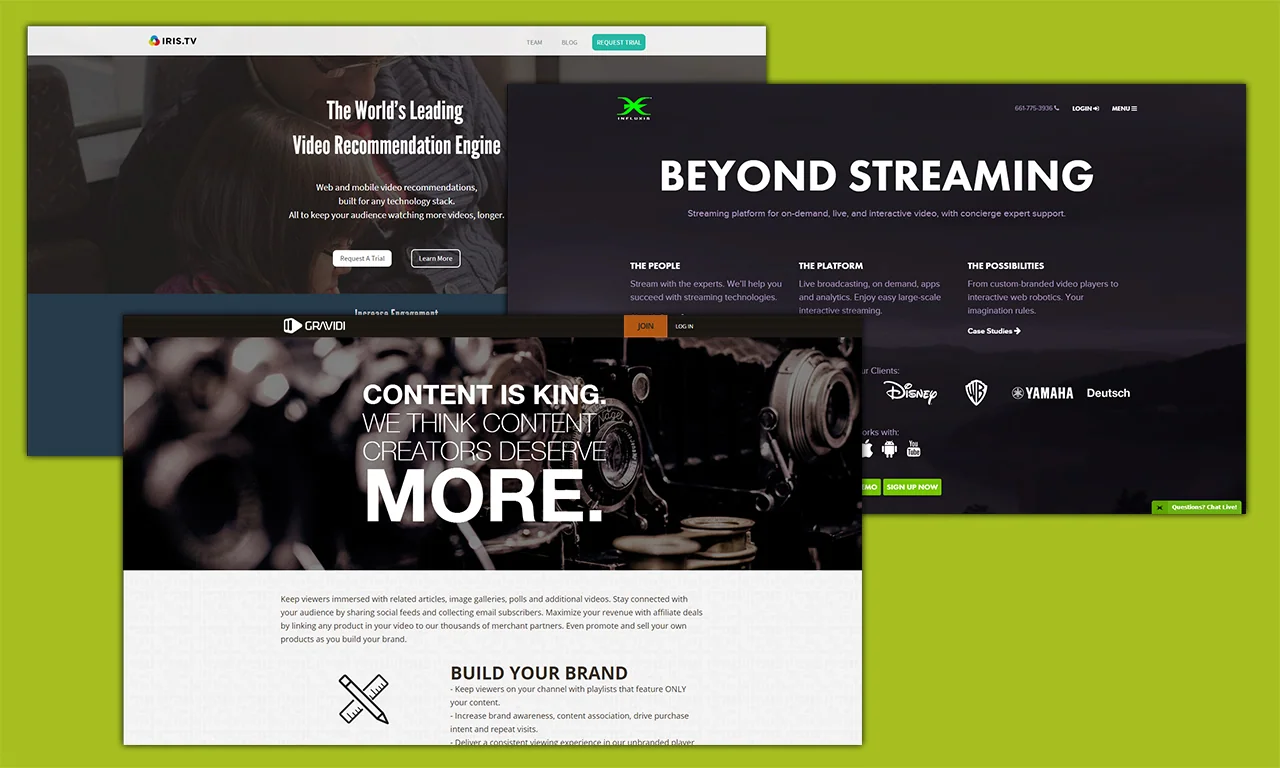
    Once you have users at your door, the challenge then becomes to retain them. After a user has seen some content, ideally you would want to immediately display or suggest something of relevance to capture his/her continuing interest. One tool that would accomplish this is a video recommendation engine that queues up subsequent content based on user behavior. For an example of a new tool that does just that, take a look at www.iris.tv.

    If you need a platform that allows interaction, in addition to live or on demand video publishing, you may want to look at platforms like www.influxis.com or at www.gravidi.com .  These services allow you to do more than just stream and enable genuine user interaction with your content.

    There are many other cutting-edge technologies and services you can use to achieve higher efficiency, stronger retention, and immersive experiences for your users. These are just a few examples of leading companies that are addressing these needs. You can learn more about video innovation and other related topics at the Digital Hollywood conference next week in Los Angeles. And, if you do come, be sure to drop by and say hello.  I will be moderating a panel on Video Innovation on Thursday October 23 at 11:05 in the Ballroom Terrace and would love to meet you.

    I will cover some other video technologies and services you need to know about in my next post.


  • What is the Best Way to Start a New Project?

    What is the Best Way to Start a New Project?

    So you have a great idea for a new digital product or service, but you are not a developer and don’t know much about technology.  How do you get started?

    Don’t worry, you are not alone. Most entrepreneurs are not necessarily techies. The secret to successfully building a new product or service is all about strategy and identifying what is needed to succeed.

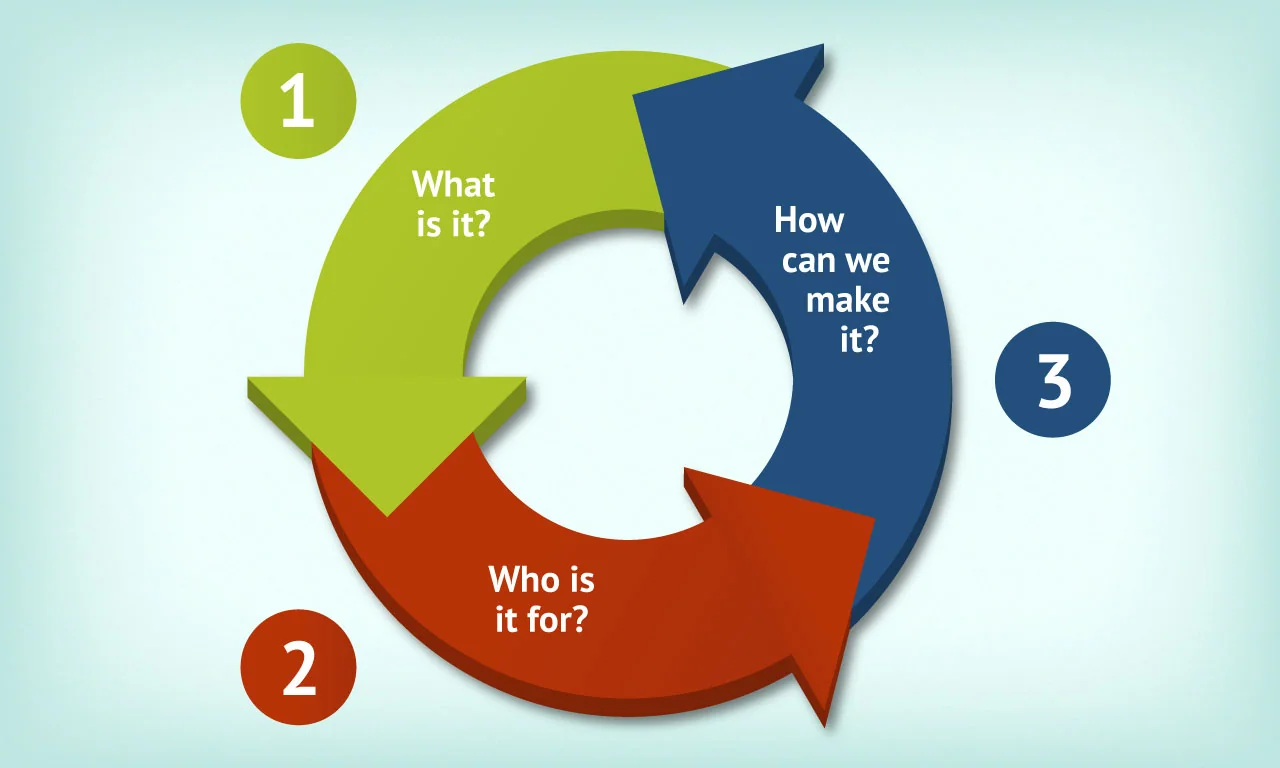
    It always comes down to three simple questions. What need or problem are you solving? Who is the product or service for? And, what do you need to make it happen? Let’s expand on these.


    Step 1: Ask yourself, “What need or problem are you trying to solve?”  

              You need to define the problem carefully and then it is important to be a good critic of your own ideas. First, do some old fashion research.  Find out if someone else is already addressing the issue. Has someone else thought of a very similar product? If someone has, that does not mean you need to give up on your idea. Often finding competing ideas validates the need for your idea in the marketplace. This could well be your first “check off” on the road to determining if you have a valid and viable proposition. The follow up questions you then need to ask yourself are:


    • Is the service or need being adequately satisfied by what is already available in the marketplace?
    • If not, what makes your idea different or superior to the competition?
    • Do you possess any special skills or have access to a key element for this product or service that would give you a competitive advantage?


    Step 2: Next, “Who is the product or service for?”

              Do many people need this product or service? Is it a “B to C” business (business to consumers)? Or, is it “B to B” (business to business), i.e. something that would benefit companies as opposed to individual consumers? In either case, what is the size of the market? Can the service or product be sold to multiple markets?  

    Knowing what the possible markets are, and quantifying the number of potential users, will help you create a business model that illustrates what percentage of the market you can realistically serve. It will also help you determine what kind of user adoption or conversion you can expect (this will of course vary drastically depending on the idea). Strategically, these questions will help you deepen your research and thoroughly understand the market and evaluate the strength of your idea


    Step 3: Last, but not least, “What do I need to make it happen?”

    Do you have the necessary skillset to execute your vision? Do you have the resources you need to successfully execute the project? If the answer to both of these questions is yes, congratulations you are probably already a multimillionaire. If the answer to one or both questions is no, then don’t worry you are right where most people or businesses start.


    If you don’t have the expertise, find or hire someone that does, but be careful, make sure you get a true expert or company, with a proven track record in your area of need.  If you choose a company, make sure you get the “A” team. Sometimes companies trot out the experts to close a sale and substitute a lesser team once the contract is signed.


    If you choose an individual, remember that you want someone with a broad range of knowledge and skills when it comes to executing projects. You want the kind of person that blends technology expertise with creative vision, who understands business and operations, and a person that knows how to put together a good team.


    If you don’t have the financial resources, then find someone that does. There are plenty of angel investors, professional investors, investment groups, money raising opportunities, and even crowdfunding. Without question, you must be relentless and determined to raise money or to find a partner that is willing to bankroll your vision. I am not saying it’s easy but plenty of people succeed, so why not you.

    Don’t forget the most important ingredients of all, partner with honest people who share your level of passion and determination to succeed. There are plenty of good ideas out there. The difference between success and failure lies in the execution, the quality and integrity of your team.  If you really plan to partner with someone, keep in mind a partnership is like a marriage (ideally a good one).  There will be good times and bad times.   Success comes with mutual respect and commitment.

    In my next post, I will share my thoughts on the steps that follow these three initial questions. Hope this post is of help to you.


  • Fixed, Fluid, Responsive, Adaptive? Which Technique is Right for You?

    Fixed, Fluid, Responsive, Adaptive? Which Technique is Right for You?


    Nowadays designing websites and web apps requires more planning than ever before. New techniques and delivery devices can sometimes raise confusing questions. So where do you begin?

    Of course, as always, everything starts with understanding your business. Before you push the first pixel you need to understand your audience, what problem your product or service solves, what the value is to the target user, and what it will take to get there both financially and logistically.

    Once your business objectives and resources are clearly defined, you are ready to move on the actual design of the product. To do this you would typically call your creative director, art director, and /or lead designer (depending on how big your organization is) to share your ideas re the business or issue you want to address. Then you may be asked something like, “Do you want the site to be responsive?” To which you probably say, “What?” Or, even more perplexing, you are asked “Should we make the site responsive or adaptive?” At this point, your head may start to spin Linda Blair’s in the exorcist movie (to cite an old flick). As if that wasn’t enough confusion, your staff may then offer additional options like fixed and fluid.

    Of course, as always, everything starts with understanding your business.

    So what’s up with all these new terms? Fixed, fluid, responsive, adaptive? Let me try to define these for you.

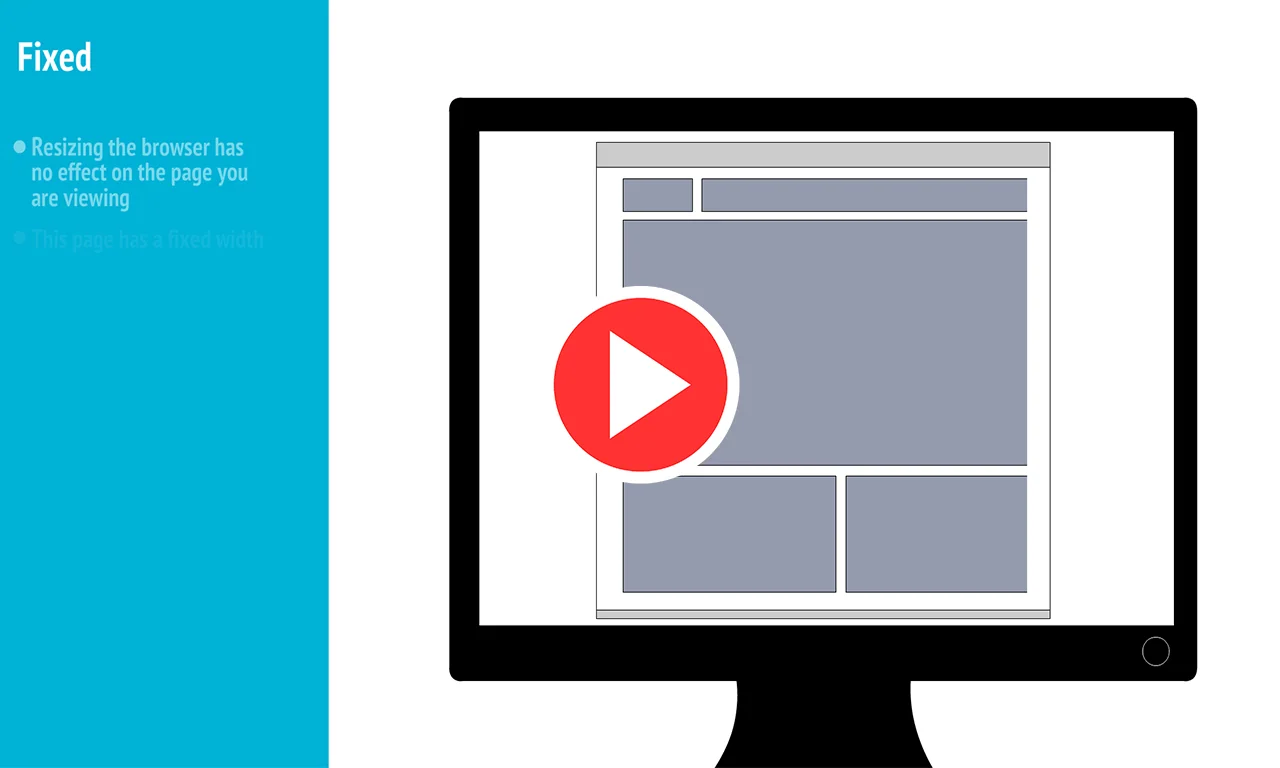
    Fixed—the best way to explain this kind of design is that this is the traditional way of developing a website. This type of page does not change shape or re-arrange content based on the device that you are using to view them. Basically, a fixed site looks the same on a computer or a smart phone. Of course, it will look tiny on a phone screen and users will need to zoom in to be able to read anything.

    Fluid—this kind of site adjusts based on percentages for width, making the columns relative to each other. This allows the site to scale up or down based on the size of the browser in which it is been displayed

    Responsive—this type of design is built on a fluid grid. Additionally media queries are added to be able to scale and re-arrange the content as needed based on the size of the browser window or device in which it is displayed. Responsive sites re-use the same content in all devices.

    Adaptive—these sites are not built on a fluid grid, although this is not a hard rule. They also use media queries, but they also rely on device detection to serve the correct version of the site or web app. When you build an adaptive site you usually create several versions of the site. At a minimal you create a general version to be used in computers, a table size for 7 to 10 inch displays, and a phone version for the smaller screens.

    If you are building a new site or web app, in most cases you should consider a responsive and adaptive approach. Many factors are to be considered in addition to the three main considerations listed at the beginning of this post. Time to market, budget, and usability are key factors.

    There are many books and websites that can give you a lot more information. If you want to learn about responsive options you can check out http://getbootstrap.com/. There are also several video on the web you can watch.

    Just in case you are still confused, I have created a little animation to illustrate the difference between the four design approaches I have addressed in this post. Hope you find this helpful and as always thank you for reading my blog

    Bill

  • Need to Start a Movement?

    Need to Start a Movement?

    Have you ever had to start a campaign? You know, for a school or other worthy cause, or perhaps just a movement to make people aware of something? If you ever have you already know this is really hard work and often a labor of love.

    When you engage in these types of activities you have to face numerous challenges—how to get the word out, how to make it easy for people to participate, how to collect donations or engage in other styles of fund raising etc. Then you also need to be able to manage your supporters, followers, and drivers.

    We all know that the web is a natural place to start a movement, but we also know that having a website, or blog, and using social media tools is a start but not enough to really generate the response you require. Unfortunately, while “if you build it, they will come,” worked for Kevin Costner in Field of Dreams, it’s not that easy in real life.

    [blockquote width=’100′]

    If you are looking to spread the word, support a political campaign, raise funds for your initiative, or generally to help others, and you want to do it quickly, this service is for you.

    [/blockquote]

    A tremendous amount of work goes into getting the word out and even if you succeed in doing that, you have to have a site that enables potential supporters and donors to get involved. To build a simple website or blog is pretty straight forward these days. You can buy a template, or you can use simple tools (even GoDaddy offers them), but if you need real functionality that is a different story.

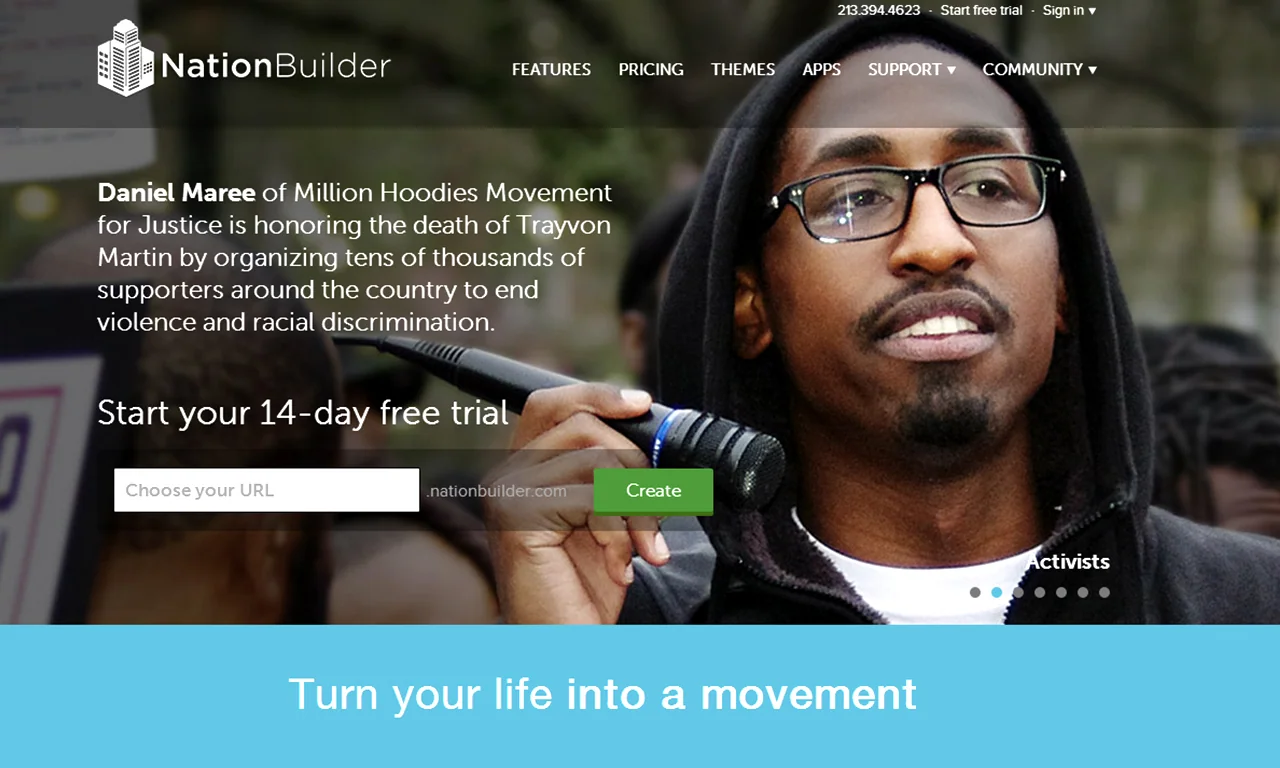
    The cost of building a community organization system is pretty high. Well, up until now. Recently I was introduced to www.nationbuilder.com. I think it is perhaps the first vibrant community organizing system. With it, you can manage people, multiple page types and profiles, donation pages with goal tracking, and social sharing.

    If you are looking to spread the word, support a political campaign, raise funds for your initiative, or generally to help others, and you want to do it quickly, this service is for you. Nation Builder is moderately priced, it’s easy to implement (although their administrative console could use some help), and you can be up and running in a very short time.

    Most experienced developers can easily work with this platform. Need something custom? High-end design? You can use a variety of agencies. I would recommend www.magicpluslogic.com this small studio has plenty of experience with this platform, additionally they are terrific designers, You can contact Rhonda Pitman (co-founder) or Christel Sayegh (co-founder) at their website or via math@magicpluslogic.com They are based in Los Angeles.

    I hope you find this article interesting. Take a look at Nation Builder. It may just help you get started in record time.

    I’ll be sharing information on other technologies and best practices for mobile and web development soon. If you like this kind of straightforward, practical information, please subscribe to my blog. And if you need a custom web app or mobile development, consider contacting my company www.northsouthstudios.com.

    Until my next post, have a great and productive day.

    Bill

  • Say Good bye to Batteries

    Say Good bye to Batteries

    If you have travelled by air in recent years, you are probably familiar with this picture. You are the terminal, you pass through security, and now you are finally at your gate. Then you notice your smart phone is about to die. You think,”No big deal, I will charge it at the free charging island”. However, you soon realize ten or more people had the same idea and all the outlets are in use. Yes, my friends we live in the era of electronics. Whether it is your smart phone, tablet, laptop, or all of the above, we are more-connected than ever. Providing however, our batteries are charged. Yes, there has been great improvement with lithium batteries in the past few years, but it never seems enough.

    Well, that is up until now. South Korean scientists have developed very small devices, like a patch, that can take your body heat and turn it into electricity. Yes, you read that right. This fantastic development means that all the thermal energy that is wasted every day worldwide can actually be harnessed and put to work. The number of applications for this technology is enormous. Cars, airplanes and just about any combustion-based vehicle can be an energy generator. Of course, thermal-energy devices have existed for some time now, however none of them are good at harvesting body heat because they are neither light nor flexible. But, this new technology overcomes those obstacles.

    Body heat charge

    It looks like in as little as a couple of years you may be able to kiss good bye to your battery operated devices in favor of self-powered devices.  And, let’s face it that’s cool, or I should say hot!

    Great new technologies seem to pop up every day and with them come opportunities to invest, and great advantages for end users. That’s what keeps me excited to be in the industry.

    There is not much public information about these devices yet, but if you want to learn more you can go to the Korean Advanced Institute of Science and Technology, better known as KAIST http://www.kaist.edu/,and look up the work of professor Byung Jin Cho. Professor Byung Jin Cho has an extensive body of work. You can also look up the original report by ABC news.

    Great new technologies seem to pop up every day and with them come opportunities to invest, and great advantages for end users. That’s what keeps me excited to be in the industry.